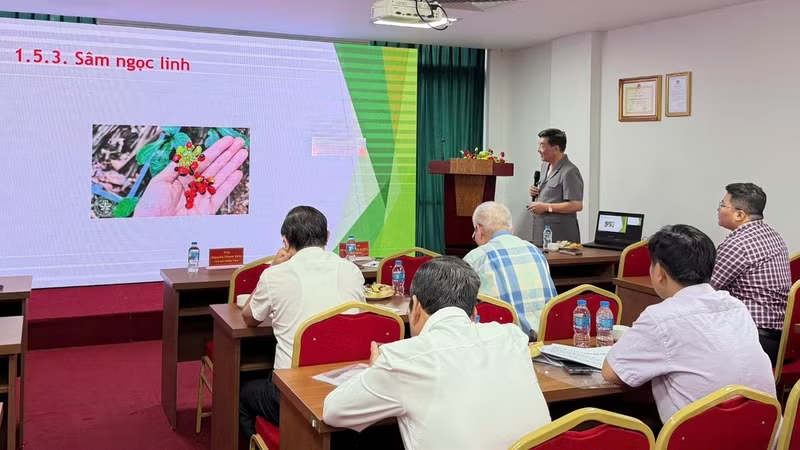
This was the assessment made at a seminar on the development of clean medicinal herbs organised by the Viet Nam Traditional Medicine Association on September 4.
Speaking at the seminar, participants said Viet Nam’s medicinal herb sector was at a turning point, shifting from spontaneous and fragmented exploitation towards standardised production processes, high technology and value-chain linkages.
It is therefore necessary to remove bottlenecks to tap valuable resources for the development of traditional medicine, the pharmaceutical industry and the country’s bioeconomy.
Pharmacist Ngo Manh Tri of the Viet Nam Traditional Medicine Association said that medicinal herbs in Viet Nam are currently being overexploited and inadequately controlled, leaving many valuable medicinal plant genetic resources depleted.
The harvesting of wild medicinal herbs remains destructive, with little protection to ensure regeneration.
Notably, there are still few concentrated cultivation areas meeting the Good Agricultural and Collection Practices (GACP) recommended by the WHO.
Close linkages between the government, scientists, businesses and farmers also remain limited.
Medicinal herb cultivation areas remain fragmented and small-scale, making it difficult to apply high technology and establish closed value chains.
The competitiveness of Vietnamese medicinal herb products in international markets has yet to reach its potential.
Notably, as domestic supply currently meets only 25-30% of demand, most medicinal herbs consumed in the Vietnamese market still have to be imported.
Medicinal herbs exported by Viet Nam are mainly shipped in raw form or after only basic processing, resulting in low added value.
To unlock the value of medicinal herbs, relevant ministries and agencies should focus on refining policies in a coordinated and consistent manner.
National standards should also be developed for medicinal herbs and traditional herbal remedies, while implementation of the national programme for developing valuable medicinal herb cultivation areas should be accelerated.
Efforts should also be stepped up to apply science and technology, digital transformation and biotechnology to cultivation, processing and traceability.
It is also necessary to promote the transfer of modern cultivation, preliminary processing and preservation techniques, and attract leading businesses to drive supply chains.
Inter-sectoral cooperation is another solution that should be pursued to build a Vietnamese medicinal herb brand.
The government should develop plans for concentrated medicinal herb cultivation areas based on the strengths of each locality, establish supportive mechanisms and policies and build production and distribution linkages between farmers and businesses.
Businesses should play the leading role in connecting scientists and organising technical training in medicinal herb cultivation and processing for farmers.
Delegates also said relevant authorities should introduce measures to strictly control the quality of medicinal herbs, as well as the import of medicinal herbs of unclear origin and those brought into the country through unofficial channels.