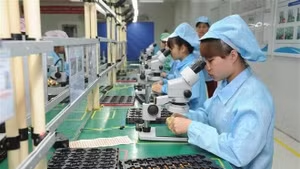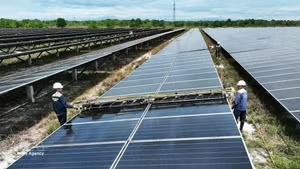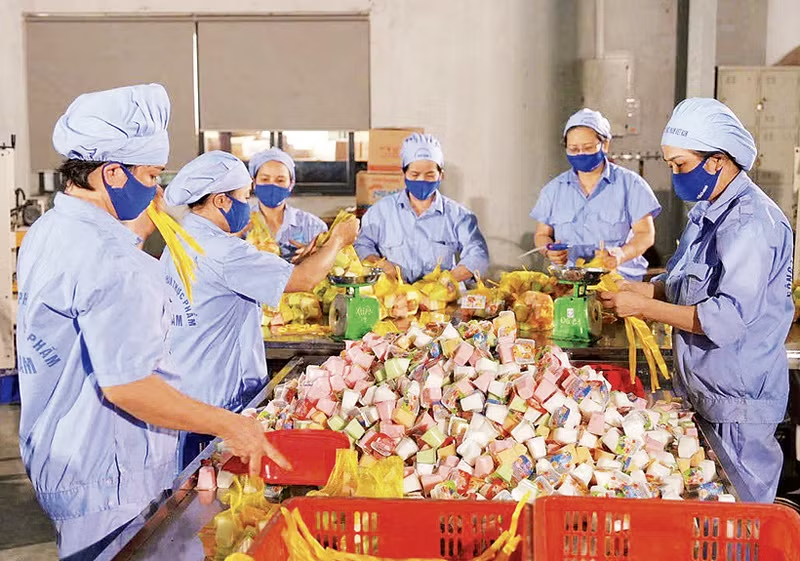
In practice, ensuring a stable workforce requires a long-term approach associated with a positive working environment, clear career development opportunities, and a stable welfare system for employees.
Creating a supportive workplace
Labour mobility at the beginning of the year has created considerable pressure for businesses. In reality, recruitment of unskilled workers in industrial parks is becoming increasingly difficult.
Nguyen Minh Truc Le, Head of Human Resources at Gre Alpha Electronics Vietnam Co., Ltd. in VSIP II-A Industrial Park (Ho Chi Minh City), said: “Workers returning to work after the Lunar New Year holiday and then resigning shortly afterwards remains a common situation. Many return for a few weeks and then submit resignation letters to move to another company. They often wait until they receive the remaining 50% of their post-holiday bonus before deciding to leave. Previously, the company set recruitment targets for workers aged between 18 and 30, but now even extending the age limit to 40 still makes it difficult to find employees.”
The company currently has more than 500 employees but still needs to recruit around 300 additional workers. One important reason lies in changes in the structure of the labour market.
Many provinces are now developing industrial parks, encouraging workers to seek jobs closer to their families rather than moving to distant industrial centres. Lower living costs and the ability to live near relatives make staying in their hometowns a more attractive option. As a result, major industrial hubs are gradually losing what was once an abundant labour supply.
For service-sector businesses, retaining employees presents another challenge. Tran Trong Manh, Human Resources Director of Viet Nam Young Talented Bodyguard Group Joint Stock Company, believes the most important factor is how well businesses care for their employees.
According to Manh, ensuring a stable workforce in the long term requires companies to organise training programmes, provide career guidance, and assign work suited to each employee’s capabilities. More importantly, they must offer timely support when employees encounter difficulties in their lives. For this reason, the company focuses on building a friendly and fair working environment with clear career pathways.
“Employees need to feel respected and listened to. When they are mentally secure, they are more likely to remain committed to the company,” Manh said.
Long-term strategy essential
According to Ngo Xuan Lieu, Director of the National Employment Service Centre under the Employment Department of the Ministry of Home Affairs, about 87% of workers returned to work after the Lunar New Year and the figure continued to rise in the following days. Many businesses have proactively improved remuneration policies and welfare benefits to retain employees, helping to reduce labour fluctuations compared with previous periods.
Data from 2025 show that around 816,000 people nationwide applied for unemployment benefits, down more than 11% from the previous year. This indicates a growing trend among workers to seek job stability.
Ngo Xuan Lieu emphasised that developing social infrastructure around industrial parks plays an important role. Essential services such as childcare facilities, healthcare centres, and community spaces help workers feel secure about working there in the long term.
At the same time, training and retraining policies need greater attention. Currently, the proportion of workers with formal qualifications or certificates is only about 29%, while many workers have yet to have their vocational skills officially recognised. Recognising vocational skills helps make workers’ capabilities more transparent, shortens recruitment time, and creates clearer opportunities for career advancement.
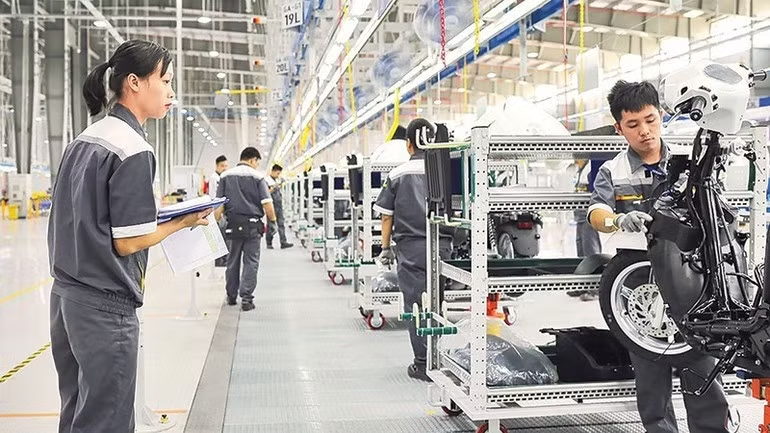
At present, the younger generation of workers, especially Gen Z, is becoming the main workforce of the economy. Therefore, corporate culture needs to be built in a more open manner that encourages creativity and provides opportunities for career development.
According to Bui Anh Tuan, Director General of the Department of Private Enterprise and Collective Economy under the Ministry of Finance, the private sector currently contributes around 50% of gross domestic product (GDP), more than 30% of total state budget revenue and creates jobs for approximately 82% of the country’s workforce.
With more than 98% of businesses being small and medium-sized enterprises, along with millions of household businesses, this sector plays a particularly important role in job creation, especially in localities. This helps reduce labour migration pressures and promote regional economic development. To strengthen the ability to retain workers and develop a sustainable labour market, a range of solutions must be implemented in a coordinated manner.
Accordingly, institutional frameworks should continue to be improved, the investment and business environment enhanced, and compliance costs for enterprises reduced in line with the spirit of Resolution No. 68-NQ/TW on private sector development. When businesses operate stably, expand production, and improve competitiveness, employment opportunities and workers’ incomes will also improve, thereby creating a foundation for long-term commitment.
Another important factor is strongly promoting innovation, the application of science and technology, and digital transformation in accordance with the orientation of Resolution No. 57-NQ/TW. Improving labour productivity and the quality of corporate governance will help create more high value-added jobs while enabling workers to develop their skills and increase their incomes.
It is also necessary to strengthen support programmes for small and medium-sized enterprises to improve governance capacity, access finance, and expand markets. When businesses develop sustainably, they will be better able to improve working conditions, build welfare policies, and create clear career development pathways for employees.
Bui Anh Tuan stressed that when businesses develop sustainably, working environments improve, and career opportunities expand, workers are more likely to remain with their employers in the long term.
Therefore, in the context of a rapidly changing labour market alongside economic development and integration, retaining workers has become a strategic challenge for both businesses and regulators.
Income plays an important role, but a positive working environment, career development opportunities, and stable welfare policies are the factors that create the foundation for long-term commitment, contributing to labour market stability and sustainable economic growth.