Local produce and crafts inspire innovation
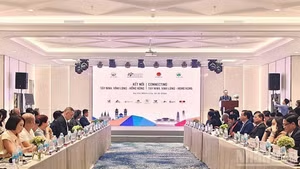
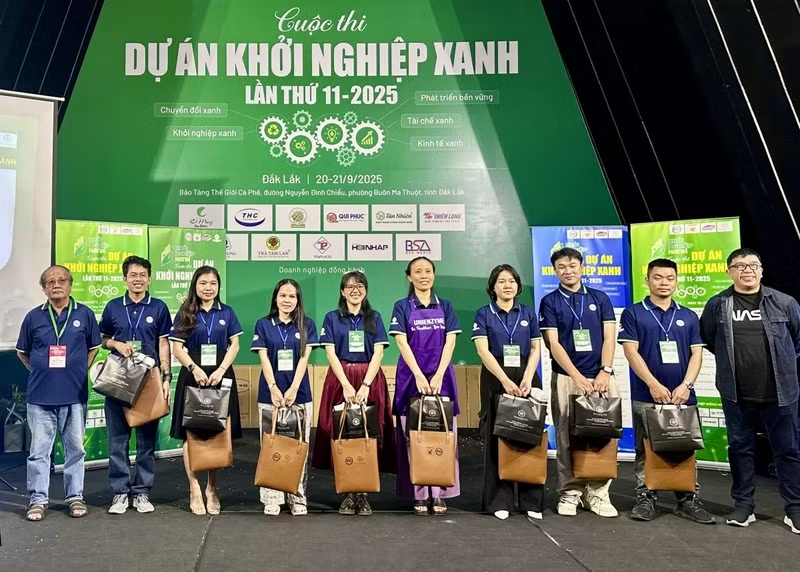
In late October, the grand final of the 11th Green Startup Project Competition 2025, organised by the Business Studies and Assistance Centre (BSA) in collaboration with the Association of High-Quality Vietnamese Goods Businesses, honoured 13 outstanding projects selected from 220 entries.
According to the organisers, this year’s highlight was the way startup teams utilised and revitalised local resources to meet sustainable consumption trends.
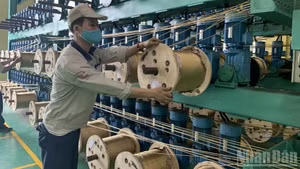
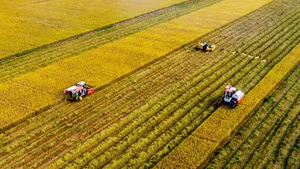
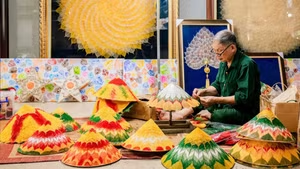
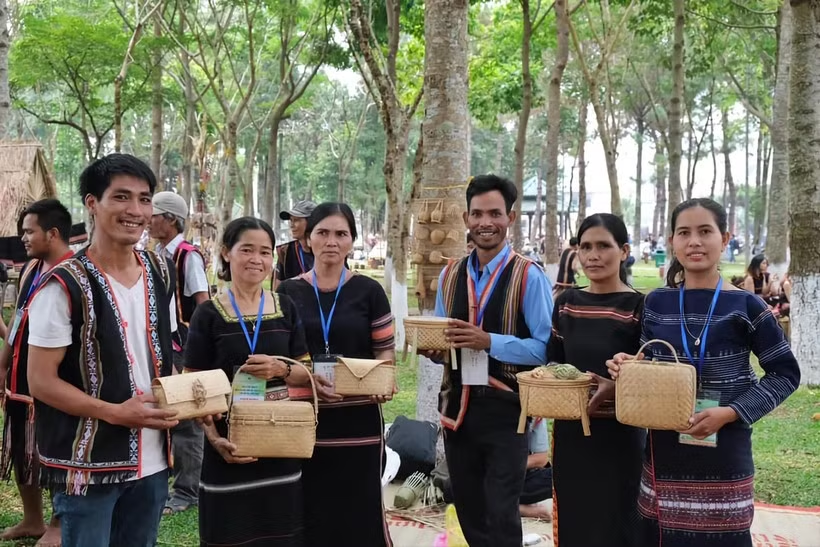
Many projects processing food and cosmetics from agricultural produce and by-products—such as rice, maize, durian, loofah fibre, soapberry and pandan leaves—or innovating traditional crafts like mat weaving, indigo dyeing, hand embroidery and hat weaving received high praise.
Some models involving forest planting, medicinal herb cultivation combined with community tourism also demonstrated fresh approaches to harnessing local resources.
More young people are starting businesses not only for profit, but also to deliver community and environmental value. The mindset of “shaping an economy from identity” reflects awareness and responsibility in harnessing indigenous knowledge.
Prestigious annual events such as Techfest Viet Nam (led by the Ministry of Science and Technology), Startup Wheel (co-hosted by the Business Startup Support Centre – BSSC and the Ho Chi Minh City Young Entrepreneurs Association), and the Creative Startup Project for Rural Youth (organised by the Ho Chi Minh Communist Youth Union Central Committee) have helped connect young entrepreneurs and artisans with experts and investors nationwide.
In addition, local and regional startup competitions held across the Central Highlands, North Central Coast and Mekong Delta are creating opportunities to access markets and build capacity for many agriculture, culture and tourism projects.
More young people are starting businesses not only for profit, but also to deliver community and environmental value. The mindset of “shaping an economy from identity” reflects awareness and responsibility in harnessing indigenous knowledge.
By elevating agricultural produce, herbs, handicrafts or cultural experiences, they create livelihoods while enriching Viet Nam’s brand.
In many rural, mountainous or island areas, entrepreneurship also carries the meaning of cultural preservation, resource protection and awakening inner strength.
Challenges demand systemic solutions
Despite its promise, the startup trend still faces numerous obstacles. Most projects remain small-scale, lacking long-term strategies; they have good ideas but insufficient management, marketing or value chain development skills.
Intellectual property registration, traceability and brand protection are limited, making it difficult for products to expand into wider markets.
The gap between “crafting stories that resonate with cultural identities” and “selling a commercial product” remains wide; many unique products lack distribution channels, logistics and after-sales service.
The startup ecosystem is vibrant but urgently needs substantive support mechanisms. If competitions merely celebrate ideas without technical aid, funding or market connections, entrepreneurship risks becoming a passing fad, difficult to break through.
Consequently, some startups have won top prizes but, after a period of operation, falter or are forced to shut down.
Moreover, research, archiving and transfer of indigenous knowledge in many localities lack seriousness and coordination. Without a scientific foundation and protection mechanisms, cultural resources are prone to haphazard exploitation, diminishing long-term value.
The startup ecosystem is vibrant but urgently needs substantive support mechanisms. If competitions merely celebrate ideas without technical aid, funding or market connections, entrepreneurship risks becoming a passing fad, difficult to break through.
From this reality, systemic solutions must be prioritised. Training in management skills, branding and technology application should be ramped up for youth, artisans and production owners. Universities and research institutes need to bridge science and practice, supporting technology transfer tailored to local specifics.
Additionally, it is essential to develop micro-investment funds, preferential credit and advisory services for agriculture–culture projects. Networks of creative incubators could be encouraged, linking regions by key sectors such as medicinal herbs, experiential tourism and OCOP products, helping young projects grow from ideas to commercialisation.
Protecting indigenous knowledge and geographical indications must also be emphasised for long-term investment.