In the 2025–2026 winter–spring crop, the city has more than 104,000 hectares, with 171 cooperative groups and cooperatives in 64 communes and wards participating in rice cultivation under this project.
From 2024 to the present, Can Tho has piloted 12 high-quality rice cultivation models (50 hectares per model), achieving many positive results. These models help reduce seeds by 40–50%, cut nitrogen fertiliser by more than 30%, and reduce pesticide spraying two to three times. Yields increase by 0.3–0.7 tonnes per hectare, and profits rise by at least 20% compared with traditional farming; meanwhile, greenhouse gas emissions are reduced by 2–12 tonnes of CO2 per hectare, making an important contribution to the goal of green and sustainable agricultural development.
While the effectiveness of the pilot fields has been clearly demonstrated, replication of high-quality, low-emission rice cultivation still faces many difficulties and challenges. Farmers are the most important link in the rice production and consumption chain, but they are also the weakest link in the value chain.
What concerns farmers and cooperatives most is the lack of capital to invest in production under high-quality rice processes, as most of their assets are land that has already been mortgaged for previous bank loans. As a result, they no longer have collateral to secure further loans, while this production model requires significant investment in expensive specialised machinery and equipment.
In addition, value chain linkages are still weak and loose. Enterprises usually only invest in contract purchasing products of the winter–spring crop every year because this crop has good yields and quality and is easier to sell. For the summer–autumn and autumn–winter crops, enterprises are less willing to participate in contract purchasing due to higher risks. Meanwhile, farmers’ production remains fragmented and small-scale, making it difficult to apply advanced technical processes uniformly, promote mechanisation, and form concentrated, high-quality raw material zones.
Moreover, Can Tho’s irrigation system has not been synchronised and closed, causing difficulties in applying alternate wetting and drying techniques, one of the key solutions for reducing greenhouse gas emissions. The internal field transport system also fails to meet the needs of goods transportation, affecting production costs and efficiency. The application of mechanisation, data management, and emission-reduction processes remains limited due to the capacity and skills of many farmers and cooperatives.
Furthermore, the impacts of climate change, including increasingly complex droughts, saline intrusion, and erosion, are badly affecting agricultural production, with farmers being the first to suffer losses.
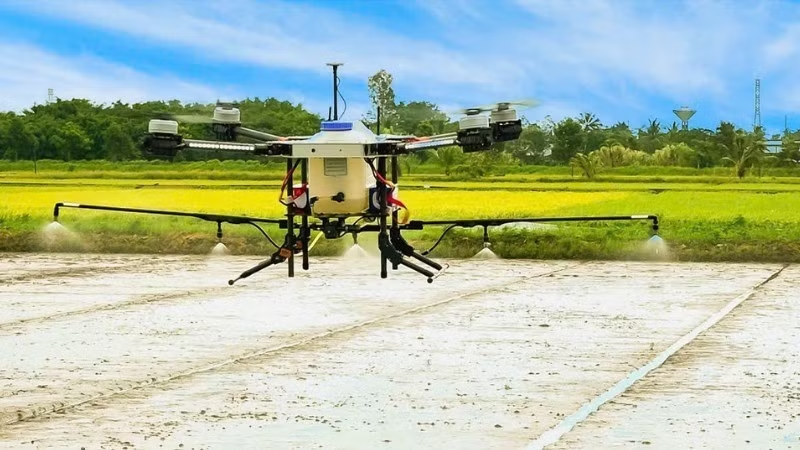
Farmers and cooperatives hope that the Government and authorities at all levels, sectors, and localities will introduce preferential credit policies, including low-interest loans or initial capital support, to help cooperatives invest in machinery and emission-reduction technologies (row seeders, rice transplanters, measuring equipment, etc.). They also call for rice insurance policies adapted to climate change risks (drought, saline intrusion, pests and diseases) so that they can feel secure in transitioning to new production methods.
Apart from technical and machinery support, for cooperatives and cooperative groups, Can Tho City needs to focus on reorganising production along value chains and linking with enterprises through public–private partnerships, connecting cooperatives with large enterprises to sign product off-take contracts at purchase prices higher than those for ordinary rice.
At the same time, the city should prioritise investment capital to upgrade and complete transport and irrigation systems to ensure proactive water supply for applying high-quality, low-emission rice cultivation techniques; encourage and support farmers to establish new-style cooperative groups and cooperatives to form large, uniform raw material zones that facilitate mechanisation application and quality management; support farmers and cooperatives in applying digital technology to make the entire production process transparent, helping consumers build trust and be willing to pay for high-quality, low-emission products; and build and guide methods for measuring, reporting, and verifying carbon emissions under international standards, ensuring transparency and reliability in carbon credit transactions so that more farmers can benefit from low-emission fields.