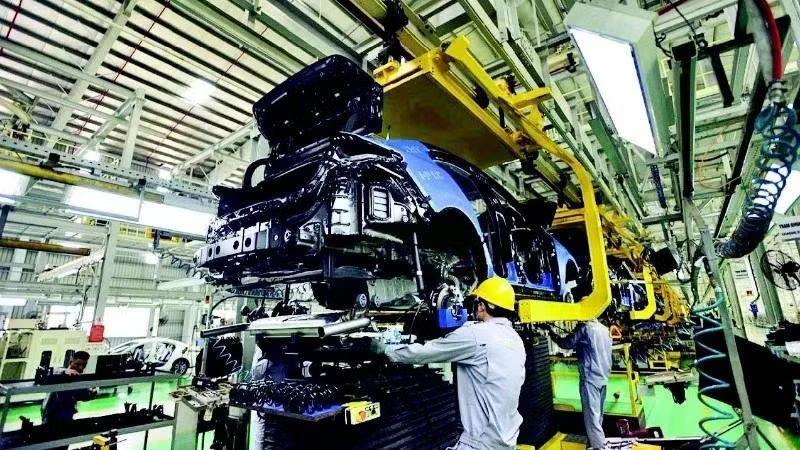
Smart factories – a new global manufacturing trend
According to a report by the Grand View Research (the US), the global smart manufacturing market could reach nearly 790 billion USD by 2030, with an average annual growth rate of around 14%.
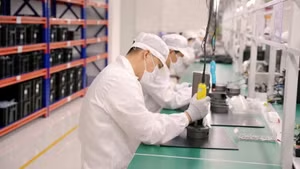
The integration of technologies such as Artificial Intelligence, the Industrial Internet of Things (IIoT), robotics and big data is creating breakthroughs in manufacturing. From optimising production lines and predicting equipment failures to managing supply chains in real time, factories are increasingly operating like fully digitised ecosystems.
This trend is not limited to advanced industrial economies such as Germany, Japan or the Republic of Korea, but is spreading worldwide, particularly as businesses face growing pressure to reduce costs, improve productivity and meet sustainable development standards.
For Viet Nam, which is emerging as a major manufacturing hub in the region, mastering smart manufacturing models is not merely a technological issue but also directly related to the country’s position within the global value chain.
The role of smart factories in Viet Nam
In recent years, the National Innovation Centre (NIC) has implemented various programmes aimed at promoting the development of smart factory models, thereby contributing to broader national orientations on science, technology and innovation.
According to Deputy Director of the NIC Vo Xuan Hoai, the centre has partnered with several leading global technology corporations to develop platforms that help businesses access new manufacturing models. One notable initiative, he said, is NIC’s collaboration with Siemens of Germany to build a digital experience space dedicated to smart factories.

Within this space, modern factory models from around the world are simulated using digital technologies, enabling Vietnamese enterprises to directly observe how intelligent production lines operate.
“Businesses that wish to transition from traditional factory models to smart factories can come here to explore, exchange ideas and study how to apply technologies and solutions from major global technology corporations,” Hoai said.
In addition, NIC is cooperating with Dassault Systèmes to establish an AI Centre and a Centre of Excellence (CoE) on digital twin and artificial intelligence in Viet Nam. According to Hoai, digital simulation technology is one of the 11 strategic technologies identified by the Prime Minister in national science and technology development orientations. It also serves as a crucial foundation for designing, operating and optimising smart factories.
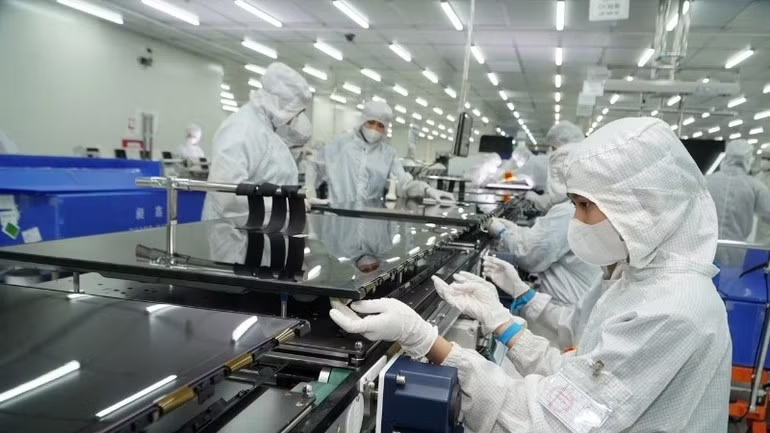
Through these international cooperation programmes, many Vietnamese enterprises have gained opportunities to access advanced technological solutions and gradually enhance their manufacturing capabilities.
The transition journey remains challenging
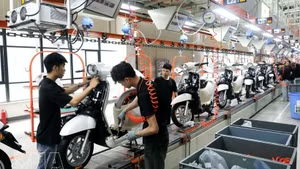
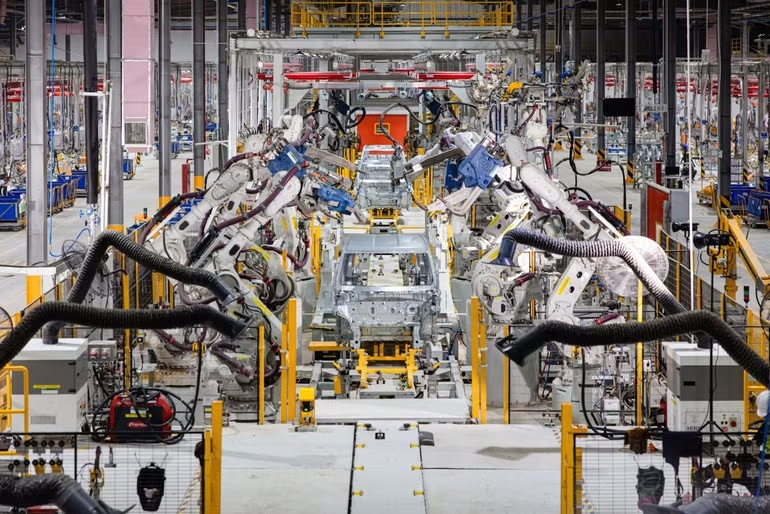
However, the overall picture of factories in Viet Nam shows that the transition to smart manufacturing remains relatively slow. According to assessment programmes conducted by the NIC in collaboration with Japanese partners, most domestic production lines are still at an early stage. Only a handful of large-scale factories invested in by major corporations have begun to adopt smart manufacturing models, notably some plants of VinFast. Meanwhile, the majority of enterprises are still in the process of learning about and preparing for this transformation.
According to Vo Xuan Hoai, building a smart factory is not something that can be accomplished in a short time. The process begins with a shift in business mindset, followed by investment in equipment, the establishment of management systems and workforce training. This poses a significant challenge for many Vietnamese enterprises, particularly small and medium-sized ones, as the cost of technological investment is often high while market risks remain.
To accelerate the transition to smart manufacturing, Hoai suggested that the State should play a facilitating role in creating a favourable environment for businesses. This includes developing technology experience centres, organising training and capacity-building programmes for factory management and operations teams. Such initiatives would enable enterprises to assess their current level of development and design appropriate transformation roadmaps.
In addition, mechanisms to support technology investment are considered essential. “If businesses have to bear 100% of the transformation costs themselves, the risks will be very high, especially since most Vietnamese enterprises are small and medium-sized,” Hoai noted. Tax incentives for companies adopting high technologies, along with policies to attract engineers and technology experts, could also serve as key drivers of the transition.
Another proposed approach is for the State to prioritise procurement from enterprises that adopt smart factory models, thereby creating an initial market that encourages investment in advanced manufacturing systems.
When smart factories align with “green manufacturing”
A notable trend in the future of smart manufacturing is the integration of digital technologies with clean energy solutions. According to energy experts, smart factories are increasingly incorporating rooftop solar power systems, energy storage solutions and intelligent energy management platforms. These solutions not only help reduce operational costs but also contribute to lowering carbon emissions, thereby meeting increasingly stringent environmental standards in export markets.
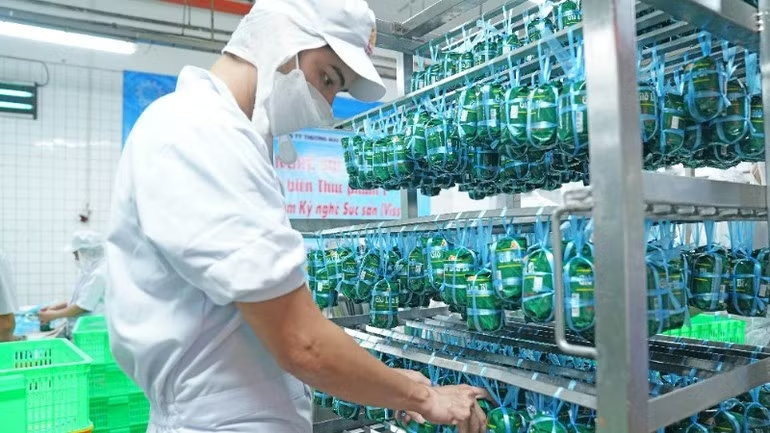
As global supply chains place greater emphasis on sustainability criteria, the combination of smart manufacturing and green energy could become a significant competitive advantage for businesses in Viet Nam.
More broadly, the development of smart factory models is not merely about technological innovation at the enterprise level. It represents a crucial step in restructuring Viet Nam’s industrial sector towards a more modern, efficient and sustainable trajectory. If opportunities arising from emerging technological trends are effectively leveraged, alongside appropriate policy support and proactive engagement from businesses, smart production lines can become a new driving force for industrial growth.