
Improving FDI quality to strengthen growth momentum
Viet Nam has recorded positive developments in attracting foreign direct investment (FDI), with major commitments highlighting the country’s growing appeal to international investors.
#FDI
Viet Nam has recorded positive developments in attracting foreign direct investment (FDI), with major commitments highlighting the country’s growing appeal to international investors.

Combined newly registered and additional capital reached 46.86 billion USD, of which processing and manufacturing accounted for 24.19 billion USD (51.6%), followed by real estate business with 7.08 billion USD (15.1%).
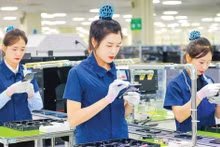
The strength of Viet Nam’s business sector does not lie simply in the number of enterprises, but in the coordination and links between diverse businesses. Several models bringing together different types of enterprises are already operating successfully in Viet Nam, but they have yet to become widespread.
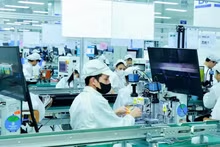
Once regarded as a laggard in attracting investment, Nghe An Province has made remarkable progress and now ranks among Viet Nam’s leading recipients of foreign direct investment (FDI).
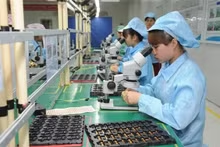
Japanese Foreign Direct Investment (FDI) is strengthening Viet Nam’s manufacturing capacity and accelerating the green transition, as more Japanese companies expand production and adopt sustainable industrial solutions.

Amid profound global changes in technology, geo-economics, geopolitics, and the environment, Viet Nam is approaching a pivotal moment in establishing a new growth model to lay the foundations for national development through to 2045.
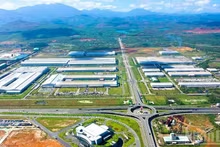
Foreign direct investment (FDI) inflows into Viet Nam are reaching new highs, both in registered and disbursed capital, expanding production capacity and providing fresh momentum for economic growth.
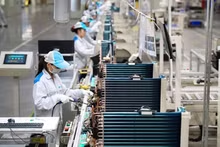
Viet Nam attracted 50.36 billion USD in registered foreign direct investment (FDI) in the first nine months of 2026, up 76.4% year-on-year, while disbursed FDI reached 21.07 billion USD, the highest nine-month level in five years, according to the National Statistics Office under the Ministry of Finance.
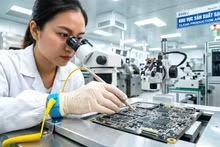
As room for competition based on low-cost labour and preferential tax rates continues to narrow, tax policies need to shift towards encouraging growth driven by technological innovation, research and development, digital transformation, green development and stronger domestic business capabilities.
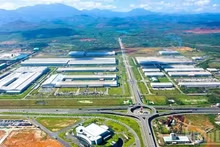
In the first half of 2026, Viet Nam’s manufacturing FDI landscape showed a notable shift: while the number of new projects fell sharply, the scale of investment grew significantly.
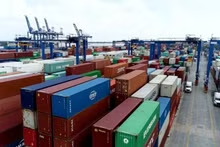
Foreign investment flows continue to find their way to Viet Nam, however, the amount of capital attracted is not the only measure of success. More importantly, stronger linkages between the foreign-invested sector and domestic businesses are needed, along with higher localisation rates and greater participation by Vietnamese businesses in higher-value segments of supply chains.

Economic cooperation between Viet Nam and the Republic of Korea has steadily expanded over more than three decades. Viet Nam has become one of the most significant investment destinations for Korean enterprises, hosting over 10,400 projects with registered capital approaching 99 billion USD.
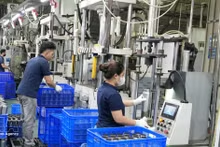
Viet Nam attracted 40.63 billion USD in registered foreign direct investment (FDI) in the first eight months of 2026, up 55.4% year-on-year, the National Statistics Office under the Ministry of Finance reported on September 3.
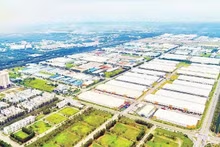
Implementing the Politburo’s Resolution 10 dated June 8, 2026, on developing the foreign-invested sector, the Ministry of Finance is adopting a new approach to ensure that these capital flows effectively serve the goal of double-digit economic growth.
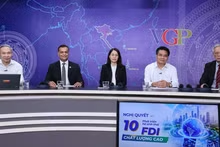
A seminar themed “Resolution No. 10: Developing a High-Quality FDI Ecosystem” was held in Ha Noi on August 7, focusing on new approaches, major policy directions and solutions for the effective implementation of the Politburo’s Resolution No. 10-NQ/TW on the development of the foreign-invested economy.
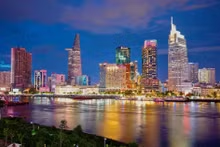
Ho Chi Minh City attracted more than 6.8 billion USD in foreign direct investment (FDI) during the first half of 2026. By proactively directing high-quality investment towards strategic technology sectors and international finance, the city is taking a decisive step to strengthen its position as a regional innovation hub.
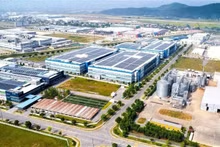
Viet Nam needs to shift from an export-driven foreign direct investment (FDI) attraction model to one that generates and retains greater value from foreign capital, with the Politburo's Resolution No. 10-NQ/TW marking a significant step in advancing the country's investment attraction strategy.
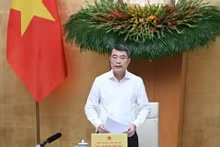
Prime Minister Le Minh Hung on August 3 instructed ministries, sectors and localities to issue or update action plans to follow the Party Central Committee’s third plenum resolutions and conclusions no later than August 10.
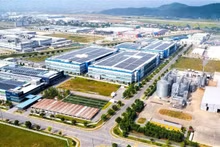
The Nghe An Provincial People's Committee announced on July 16 that foreign direct investment (FDI) attraction continues to be a standout achievement in the socio-economic landscape of the province.
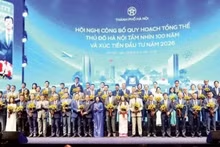
Ha Noi is reshaping its investment attraction strategy by focusing on large-scale capital flows into high technology, green infrastructure and innovation.