Enthusiasm without structure
As children increasingly immerse themselves in the virtual world, reviving traditional games in schoolyards is not simply about preserving the past but about building a cultural bridge between tradition and modernity.
Associate Professor Dr Nguyen Van Huy, former Director of the Viet Nam Museum of Ethnology, stressed that traditional games not only inspire children’s imagination and creativity but also instil lessons about friendship, family affection, and love for the homeland.
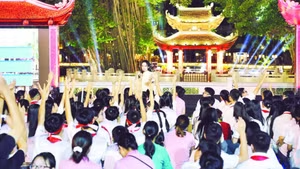
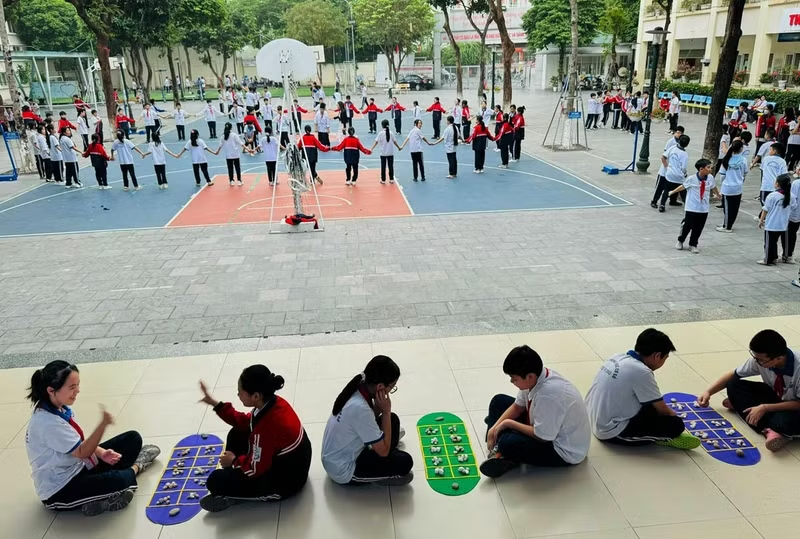
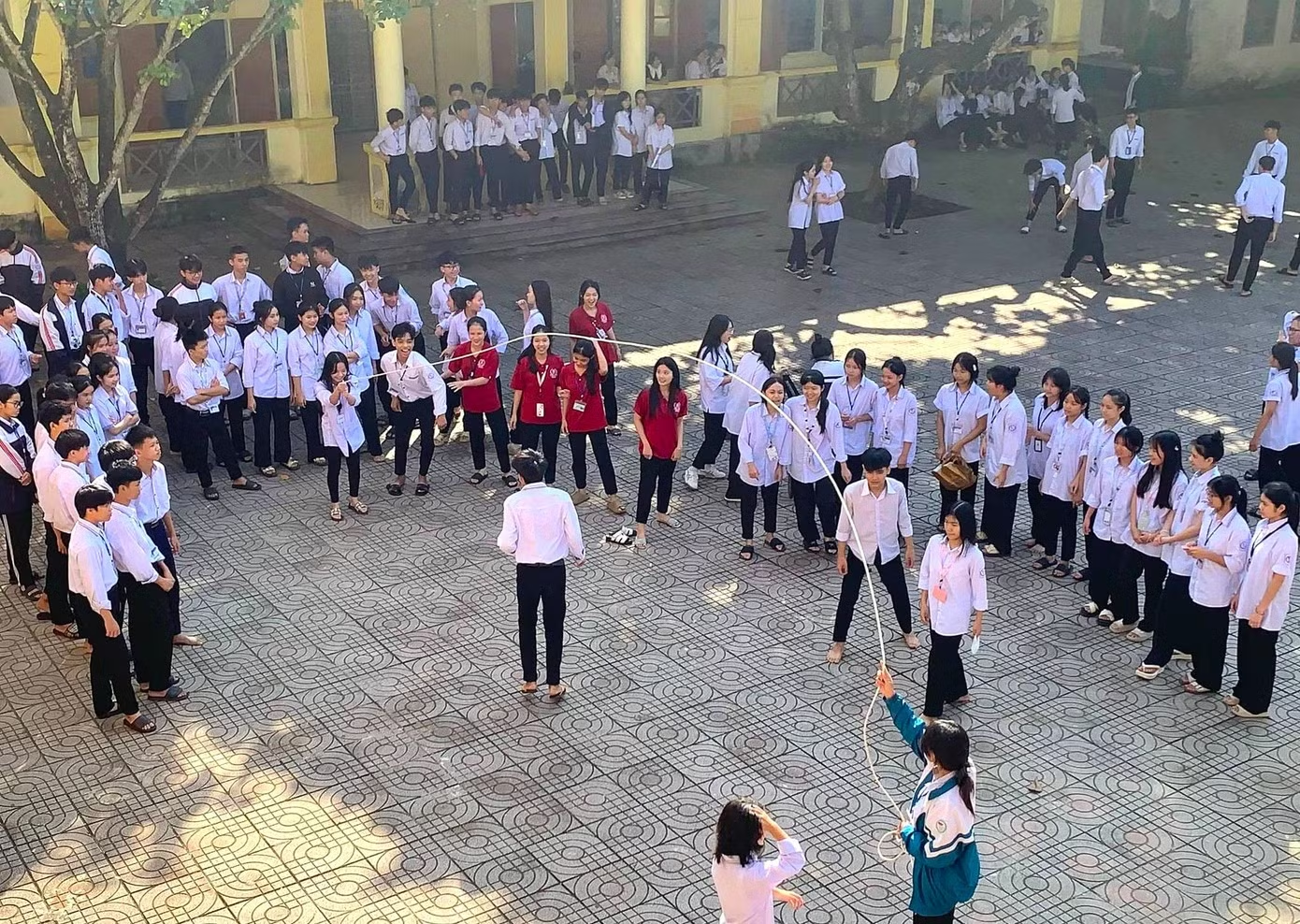
At many schools, particularly at primary and secondary levels, traditional games are gradually returning; every breaktime transforms the schoolyard into a lively space for jacks, skipping rope, and tug-of-war.
Traditional games not only inspire children’s imagination and creativity but also instil lessons about friendship, family affection, and love for the homeland.
Associate Professor Dr Nguyen Van Huy
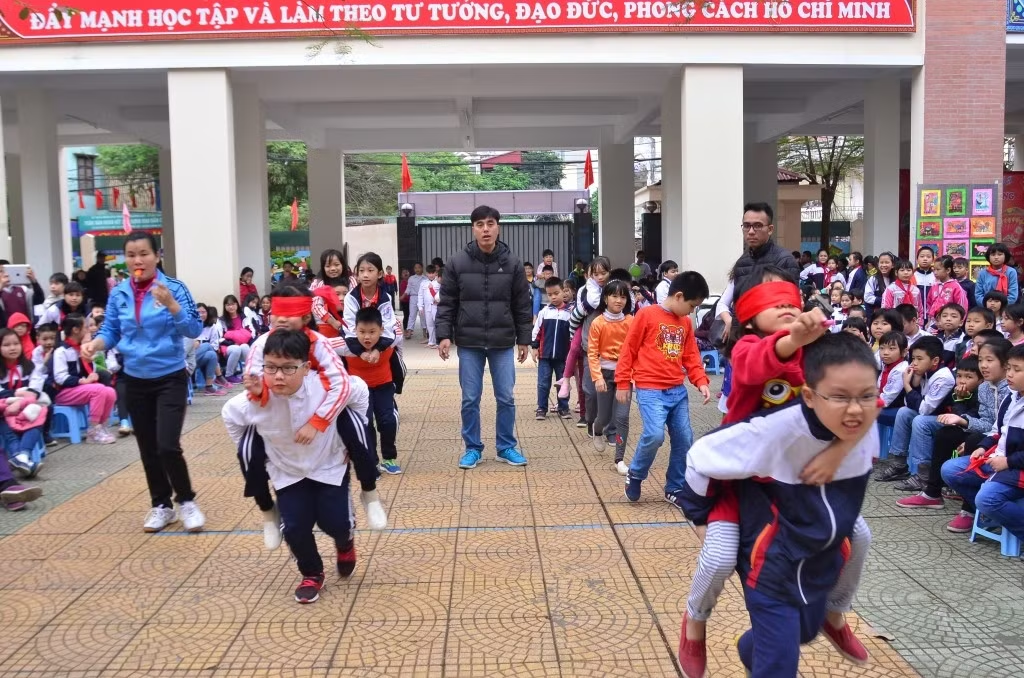
In recent years, responding to the Ministry of Education and Training’s “child-friendly school, active students” initiative, many localities have organised “traditional playgrounds” featuring dozens of folk games such as ‘con’ (cloth ball) throwing, ‘o an quan’ (mandarin square capturing), ‘rong ran len may’ (dragon and snake), ‘bit mat bat de’ (blindfolded goat catching), and the bamboo pole dance.
These playgrounds not only bring laughter but also rekindle community spirit, helping pupils learn to connect with one another.
Ngo Thu Ha, a teacher at Olympia School in Ha Noi, remarked that traditional games not only relieve stress but also cultivate cooperation, team spirit, and confidence. “Most importantly, they play together rather than just staring at phones,” she said.
Yet traditional games have not been systematically integrated into schools. In some places, they are confined to anniversaries, sports festivals, or cultural weeks, appearing more as spontaneous activities than long-term programmes.
Many teachers also report a lack of proper guidance materials to lead experiential activities.
This reality highlights the urgent need for a long-term folk culture education strategy, where traditional games are seen not merely as extracurricular diversions but as a method of instilling Vietnamese values – enabling children to learn, play, and grow up immersed in national culture.
Cultural heritage as an educational tool
In today’s fast-paced world and the rapid rise of digital technology, traditional games – once thought to belong only to memory – are quietly but steadily returning to schools. From schoolyards filled with laughter to “heritage spaces” created in classrooms, the legacy of traditional games demonstrates its enduring vitality: both as cultural heritage and as a comprehensive educational tool.
Teacher Nguyen Thu Phuong from Ha Dong High School in Ha Noi observed that when traditional games are incorporated into lessons, pupils gain far more than physical skills. They sharpen calculation skills through ‘o an quan’, develop coordination through tug-of-war, and learn respect in group play. Most importantly, they experience joy and strengthen bonds with friends and school.
Traditional games are not simply nostalgic memories of past generations but dynamic cultural tools – teaching children how to live and feel the Vietnamese spirit. Yet to make this spirit truly flourish in schools, a systematic, creative, feasible, and sustainable strategy is essential.
Traditional games are not simply nostalgic memories of past generations but dynamic cultural tools – teaching children how to live and feel the Vietnamese spirit.
First, the role of traditional games must shift from supplementary activities to tools for developing pupils’ competencies and qualities. Guidance materials and soft evaluation tools are needed to help teachers identify skills nurtured through play. Games can be integrated into lessons on Ethics, History, Fine Arts, Civic Education, and Experiential Activities.
Second, schools should establish “heritage spaces” – environments where culture is lived daily. Integrating traditional games requires genuine cultural settings where pupils not only play but also understand, experience, and feel.
Each school could create a “heritage corner” to store traditional game equipment, record images and folk stories, or invite artisans, village elders, and local communities to guide games and share their origins. Such spaces transform traditional games from static artefacts into living school culture.
Pupils would not only learn to play but also to tell, pass on, and appreciate the values behind each rule. This makes games a natural part of the learning environment, from breaktimes to extracurricular lessons.
Third, technology should be harnessed as an ally of heritage promotion. In the digital age, where children often bond more with screens than playgrounds, “bringing heritage closer to youth” requires innovation. Used wisely, technology can become culture’s partner.
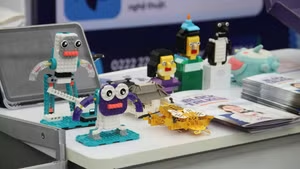
A notable example is the “Vui Hoi Lang” app – a mobile game concept simulating Vietnamese traditional games in a digital environment, developed by young Vietnamese creators during Lollypop Design’s Designathon 2024.
The app allows players to assume roles, choose characters, and explore northern, central, and southern regions while directly experiencing games such as ‘o an quan’, bamboo pole dance, and tug-of-war.
Each game includes information on its origins, meaning, and cultural history, enabling users – especially pupils – not just to “play” but to “understand” folk culture through digital interaction.
Fourth, coherent policies and incentives for cultural creativity in schools are needed to fully realise the value of traditional games.
When children grow up in environments where traditional games are cherished and creatively engaged with heritage, that is the most sustainable path to preserving and spreading Vietnamese culture.
A “Traditional Games – Cultural Heritage in Schools” project should be launched, focusing on incorporating UNESCO-recognised games into experiential education programmes, organising annual National School Traditional Games Festivals, encouraging initiatives from teachers and pupils, and supporting infrastructure, particularly playgrounds and equipment.
These measures go beyond preserving traditional games as “spiritual nourishment” to laying the foundations for a culturally rich educational environment. When policies encourage creativity and link schools with communities, folk heritage will no longer remain outside school gates but will become a natural part of pupils’ lives.
Education is not only about imparting knowledge but also about nurturing cultural identity. When children grow up in environments where traditional games are cherished and creatively engaged with heritage, that is the most sustainable path to preserving and spreading Vietnamese culture.