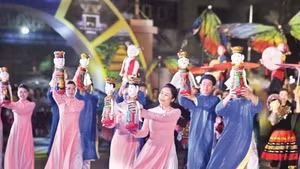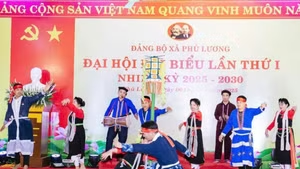
The Tet atmosphere of ethnic minority communities at the Viet Nam National Village for Ethnic Culture and Tourism is portrayed through daily life, with artisans actively taking part in activities, performing rituals, and introducing their culture within their own community spaces.
Unique Tet culture of ethnic groups
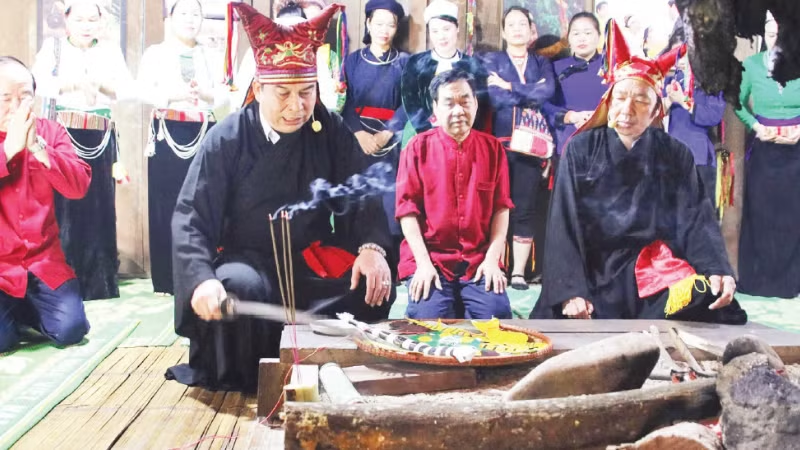
The morning at the Muong ethnic village space in the Viet Nam National Village for Ethnic Culture and Tourism begins with light kitchen smoke drifting through the stilt house. The fire is lit not only to provide warmth, but also to prepare for the kitchen spirit worship ritual, an important ritual in the spiritual life of the Muong people.
For the Thai ethnic group in Moc Chau (Son La Province), Tet cuisine is both a distinctive feature and a source of pride. One unique dish that cannot be absent from the Tet meal tray is “ga mo”, made from chicken combined with local ingredients such as banana blossom, ‘mac khen’ (Zanthoxylum rhetsa) and ‘doi’ seeds, and mustard greens. The ingredients reflect the distinctive and refined flavours of the Thai people in the north-western region. “The chicken is chopped into small pieces and marinated with spices. Once fully absorbed, it is wrapped in “dong” (phrynium placentarium) leaves or banana leaves and then steamed for about one hour to make the chicken soft,” said Lo Thi Tom (from Moc Chau) while skilfully preparing the dish and sharing with visitors. In addition, artisans and local people also prepare many other dishes such as “Chung” cake, grilled fish, five-colour sticky rice, and smoked buffalo meat. Visitors observe the artisans at work, take part in the experience, sit by the fire and listen to stories about the Tet customs of the Thai people. The space becomes a place for sharing cuisine and culture, forming a link between ethnic communities, between artisans and visitors, and between tradition and the present.
In other village areas, the spring atmosphere is also spreading in distinctive ways. Each ethnic group brings its own cultural colour, directly engaging in daily activities, guidance, conversations, and cultural transmission, creating a vibrant and colourful Tet picture.
Preserving culture linked with sustainable tourism development
Artisan Lo Thi Tom, who has been involved in activities at the Viet Nam National Village for Ethnic Culture and Tourism for nearly nine years, said: “We are very happy and proud to receive the attention of the Party and the state, which helps us come here to introduce and spread our culture to a large number of people.” Meritorious Artisan Bui Thanh Binh said that each time he returns to the village to introduce Muong culture and receives interest from visitors, some even spending an hour discussing unique rituals, that makes him feel deeply moved and more responsible for preserving and passing on the identity of his community.
Activities held at the Viet Nam National Village for Ethnic Culture and Tourism are not only performances or introductions of customs and practices, but more importantly, create a space for ethnic communities to meet, exchange, and enrich their own cultural values, thereby strengthening bonds and spreading the spirit of great national unity.
Trinh Ngoc Chung
Head of the Department of Culture of Vietnamese Ethnic Groups
According to Trinh Ngoc Chung, Head of the Department of Culture of Vietnamese Ethnic Groups, the activities held at the Viet Nam National Village for Ethnic Culture and Tourism are not only performances or introductions of customs and practices, but more importantly, they create a space for ethnic communities to meet, exchange, and enrich their own cultural values, thereby strengthening bonds and spreading the spirit of great national unity. The consistent goal in the construction and operation process of the Viet Nam National Village for Ethnic Culture and Tourism is to authentically recreate and preserve traditional cultural values within the proper cultural space of each community. This approach not only brings joy and pride to artisans who directly introduce their heritage but also helps these cultural values sustainably continue and spread with the public and visitors.
The number of visitors to the Viet Nam National Village for Ethnic Culture and Tourism has steadily increased over the years; in 2025 alone, it welcomed nearly 1 million visitors, more than 44% of whom were pupils and students and nearly 20% were international tourists. Each year, the Viet Nam National Village for Ethnic Culture and Tourism organises two training courses on community-based tourism and skills in cultural presentation and interaction for artisans coming to the village. So far, more than 15 training courses on community-based tourism have been held in coordination with professional agencies and travel companies. Notably, this knowledge does not maintain within the village but is passed on to their children and relatives in localities by artisans, contributing to the development of a local community-based tourism workforce. As a result, tourism activities linked with traditional culture are becoming more organised, creating sustainable livelihoods and helping to preserve cultural heritage in daily life.