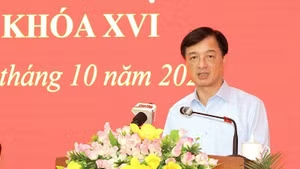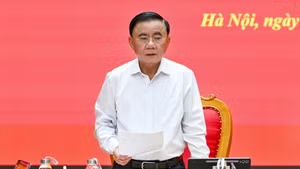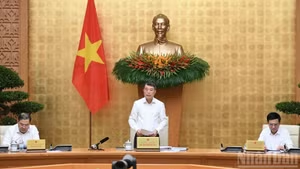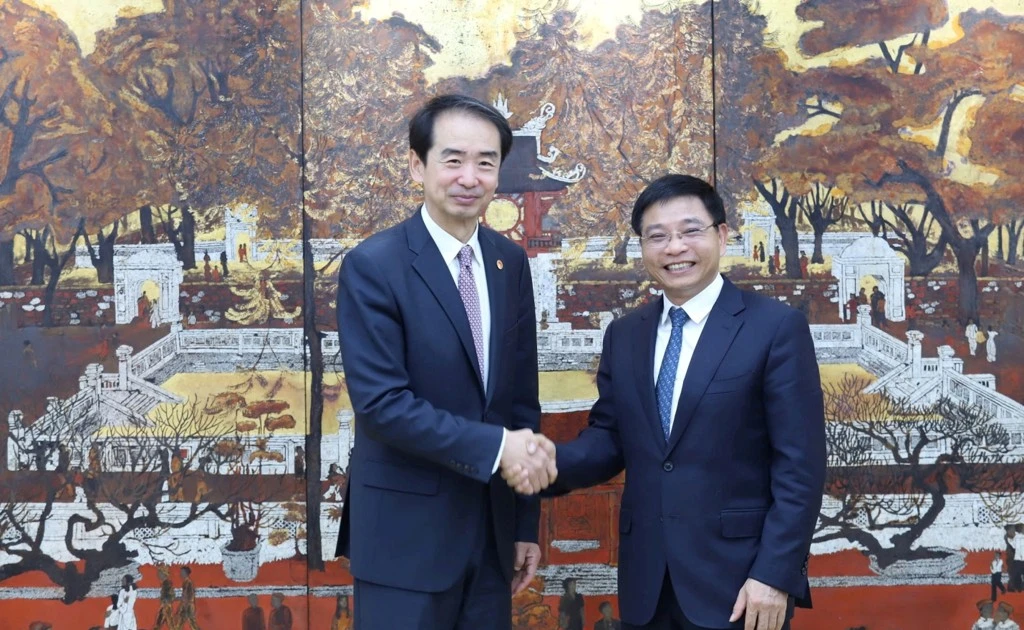
Thang highlighted the robust growth in Viet Nam-China economic ties. Chinese investors now hold more than 6,000 active projects in Viet Nam worth nearly 35 billion USD, a substantial figure. Two-way trade surged in the first 10 months of 2025, exceeding 200 billion USD, with Viet Nam exporting about 57 billion USD to China and importing roughly 150 billion USD.
He thanked the Chinese Government and people’s 500,000 USD aid package to help Viet Nam recover from devastating floods in the central and Central Highlands provinces, calling it a reflection of the close friendship between the two countries.
He, for his part, said Viet Nam–China relations are entering a “second golden period”, noting that many Chinese firms are increasing investment in Viet Nam and economic and trade ties are prospering.
According to him, Viet Nam is preparing for the 14th National Party Congress and will enter a new era dubbed as the “era of national rise” while China is set to roll out its 15th five-year socio-economic development plan, which shares similarities with Viet Nam’s new development vision.
Against this backdrop, the ambassador expected that economic, trade and financial ties would reach a new height, stressing the key role the Vietnamese Ministry of Finance will play.
Thang said China’s sharing of orientations for its 15th five-year socio-economic development plan reveals similarities with Viet Nam’s current and forthcoming development plans. He described the information as highly valuable for the ministry’s policy advice and task performance. He added that the two sides would effectively continue with cooperation along three pillars: finance, strategic infrastructure, and state-owned enterprises (SOEs).
On infrastructure, he called for continued Chinese support, especially in finance, for the Ha Noi-Hai Phong-Lao Cai railway project. He also asked the ambassador to encourage more Chinese companies to invest and develop production and business in Viet Nam.
Turning to SOEs, he said the ministry is proposing the Politburo issue a resolution to advance SOE reforms. He announced plans to send a high-ranking delegation to China to learn from its SOE overhaul experience, and sought the ambassador’s help to arrange the trip.
The guest agreed with Thang’s ideas, vowing to connect relevant sides on the railway project for direct talks to speed progress. He also pledged all possible support for Chinese firms to expand in Viet Nam, and vice versa.