Viet Nam’s economy continues to show strong resilience and steady expansion despite persistent global uncertainties, according to a press release on Viet Nam’s economic outlook issued by the ASEAN+3 Macroeconomic Research Office (AMRO) on April 24.
This preliminary assessment follows AMRO’s Annual Consultation Visit to Viet Nam from March 23 to April 3.
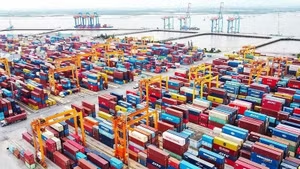
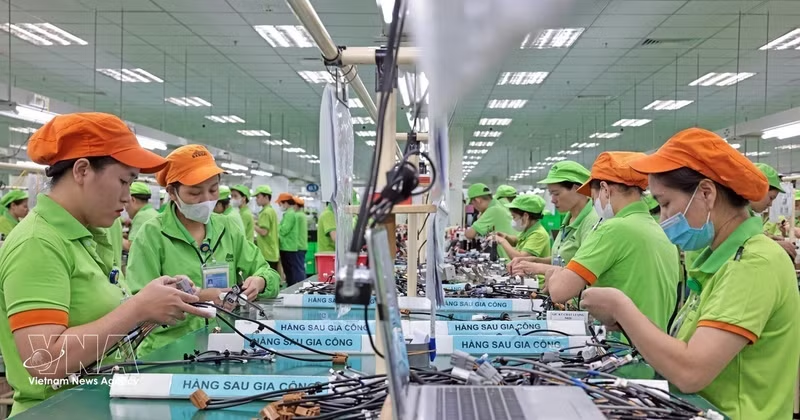
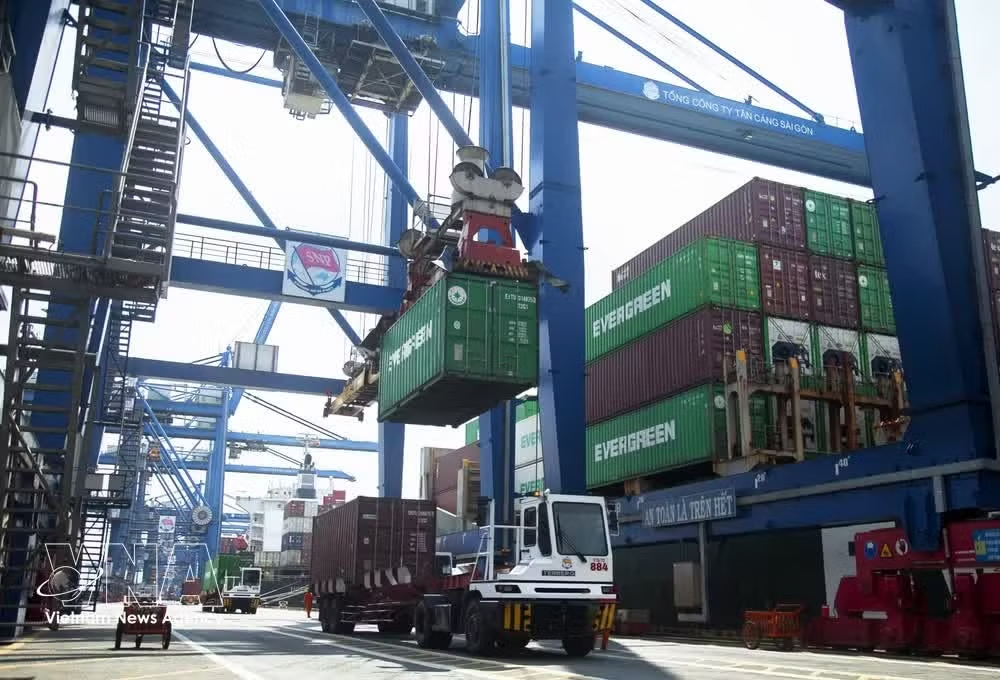
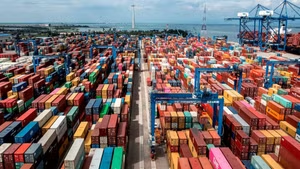
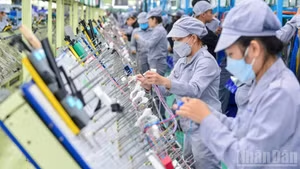
According to AMRO, the Vietnamese economy has demonstrated notable resilience despite prolonged global headwinds. Growth has been underpinned by strong export-oriented manufacturing, sustained foreign direct investment, and firm domestic demand.
Principal Economist of AMRO Anthony Tan stressed that after an exceptionally strong growth performance last year, Viet Nam’s economic growth is expected to soften to around 7.2% in 2026−2027, as the tailwinds from last year’s robust external demand gradually fade.
Domestic demand is expected to remain resilient, underpinned by continued policy support, including the extended value-added tax (VAT) rate reductions and planned public infrastructure spending, he added.
AMRO observed that inflation has remained contained so far, staying below the government’s operating ceiling of 4.5%. However, escalating tensions in the Middle East since February 28 have driven up global energy prices, prompting a sharp increase in retail fuel prices in Viet Nam in early March. Continued strong credit growth and rising public expenditures are also expected to add to price pressures.
Against this backdrop, AMRO stressed that Viet Nam’s near-term macroeconomic conditions require a cautious and well-coordinated policy to stabilise growth while containing emerging risks. It added that fiscal policy should prioritise targeted support for sectors most vulnerable to rising energy costs rather than broad-based expansion, with an emphasis on efficient spending that does not exacerbate macro-financial pressures.
According to AMRO, strong growth alongside emerging financial imbalances points to the need for an unwinding of accommodative monetary policy, while closely monitoring liquidity and foreign exchange conditions. Financial regulators and supervisors should exercise stronger macroprudential oversight particularly on real estate and household lending.
Over the longer term, the office said the policy agenda should focus on three inter-related priorities: accelerating domestic industrial upgrading by deepening FDI−local linkages and raising further domestic value-added content; strengthening policy frameworks in tandem with growing economic complexity, including modernizing monetary and financial policy frameworks, revenue mobilization, and public investment management; and advancing financial sector and capital market reforms to create credible domestic investment opportunities, improve capital allocation, and reduce incentives for speculative capital outflows.
AMRO is an international organisation established to support macroeconomic resilience and financial stability of the ASEAN+3 region, comprising members of the Association of Southeast Asia Nations (ASEAN) and China, Japan, and the Republic of Korea. AMRO’s mandate is to conduct macroeconomic surveillance, support regional financial arrangements, and provide technical assistance to the members. It also serves as a regional knowledge hub and provides support to ASEAN+3 financial cooperation.



![[Infographic] GRDP growth scenarios for 34 provinces and cities in fourth quarter of 2026](https://en-cdn.nhandan.vn/images/nyM650OGFWrOVWc-xajqN-rTZ68Rlmc1fiGJOhBRYHFSa4DhrHNDxEFdnz313Vk5dNJuxdkHglPA3rLeaPeiaUheNuCI723k2lNssd-YLJuKR58epWq7s21lV5WjM-HR2-Qpbi4MwAzqt9wRjL4WjGkfEz7RO9qhcwg8o8LQFK8/grdp-growth-scenarios-for-34-provinces-and-cities-in-q42026-anh-dai-dien.jpg.avif)