In an announcement issued on December 19, the researchers said the newly described species cover a broad spectrum of life, ranging from dinosaurs and mammals to fish, reptiles and insects. Notably, many of the discoveries did not result from recent field expeditions, but from the re-examination of specimens long preserved in museum collections and overlooked for decades.
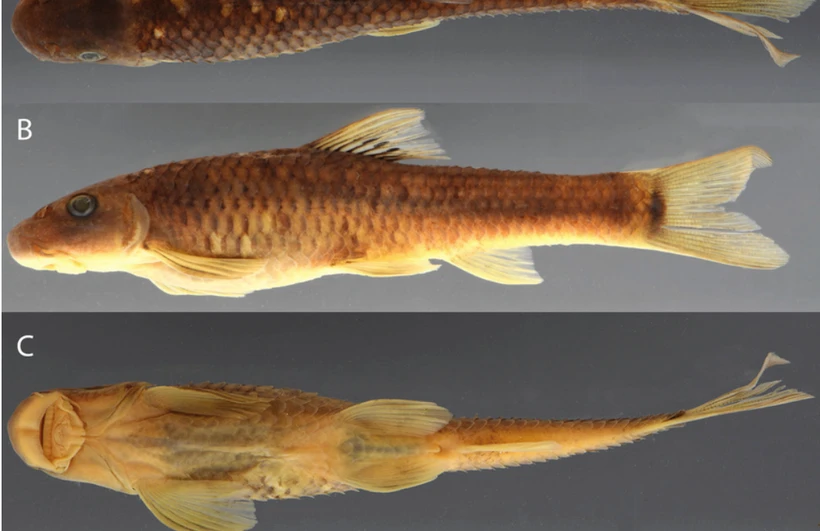
One of the most notable “hidden” finds is a small sucker-mouthed minnow endemic to Viet Nam’s highlands, discovered in the Lo River. Scientifically named Supradiscus varidiscus, the specimen was collected and shelved some 25 years ago but has only now been studied and formally described.
According to the museum’s ichthyologists, this represents the first recorded presence of the genus in Viet Nam, shedding new light on the biodiversity of the country’s river systems.
The list also includes another Vietnamese discovery, the bee species Habropoda pierwolae. The insect has attracted attention for its dense fur and rounded body, earning it the nickname “teddy bear” bee among scientists. The finding was reported in a study co-authored by Vietnamese researcher Ngat Thi Tran of the Institute of Ecology and Biological Resources.
Beyond Viet Nam, researchers identified a range of other remarkable species worldwide during the year, including Huadanosaurus sinensis, a feathered dinosaur that lived around 125 million years ago in present-day China; the long-nosed opossum mouse Marmosa chachapoya from remote mountainous regions of Peru; and ancient fruit flies whose mouthparts evolved into hardened jaws used to grip mates.
"Together, these discoveries highlight the remarkable richness of Earth's biodiversity and underscore the enduring value of natural history collections," said the Museum's Senior Vice President and Provost of Science Cheryl Hayashi. "Specimens preserved across generations continue to reveal new insights, reminding us how much there is still to learn about life on our planet."