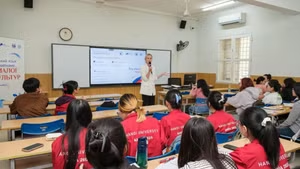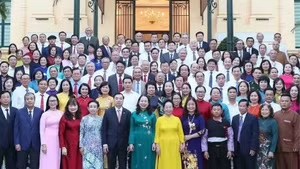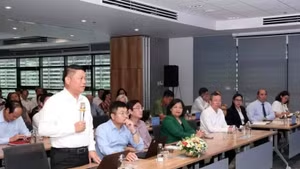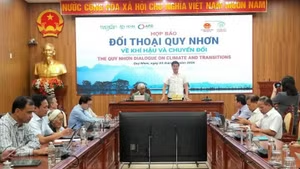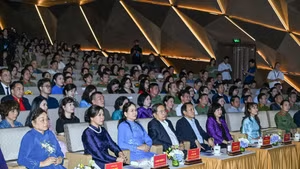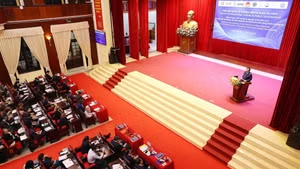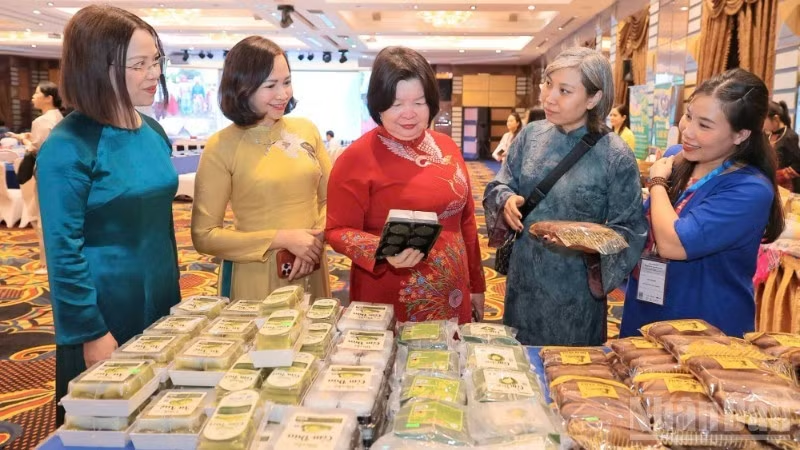
The conference attracted the participation of international organisations, experts, policymakers, and a large number of female cooperative leaders from Viet Nam and the region, focusing on discussing solutions to promote gender equality and enhance the role of women in sustainable agricultural development and the collective economy.
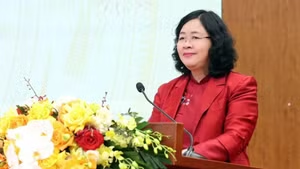
Speaking at the opening ceremony, Cao Xuan Thu Van, President of the Viet Nam Cooperative Alliance, emphasised that women are playing an increasingly important role in the development of the collective economy and sustainable agriculture. Many cooperatives managed by women have operated effectively while creating jobs, improving the incomes of female workers, and contributing to addressing social welfare issues in localities.
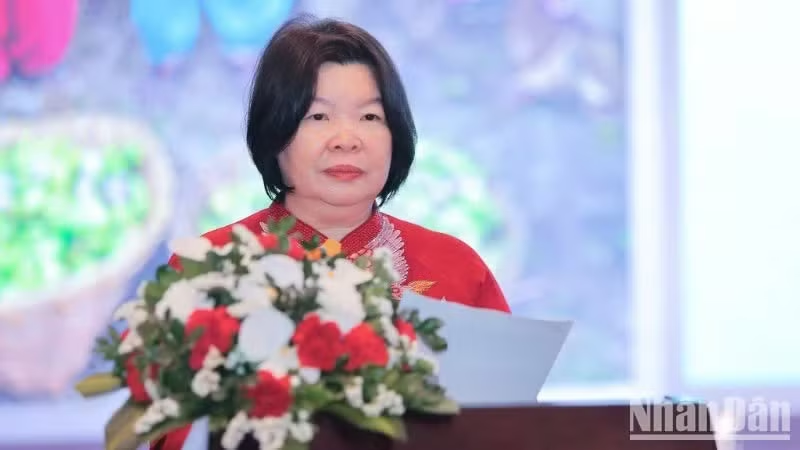
According to Cao Xuan Thu Van, the country currently has nearly 24,000 agricultural cooperatives, of which around 10% have women participating in management and administration. However, the proportion of women holding key leadership positions remains modest, accounting for only more than 25% of total cooperative leaders, most of whom hold deputy-level positions. Many female cooperative officials still face difficulties in management skills, access to finance, application of technology, and trade promotion.
Over recent years, the Viet Nam Cooperative Alliance has implemented many programmes to support women participating in the development of the collective economy, such as training and improving management capacity, trade promotion, support for access to preferential capital sources, and expansion of international cooperation to share experiences and replicate effective cooperative models.
Speaking at the conference, Chitose Arai, Chairperson of the ICA-AP Women’s Committee, stated that the United Nations’ declaration of 2026 as the International Year of Women Farmers is an important milestone recognising women’s persistent contributions to agricultural development and global food security.
Chitose Arai also said that in 2023, the ICA-AP Women’s Committee developed a gender equality strategy aimed at building gender-equal cooperatives in the Asia-Pacific region, based on four pillars: economic empowerment, social empowerment, strengthening knowledge and education, and promoting cooperative solidarity.
Citing data from the United Nations Food and Agriculture Organisation (FAO), Chitose Arai stated that women currently contribute up to 71% of the agricultural workforce in the Asia-Pacific region. Nevertheless, women still face many barriers in accessing land, technology, finance, and development resources.
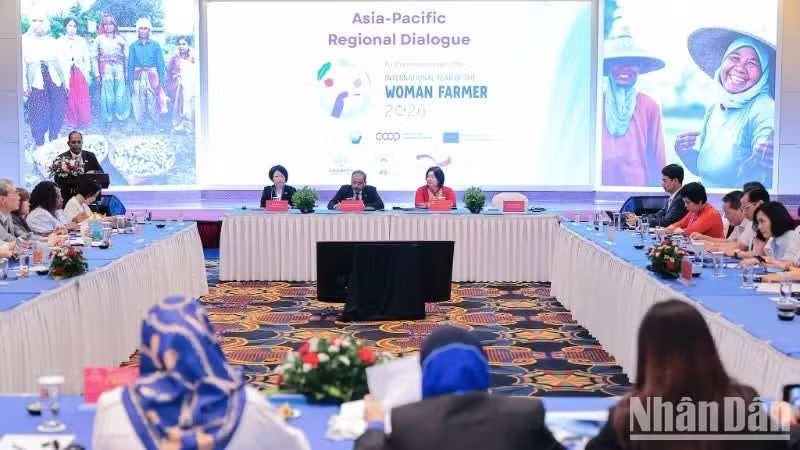
At the conference, Vinod Ahuja, FAO Representative in Viet Nam, noted that the global food system is facing many pressures from climate change, demographic fluctuations and the requirement to transition towards sustainable agriculture. In this context, women play a central role in ensuring food security and maintaining agricultural supply chains.
According to Vinod Ahuja, women not only participate strongly in the agricultural labour force but also play an important role throughout the entire value chain, from production and processing to market access. However, gender inequality and institutional gaps are still limiting the ability of women farmers and women-led cooperatives to fully realise their potential.
The FAO representative said that appropriate institutions and policy frameworks need to be developed to strengthen the role of women in the food system, while also promoting the application of digital technology, e-commerce, and innovation to help women and agricultural cooperatives expand markets, improve competitiveness, and adapt to climate change.
The Women’s Conference 2026 is expected to create further momentum for promoting gender equality and enhancing the position of women in agriculture and cooperatives in Viet Nam as well as the Asia-Pacific region, towards an inclusive and sustainable food system that leaves no one behind.