The WHO has affirmed that both electronic cigarettes and heated tobacco products contain nicotine – a highly addictive substance that seriously affects health, particularly brain development in children and adolescents.
In addition to increasing the risk of lung damage, cardiovascular diseases, and cancers, next-generation tobacco products also contribute to rising nicotine dependence among young people.
The theme introduced by WHO serves as a reminder that disguised promotional activities on digital platforms, social media, sponsorship programmes, and celebrity marketing campaigns are increasing the risk of nicotine addiction within communities.
In Viet Nam, tobacco harm prevention and control efforts have achieved many positive results in recent years.
The Law on Prevention and Control of Tobacco Harms, together with related policies, has created an important legal framework for building smoke-free environments; controlling advertising, promotions, and sponsorship by the tobacco industry; strengthening health warnings; supporting smoking cessation; raising public awareness; and protecting younger generations from the risk of nicotine addiction.
Policies on tobacco harm prevention and control are not merely healthcare measures, but also sustainable development policies and investments in human resources and the country’s future.
However, smoking rates among men in Viet Nam remain high, while the use of tobacco, e-cigarettes, and heated tobacco products is increasing among young people. Promotional activities on digital platforms are becoming increasingly sophisticated, and the enforcement of smoking bans in certain public places has yet to achieve full effectiveness.
Notably, tobacco and nicotine products are now appearing not only in the form of traditional cigarettes but are also being designed with appealing flavours, eye-catching packaging, and “high-tech”, “modern”, and “less harmful” images. They are even promoted through social media, celebrities, and communication channels that directly target adolescents.
In Viet Nam, smoking is estimated to cause around 103,000 deaths each year. The economic burden caused by tobacco amounts to hundreds of trillions of dong, including healthcare costs, lost labour productivity, premature deaths, and environmental costs.
Meanwhile, the rate of e-cigarette use among students is rising rapidly. In 2019, the rate of e-cigarette use among students aged 13-17 stood at 2.6%, but by 2023, a survey conducted in 11 provinces and cities showed that the figure had increased to 8.1%.
In response to World No Tobacco Day (May 31) and National No Tobacco Week (May 25-31), authorities at all levels, sectors, and every citizen need to raise awareness of the increasingly sophisticated strategies employed by global tobacco corporations to heighten addiction while still creating the impression of “advanced technology”.
Stronger actions are needed to protect adolescents and enforce measures aimed at preventing addiction and reducing demand by equipping the public, especially young people, with the knowledge, methods, and skills necessary to resist the temptations promoted by tobacco manufacturers.
The Ministry of Health is currently revising and submitting the amended Law on Prevention and Control of Tobacco Harms to the Government and the National Assembly in order to address existing legal gaps, make the law more responsive to practical realities, and safeguard the achievements Viet Nam has persistently built in tobacco harm prevention and control over many years.
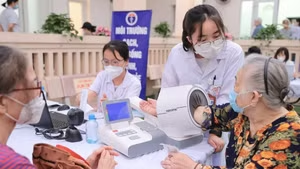
Speaking at the rally marking World No Tobacco Day (May 31) and National No Tobacco Week (May 25-31), held in Hai Phong, Dr Ha Anh Duc, Director of the Medical Services Administration under the Ministry of Health and Director of the Tobacco Harm Prevention Fund, stated that Viet Nam is facing an urgent need to maintain and strengthen tobacco control measures, particularly as new tobacco products such as e-cigarettes and heated tobacco products continue to expand.