As a result, this land in the heart of the Truong Son Mountains is gradually changing, bringing hope for a more prosperous life, no longer as precarious as its name suggests.
Protecting the forest as they protect their lifeline
Chenh Venh Village, Huong Phung Commune, lies quietly at the foot of Sa Mu Pass along the western branch of the Ho Chi Minh Trail. The village covers more than 1,500 hectares and is home to 130 households with 440 residents, all of whom are Bru-Van Kieu ethnic minority people. Surrounded by mountains, forests, rivers, and streams, the area retains a pristine landscape that is closely connected with the lives of local residents.
Village Elder Ho Van Chien, Head of the Community Forest Management Board of Chenh Venh Village, said that Chenh Venh Forest has existed for hundreds of years, since the Bru-Van Kieu people settled along the stream of the same name that runs through the forest. The forest has become a sacred place for the community. Local people depend on it for food, water, building materials, and valuable medicinal plants. As a result, they have always regarded protecting the forest as protecting their own lives.
Over time, however, parts of the forest were damaged and subjected to illegal exploitation. In response, in 2017, the People's Committee of Huong Hoa District (former) allocated nearly 700 hectares of forest to the Chenh Venh community for management. The Community Forest Management Board consists of seven members who conduct three regular patrols each month, along with many unscheduled inspections. Forest protection has been maintained collectively by all households in the village for nearly 10 years.
Thanks to its diverse primary ecosystem and strict protection measures, Chenh Venh Forest became one of the first two community forests in Viet Nam to receive international Forest Stewardship Council (FSC) certification at the end of 2021. The forest is home to many large-diameter timber trees, while numerous rare species listed in the Red Book have returned to live there.
Today, Chenh Venh Forest attracts a growing number of visitors from both within and outside the province who come to explore and experience its natural beauty. Ho Van Chien also volunteers as a guide for visiting groups.
“Forest protection remains challenging because our workforce is limited, the terrain is difficult, and people need time to change old habits and ways of thinking. However, everyone understands that forest protection means protecting the environment for themselves and future generations, so we remain determined to overcome difficulties and work together,” he said.
Forest protection has also provided a stable source of income for local residents. Ho Van La Hai, Head of Chenh Venh Village, said that in 2025, the village received more than 340 million VND from forest environmental service payments and programmes supporting socio-economic development in ethnic minority-inhabited areas. Part of the funding was distributed to households, while the remainder was used to finance forest patrol and protection activities.
Although the amount of money received by each household is modest, residents are pleased and increasingly committed to protecting the forest. As a result, the province has assigned the village an additional 200 hectares of natural forest for protection. The total contracted forest area managed by the village has now reached around 800 hectares.
Creating new livelihoods through community-based tourism
After the community forest obtained FSC certification, Chenh Venh Tourism Village was established under the PROSPER project, funded by the European Union and the Netherlands–Viet Nam Medical Committee. The model aims to develop eco-tourism in association with sustainable forest management.
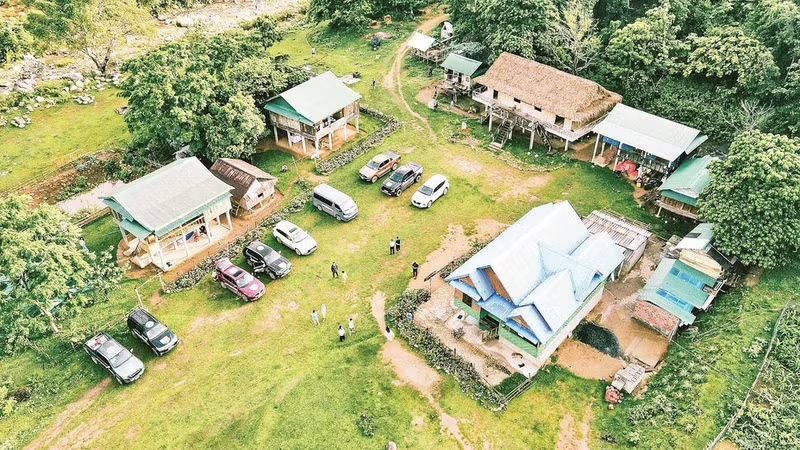
Residents subsequently began converting traditional stilt houses into homestays and opening access routes to waterfalls and attractions on the summit of Sa Mu Pass. Chenh Venh Eco-tourism Village became the first ethnic minority community tourism model in the locality in April 2022.
After graduating from Hue Medical College, Ho Thi Thiet, born in 2002, chose not to live in the city but returned home to establish a homestay and develop community-based tourism. She said her decision was driven by a belief that local people could escape poverty on the land where they were born. In her view, the area's natural beauty and unique traditional culture provide a strong foundation for tourism development and stable incomes.
To develop tourism more professionally, Thiet encouraged households in the village to participate in training courses organised by projects and organisations. She also continued to gain practical experience and skills to improve the quality of her services. Her family’s homestay currently consists of three large stilt houses capable of accommodating between 40 and 50 guests. The family also serves traditional dishes and sells local products to visitors.
Chenh Venh Eco-tourism Village has been the first ethnic minority community tourism model in the locality since April 2022.
Encouraged by the success of community-based tourism, many other households have also renovated their stilt houses, built accommodation facilities, and organised experience activities such as fishing, harvesting agricultural products, and introducing visitors to traditional cuisine and clothing.
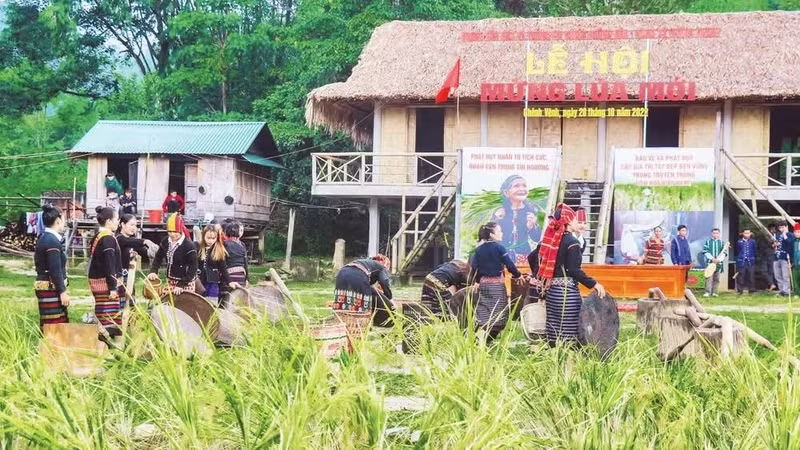
Many local agricultural products, including black glutinous rice, wild bamboo shoots, ginger, turmeric, chilli, and various fruits, have become popular products for visitors. Notably, the village's nearly 140 hectares of arabica coffee are helping to build the brand of Quang Tri's high-quality cold-climate coffee. Depending on the time of year, visitors can also experience traditional festivals of the Bru-Van Kieu people such as the new rice celebration festival, the Heaven Worship Ceremony, and the gong festival; enjoy Oat, Ta Oai, Cha Chap, Ka Loi, and A Den folk songs; and learn about weaving and traditional musical instrument making.
Despite its great potential, community-based tourism in Chenh Venh still faces many challenges. Infrastructure remains limited, access roads to the village are difficult, accommodation and catering services are largely spontaneous in nature, and environmental sanitation and parking facilities have not met demand.
Pham Huy Van, Chairman of the People's Committee of Huong Phung Commune, said that the locality considers eco-tourism as one of its sustainable development directions and an important means of poverty reduction in the border area. The commune plans to mobilise resources to upgrade infrastructure and transport systems connecting tourism destinations, develop cooperation programmes with the tourism sector, and strengthen the promotion of images and destinations of the locality through social media.
The journey towards developing community-based tourism in Chenh Venh will undoubtedly not be easy. However, the Bru-Van Kieu people place their faith in their hard-working hands and believe that protecting the forest and preserving traditional culture will be the key to escaping poverty and achieving prosperity. In doing so, the land beneath Sa Mu Pass will take on a brighter new appearance.