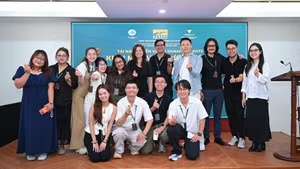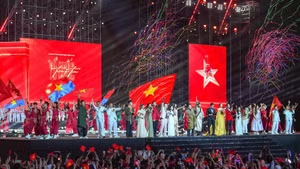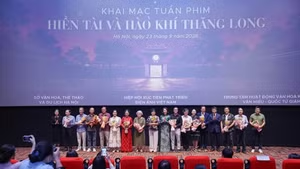
Ho Chi Minh City’s film industry has made remarkable progress, steadily establishing itself as a key pillar of the city’s cultural industries ecosystem. In particular, the second Ho Chi Minh City International Film Festival (HIFF) 2026, which concluded in June, left a strong impression, bringing fresh energy and groundbreaking opportunities for professional filmmakers.
According to Dr Nguyen Thi Thu Ha, former Deputy Director of the Cinema Department, the second edition of the festival was a success, with growing public appeal, an increasing number of international entries and steadily improving film quality.
Earlier, the inaugural edition was held in 2024 with a high professional standard, marking a significant milestone in the city’s integration into the international film industry.
UNESCO’s official recognition of Ho Chi Minh City as a Creative City of Film within the Creative Cities Network has not only affirmed the city’s standing but also given it long-term responsibilities and a development roadmap for its film sector. The city has committed to six key initiatives, with the HIFF serving as one of its flagship international programmes.
According to leaders of the Ho Chi Minh City Department of Culture and Sports, the city has been identified as the nation’s leading hub for the creative content industry, encompassing film, television, gaming and digital media.
The city has proactively shifted from an administrative management mindset to one focused on cultural development governance, viewing culture as an intrinsic resource and a driver of growth. As a result, it has concentrated on removing long-standing bottlenecks while gradually investing in a modern network of cultural and sporting facilities.
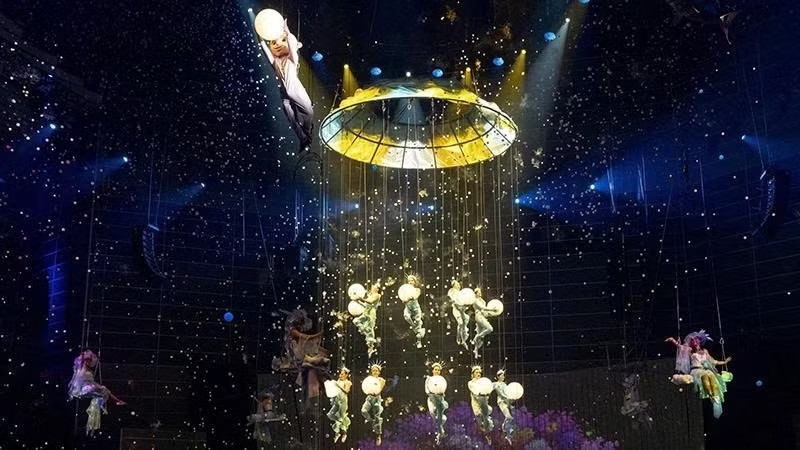
Most recently, the Phu Tho Circus and Multi-purpose Performance Theatre was inaugurated with Dreamscape Show, the largest circus-puppetry production ever staged in the city. It stands as a testament to the city’s sustained efforts to invest in cultural infrastructure befitting a future megacity.
Alongside infrastructure development, the city has also prioritised building internationally recognised cultural events, thereby gradually shaping a cultural industries market, attracting artists, producers and creative enterprises from both Viet Nam and abroad, and transforming culture into a genuine economic sector.
This approach reflects a new vision: cultural development must be closely integrated with the creative economy, tourism, services and digital transformation, while creating open spaces in which communities can participate in cultural creation, enjoyment and dialogue.
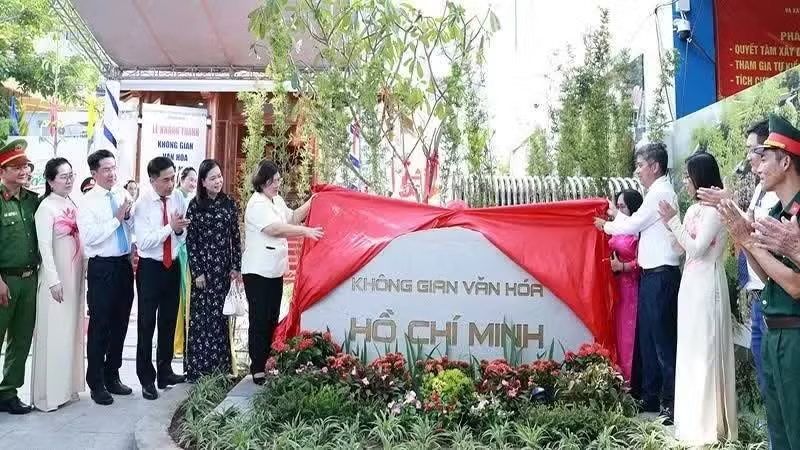
Tran The Thuan, Director of the Ho Chi Minh City Department of Culture and Sports, said that in addition to investing in physical infrastructure, the city has placed particular emphasis on soft infrastructure, including the development of Ho Chi Minh Cultural Spaces, the preservation and promotion of the heritage of the Sai Gon-Cho Lon area, the expansion of community cultural centres, and the construction of digital libraries and digital museums.
According to Dr Nguyen Thi Hau, Secretary General of the Ho Chi Minh City Historical Science Association, after five decades of development, the city is entering a new phase in which its core competitive advantage no longer lies in its physical scale or land resources, but in its ability to interpret and unlock the value of intangible cultural assets.
She said transforming heritage into economic assets does not mean commercialising or distorting historical memory; rather, it is about bringing those memories back to life so that they become seed capital capable of stimulating future economic growth.
As Ho Chi Minh City implements the Politburo’s Resolution 80 on the development of Vietnamese culture, the city’s culture and sports sector faces both major opportunities and pressing demands for innovation.
The city has been translating the spirit of the Resolution into action through a wide-ranging strategy: turning culture into the soft power of a creative city and establishing itself as a cultural exchange hub for Southeast Asia, thereby helping to shape a new identity and standing in the era of sustainable development.
According to Thuan, the effective implementation of Resolution 80 requires breakthroughs in both institutional frameworks and development thinking. The city regards investment in culture as an investment in long-term growth and sustainable development.
Cultural and sporting institutions are being reoriented to operate under autonomous, commissioned and public-private partnership models, enabling them to become centres for content production, talent development and cultural tourism, rather than merely venues for isolated performances. At the same time, the city is building a cultural industries ecosystem with a distinctive local identity.
As Viet Nam’s largest consumer market with a vibrant creative community and a strong network of universities and technology enterprises, Ho Chi Minh City is fostering stronger links between film, music, design, digital advertising, gaming, fashion, cuisine, the night-time economy and tourism.
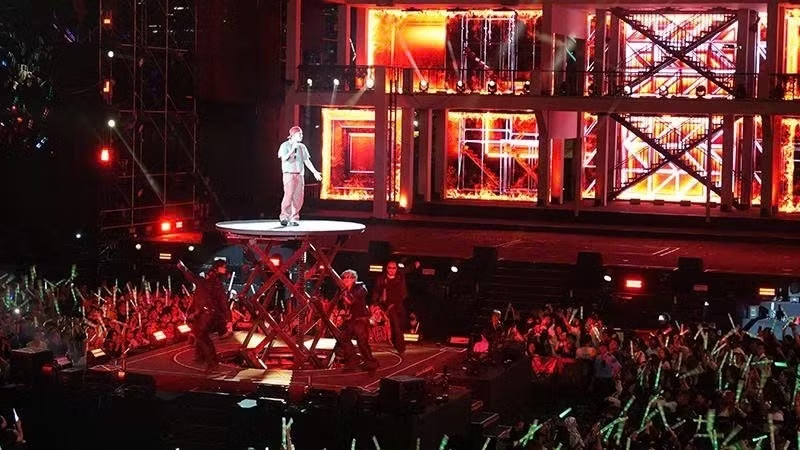
Flagship cultural events and spaces, including the Ho Chi Minh City International Film Festival, the HOZO International Music Festival, Nguyen Van Binh Book Street, the Ao Dai Festival, pedestrian streets, museums and historical sites, are being developed along integrated value chains, creating a “creative economy factory” that not only promotes the city’s image but also generates revenue, creates employment and makes an increasingly significant contribution to the city’s economic output.
Thuan stressed that, in the current context, the city is stepping up efforts to preserve and revitalise heritage values associated with community livelihoods, ensuring that heritage truly remains alive in contemporary life.
At the same time, it is placing greater emphasis on cultural diplomacy by proactively cooperating with cities within UNESCO’s Creative Cities Network, bringing the city’s arts to the international stage and attracting major production companies to Viet Nam, while gradually positioning Ho Chi Minh City as the cultural events capital of Southeast Asia.