When cultural values are fully recognised and channelled in the right direction, they become a vital resource driving socio-economic development. With its rich historical depth, abundant heritage system, and position as a dynamic port city, Hai Phong has sought to transform cultural resources and heritage into engines of growth.
Implementing the Party Central Committee’s resolutions and the action programme for the 14th National Party Congress Resolution, Hai Phong has placed particular emphasis on the cultural sector, especially the cultural industry.
For the 2025–2030 term, the city Party Committee has identified building Hai Phong into a regional and international centre for marine tourism, culture, and heritage—with distinctive tourism products linked to cultural-historical identity and marine island resources—as one of its strategic development breakthroughs.
Hai Phong possesses significant potential and advantages for developing the cultural industry, with a rich, diverse, and distinctive system of tangible and intangible cultural heritage.
Nguyen Thanh Trung, Director of the city Department of Culture, Sports and Tourism
According to Nguyen Thanh Trung, Director of the city Department of Culture, Sports and Tourism, Hai Phong possesses significant potential and advantages for developing the cultural industry, with a rich, diverse, and distinctive system of tangible and intangible cultural heritage.
At present, the city has nearly 4,000 historical and cultural relics, including two UNESCO-recognised World Heritage sites, nine national special relics and relic clusters, together with thousands of national and city-level relics, and countless intangible cultural festivals. These cultural assets form Hai Phong’s unique identity and serve as an important resource to promote tourism and the cultural industry.
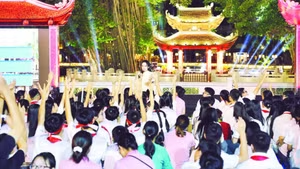
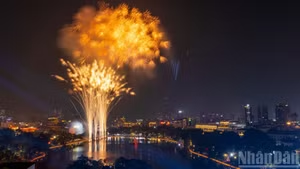
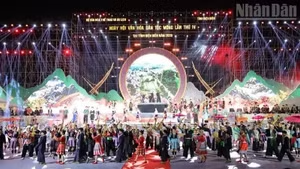
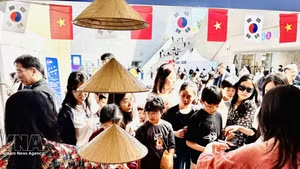
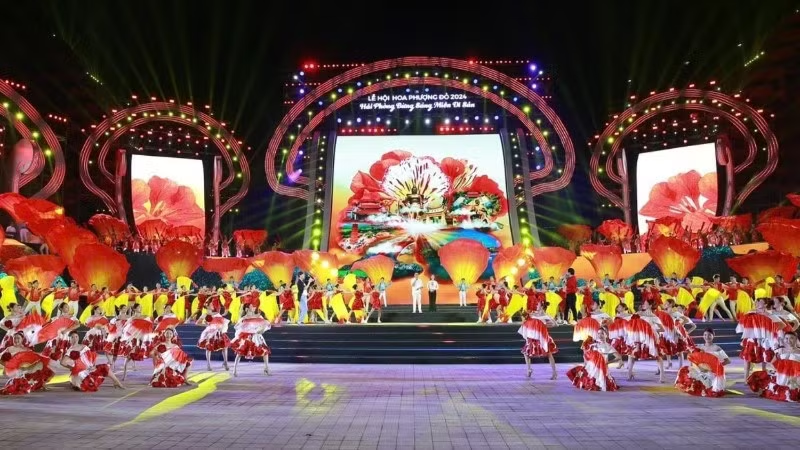
In recent years, Hai Phong has concentrated on developing the cultural industry by organising a series of professional events, festivals, and cultural activities that harness the economic value of heritage. Notable among them are the Do Son buffalo-fighting festival, the Hoa Phuong Do (Red Flamboyant Flower) Festival, and weekend street art events, which create lively cultural spaces attracting millions of domestic and international visitors.
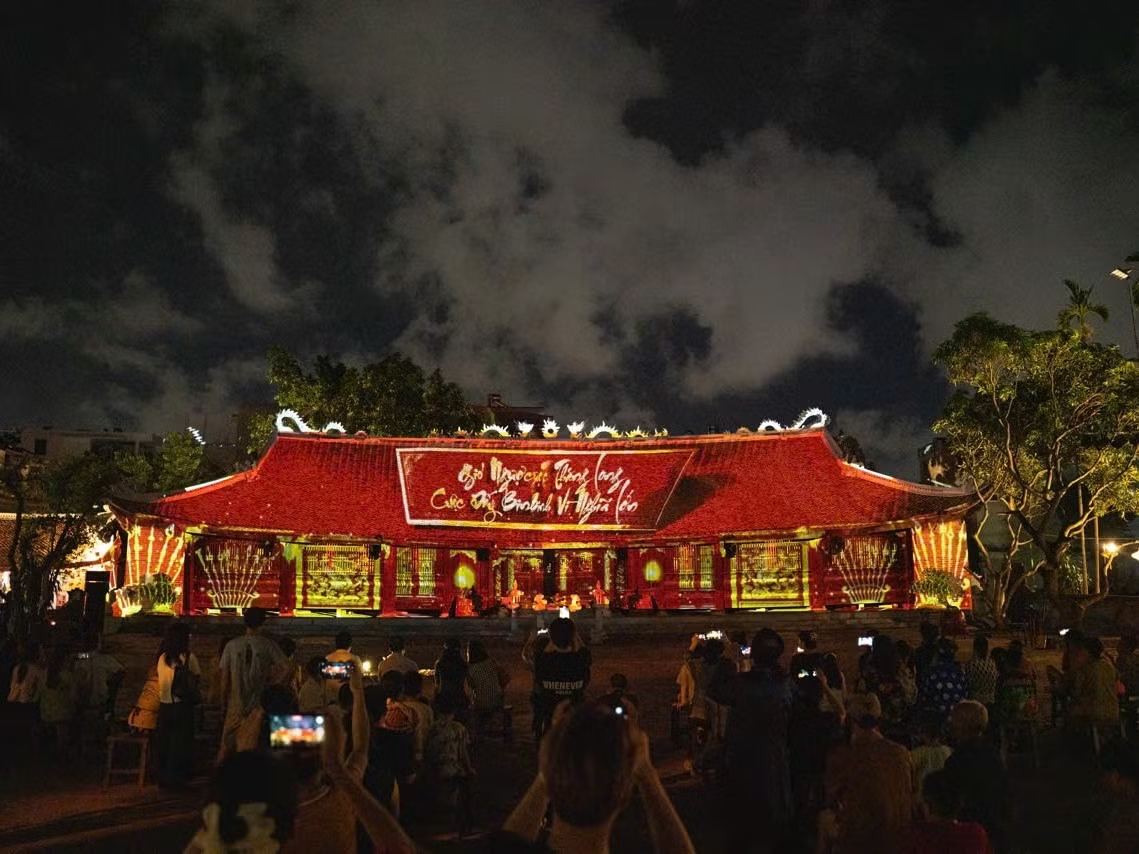
Recently, the city introduced a night tour at Hang Kenh Temple every Wednesday, Saturday, and Sunday. During the tour, visitors can enjoy a 3D mapping show alongside folk art genres such as water puppetry, courtyard singing, and culinary cultural experiences.
This marks Hai Phong’s first night-time tourism product applying modern digital technology to heritage spaces, becoming a highlight in the exploitation of cultural heritage value.
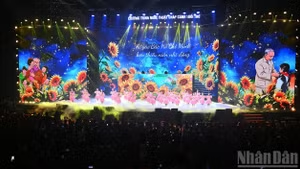
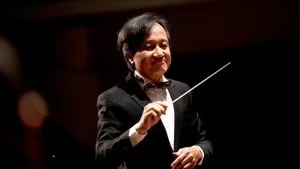
The Hoa Phuong Theatre was also recently inaugurated, hosting the New Year Concert 2026 at its opening ceremony. The theatre not only provides new venues for large-scale local art activities but also demonstrates the city’s determination to develop modern cultural infrastructure.
In 2025 Hai Phong welcomed around 14.5 million visitors, including approximately 1.5 million international tourists, with estimated tourism revenue exceeding 15 trillion VND.
According to the leadership of the city Department of Culture, Sports and Tourism, in 2025 Hai Phong welcomed around 14.5 million visitors, including approximately 1.5 million international tourists, with estimated tourism revenue exceeding 15 trillion VND. The city aims to receive 16 million visitors in 2026 and 25 million by 2030.
Hai Phong is advancing the “Hai Phong—City of Music” scheme, with the ambition of joining UNESCO’s Creative Cities Network. This represents an important step towards realising the aspiration to become Viet Nam’s and the region’s city of music.
The city also focuses on developing the cultural industry through creativity, applying technology to heritage spaces, building distinctive products, forming chains of art performance venues and cultural experience destinations, and developing an entertainment industry linked to marine island landscapes, heritage, culinary culture, and people. The goal is to make the cultural industry one of the key drivers of rapid and sustainable development for Hai Phong in the new era.