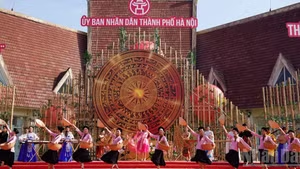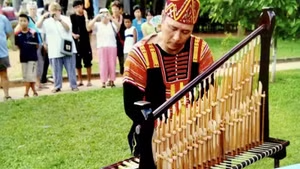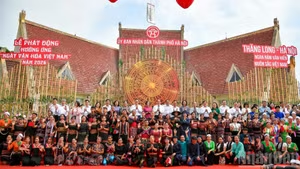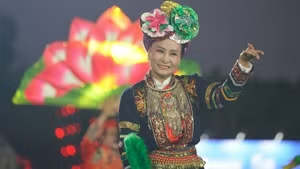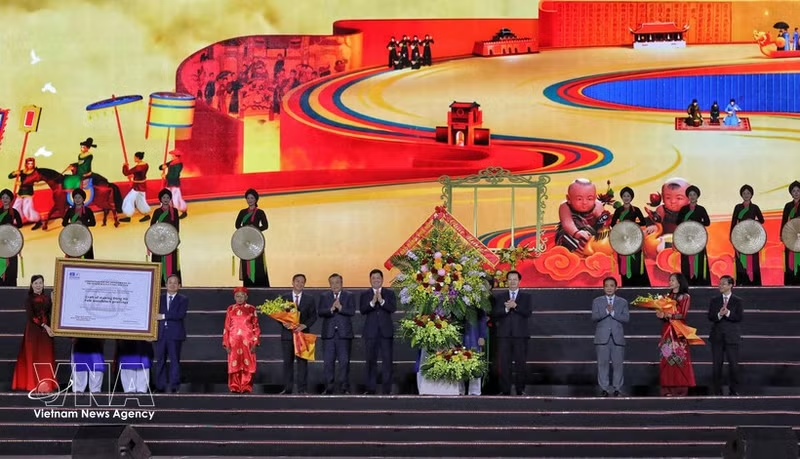
The event also marked the opening of the “Coming to the Bac Ninh Heritage Land ” Festival 2026.
Among attendees were Tran Sy Thanh, Politburo member, Secretary of the Party Central Committee and Chairman of its Commission for Inspection; Deputy Prime Minister Mai Van Chinh; representatives of central ministries and agencies; delegates from UNESCO, foreign embassies, the Viet Nam Buddhist Sangha, and a large number of residents and visitors.
In his remarks, Chairman of the Bac Ninh provincial People’s Committee Pham Hoang Son highlighted Bac Ninh–Kinh Bac as a land rich in historical depth and cultural heritage. Over centuries, it has nurtured a diverse cultural legacy integral to Viet Nam’s identity. While Quan ho (love duet) folk singing symbolises the soul of the region, Dong Ho folk folk woodblock printings stands as a unique artistic heritage reflecting Vietnamese creativity and aesthetics.
The UNESCO inscription of the craft of making Dong Ho folk folk woodblock printings not only affirms its historical, cultural, and artistic values but also recognises the enduring efforts of artisans and local communities. It serves as a reminder of the shared international responsibility to safeguard and revitalise endangered heritage amid modern challenges.
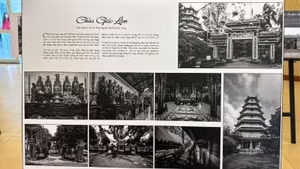
The recognition of the Yen Tu–Vinh Nghiem–Con Son–Kiep Bac complex marks another milestone. Within this heritage cluster, Bac Ninh is home to two prominent sites - Vinh Nghiem Pagoda and Bo Da Pagoda - both closely associated with the Truc Lam Zen sect of the Tran Dynasty, a distinctly Vietnamese Buddhist tradition embodying harmony and engagement with society. The designation opens new opportunities for sustainable conservation and for promoting Bac Ninh’s cultural image globally.
To effectively implement the province’s action programme on heritage preservation, Bac Ninh will continue refining support policies for artisans and craft communities, strengthen vocational training and intergenerational transmission, integrate heritage education into schools, and promote systematic inventorying and digitalisation of cultural assets. Efforts will also focus on raising public awareness and diversifying heritage-based products to expand markets and enhance global recognition.
The province reaffirmed its commitment to closely coordinating with neighbouring Quang Ninh and Hai Phong to ensure unified management and maintain the integrity and authenticity of the heritage complex, and balance conservation with sustainable tourism development.
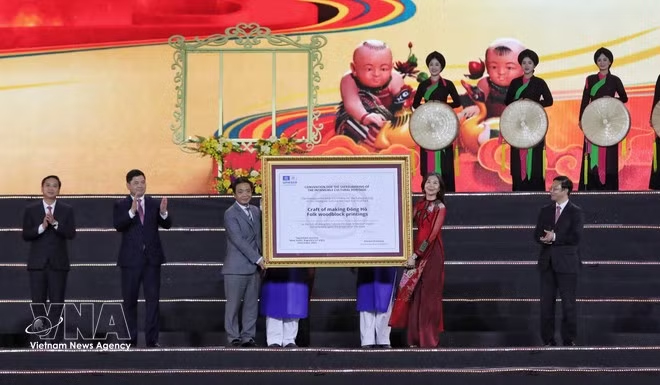
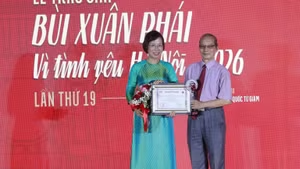
At the ceremony, UN Resident Coordinator in Viet Nam Pauline Tamesis presented UNESCO’s certificate of inscription to representatives of the Ministry of Culture, Sports and Tourism and Bac Ninh authorities.
Congratulating the province, she noted that Kinh Bac has long been regarded as a cradle of Vietnamese culture, home to rich and diverse heritage preserved through generations. The dual recognition by UNESCO underscores the global significance of these cultural values and highlights the importance of safeguarding and revitalising heritage in contemporary life. She reaffirmed that the United Nations and UNESCO will continue to support Viet Nam’s efforts in heritage preservation, community engagement, and sustainable development.