Currently, the global integration trend and strong development of information technology have been directly impacting on the development process of our culture. It is therefore essential for us to identify challenges and development trends of the Vietnamese culture in the new period as well as map out appropriate approaches.
In the meantime, peace, friendship, co-operation and development remain a prevailing trend in the world. After nearly 30 years of implementation of the renewal process, our country has also made enormous achievements. From a cultural perspective, we can see favourable conditions and opportunities.
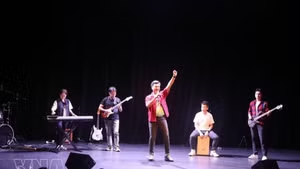
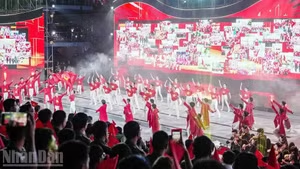
The trend of peace, co-operation, and development; globalisation, and scientific and technological revolution have helped accelerate the formulation process of the information society and knowledge economy, as well as created favorable conditions for cultural exchange, integration and development. Cultural and artistic activities are gradually being modernised and rapidly spread on a global scale, not only in urban but also remote and far-flung areas. The socio-economic development has also created a driving force for the cultural development.
However, the process of building and developing culture in our country is also facing risks and challenges. With the process of globalisation, unselectively receptions of foreign cultures as well as commercialisation trends in cultural activities will cause negative impacts on the national culture.
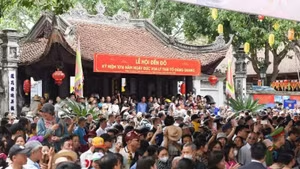
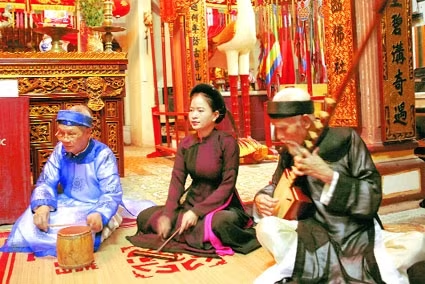
The preservation and construction of an advanced Vietnamese culture imbued with national identity are considered tasks which have been given due attention by our Party and State. Great efforts should be made to preserve and develop both tangible and intangible cultural values. It is needed to encourage organisations and individuals to actively participate in art and cultural activities, as well as protect cultural heritages and historical relics.
In the coming years, the Vietnam culture will be faced with many opportunities and pitfalls as it makes the transition from a traditional to a more modern society. However, culture is not an instinct. It was, is, and always will be greatly influenced by State guidelines, policies, laws and management. Therefore, the role of the State needs to be strengthened in order to make full use of favourable opportunities, overcome challenges to adjust the movement and the trend of development in the direction of a more advanced culture imbued with national identity.