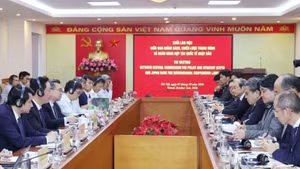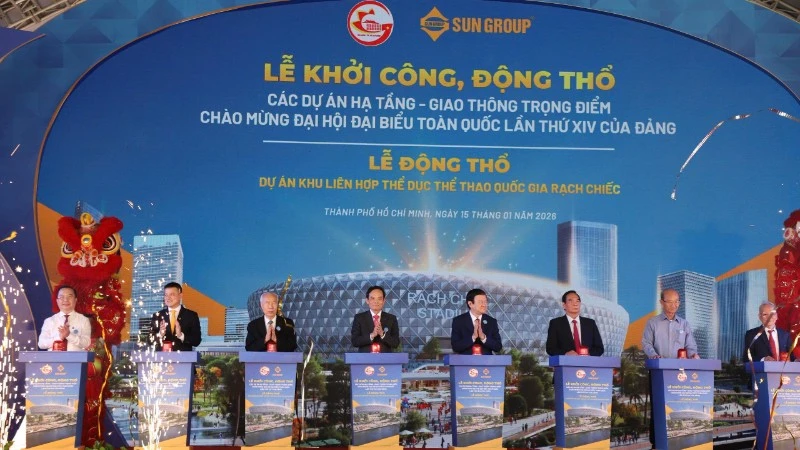
Attending the groundbreaking ceremony for the Rach Chiec National Sports Complex were Secretary of the Party Central Committee and Secretary of the Ho Chi Minh City Party Committee Tran Luu Quang. Former Party and State leaders also attended the groundbreaking ceremony for the projects.
These are major infrastructure projects of strategic significance, contributing to the completion of the city’s transport network, promoting socio-cultural development, and helping realise the vision of Ho Chi Minh City as a modern, civilised, and sustainable metropolis.
In particular, the commencement of construction of Metro Line No. 2 (Ben Thanh–Tham Luong), invested in by the city’s Urban Railway Management Board, holds strategic importance in forming the city’s urban railway network, gradually shaping multi-centre urban and economic development spaces. Urban railways are expected to serve as the backbone in connectivity and development leadership.
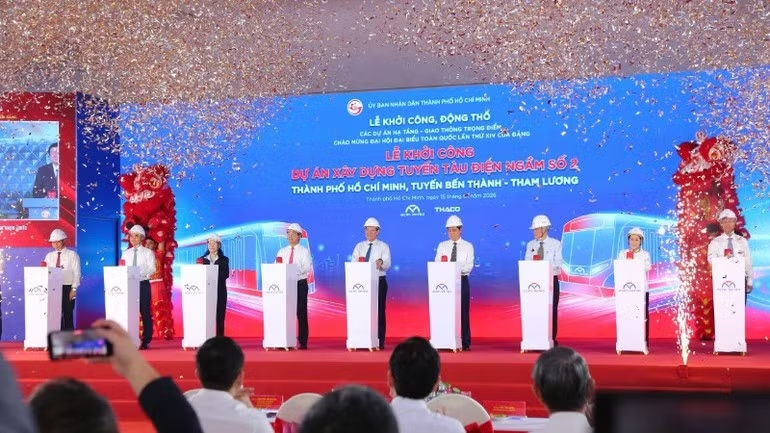
The EPC contractor consortium, led by Thaco–Truong Hai Group Joint Stock Company, serves as the main contractor for the project, bringing strong project management capacity and practical experience in implementing major infrastructure works.
In Phase 1, the Ben Thanh–Tham Luong section has a total length of about 11.3 kilometres, including 9.3 kilometres of underground track and two kilometres of elevated track, with 10 underground stations, one elevated station, and one depot. The project is funded by the city’s budget.
During the initial operation phase, the line will use three-car trainsets, each car measuring 22 metres in length, with a maximum operating speed of 80–110 kilometres per hour. At peak hours, the line’s capacity can reach up to 14,418 passengers per hour per direction. Upon full completion, six-car trainsets will be deployed, increasing capacity to 40,553 passengers per hour per direction to meet growing urban transport demand.
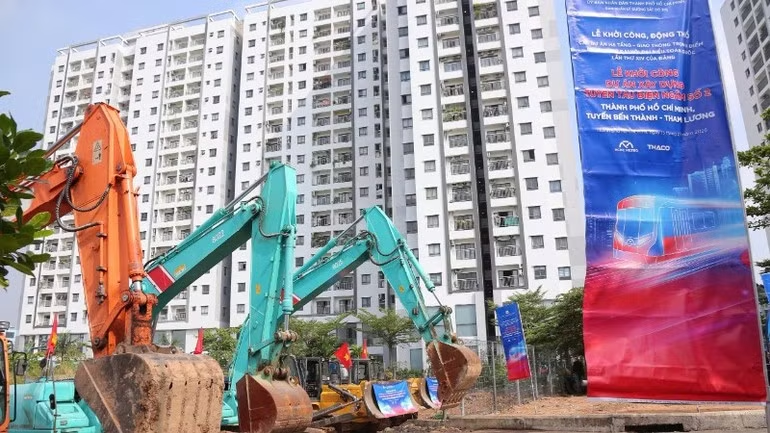
It is also the first project implemented under special and breakthrough mechanisms and policies for urban railway development, affirming the sound policy of strong decentralisation and delegation of authority by the Central Government, the National Assembly, and the Government, granting the city greater autonomy coupled with clear accountability.
Another major project among the four is the Rach Chiec National Sports Complex, with a total investment of 600 billion VND, implemented by Sun Vung Tau Co., Ltd. under Sun Group through a public–private partnership (PPP) model. The project covers an area of more than 186.78 hectares in Binh Trung Ward, featuring a central stadium with a seating capacity of up to 70,000.
Closely linked to Ho Chi Minh City’s strategy for developing cultural industries, the Rach Chiec complex, once completed, will become the city’s largest stadium to date and rank among the leading sports facilities in Southeast Asia, approaching iconic stadiums worldwide.
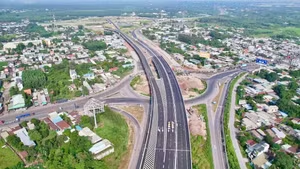
Also launched were the Phu My 2 Bridge and Can Gio Bridge projects in the southern part of the city, both implemented under the PPP model, with total investments of approximately 23.186 trillion VND and over 13.2 trillion VND, respectively. These two strategically significant transport projects aim to complete the city’s external and inter-regional transport network. Both bridges are invested in by Masterise Group and are scheduled for completion in 2029.
Phu My 2 Bridge, with a length of about 6.3 kilometres and eight traffic lanes, will connect southern Ho Chi Minh City with Dai Phuoc Commune (Dong Nai Province), creating a new transport axis towards Long Thanh International Airport. Once operational, it will help reduce pressure on the existing Phu My Bridge, National Highway 51, and the Ho Chi Minh City–Long Thanh–Dau Giay Expressway, thereby lowering logistics costs for the entire southern key economic region.
Can Gio Bridge, spanning the Soai Rap River with six lanes and a total length of over 6 kilometres, will replace the Binh Khanh ferry, ending the long-standing “transport island” situation of Can Gio District. The bridge will open up new development space towards the sea while ensuring harmony between socio-economic development and the conservation of the Can Gio Mangrove Biosphere Reserve.
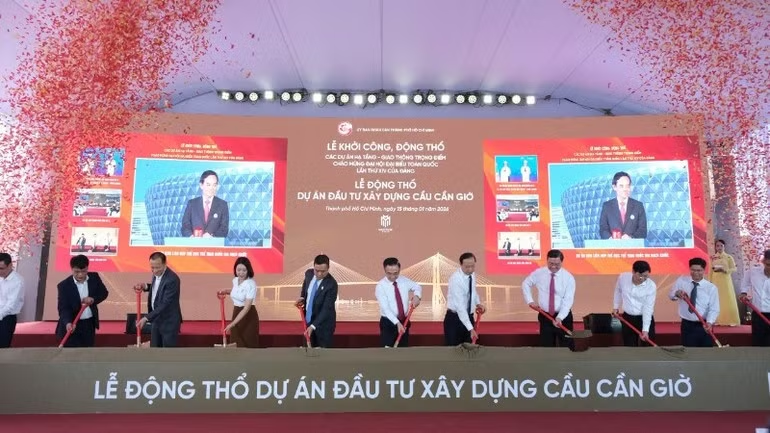
Speaking at the ceremony, Permanent Vice Chairman of the Ho Chi Minh City People’s Committee Nguyen Loc Ha stated that the simultaneous implementation of public investment projects and PPP projects clearly demonstrates the city’s innovative development mindset, in line with the Politburo’s Resolution No. 68-NQ/TW on private sector development.
In the city’s overall development, the private economic sector is increasingly affirming its important role in participating in the creation of major infrastructure works, sharing resources with the State, improving investment efficiency, and laying a solid foundation for rapid and sustainable economic growth.
![[Infographic] GRDP growth scenarios for 34 provinces and cities in fourth quarter of 2026](https://en-cdn.nhandan.vn/images/nyM650OGFWrOVWc-xajqN-rTZ68Rlmc1fiGJOhBRYHFSa4DhrHNDxEFdnz313Vk5dNJuxdkHglPA3rLeaPeiaUheNuCI723k2lNssd-YLJuKR58epWq7s21lV5WjM-HR2-Qpbi4MwAzqt9wRjL4WjGkfEz7RO9qhcwg8o8LQFK8/grdp-growth-scenarios-for-34-provinces-and-cities-in-q42026-anh-dai-dien.jpg.avif)