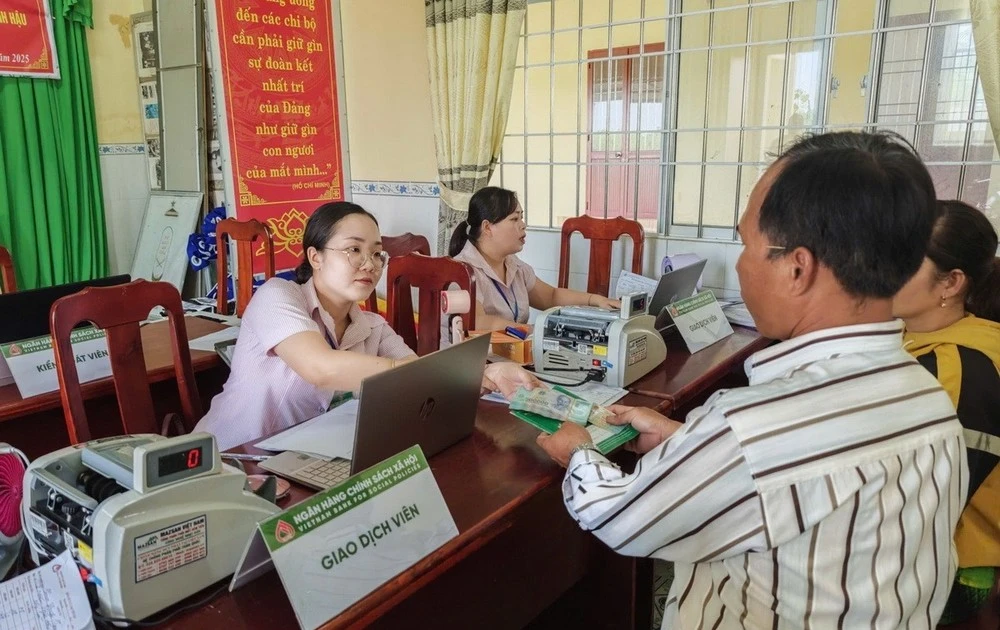
Speaking at the Government’s regular press conference on December 6, Ha cited banks’ statistics as saying that around 250,000 borrowers with outstanding loans of nearly 60 trillion VND (2.27 billion USD) have been affected by natural disasters.
Following directions from the Government and the Prime Minister, the central bank has implemented timely and dedicated measures to support recovery, including restructuring loan repayment terms for affected borrowers, reducing lending rates by 0.5–2% in 3–6 months for around 24,000 customers with loans totalling 14 trillion VND.
In addition, a 70 trillion VND credit package to help restore production and business has been carried out. To date, banks have disbursed 1.5 trillion VND to about 6,500 customers.
On December 4, the Prime Minister issued Decision No. 2654/QD-TTg, requiring a 2% interest rate cut for the three final months of 2025 for about 3 million storm-affected borrowers in 22 provinces and cities, with support covering more than 1.1 trillion VND in interest.
For damage caused by Typhoon Kalmaegi in Gia Lai, Dak Lak, Lam Dong, and Khanh Hoa last month, the Viet Nam Bank for Social Policies is finalising procedures to propose a similar 2% interest rate reduction for nearly 1 million customers, with an estimated support amount of nearly 300 billion VND, Ha shared.

Regarding the use of the state and central budgets to support localities hit by storms and floods, Deputy Minister of Finance Nguyen Duc Chi said many northern and south-central localities have suffered consecutive natural disasters. The ministry has assessed and reported to the Government the significant impacts of these disasters on the GRDP growth of the affected localities, as well as on national GDP growth in the fourth quarter and the whole year.
Facing this situation, the Prime Minister has decided to allocate more than 6.8 trillion VND from the 2025 central budget to support the affected localities, ensuring urgent funding to meet the immediate needs in disaster and flood recovery.
The Deputy Minister noted that policies relating to taxes, fees, and financial support for disaster-hit organisations, businesses and residents are clearly regulated. Under the Law on Tax Administration, organisations, individuals and enterprises suffering force majeure losses caused by storms and floods are eligible for tax payment extensions and deferrals. The Law on Corporate Income Tax also allows enterprises to include force majeure disaster losses in their reasonable and allowable expenses.
The ministry will continue close coordination with the Ministry of Agriculture and Environment, disaster-hit localities, and relevant ministries and sectors to develop urgent financial solutions for disaster recovery, while also considering longer-term financial measures to restore business infrastructure, strengthen resilience to future natural disasters, and reduce losses for residents and enterprises, Chi stressed.