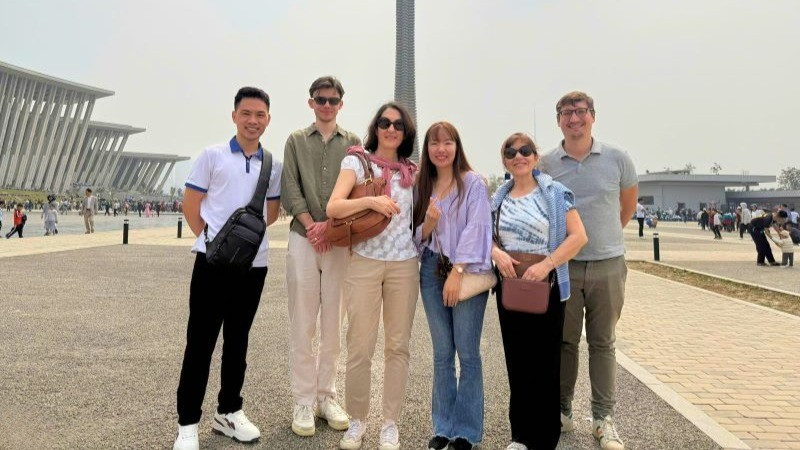
Taking a creative approach that combines language learning with hands-on cultural experiences, the Hanoi Free Private Tour Guide Club has emerged as a model initiative—where young people in the capital not only improve their English skills but also become “cultural ambassadors,” bringing Hanoi closer to international visitors.
Founded in 2013, the Hanoi Free Private Tour Guide Club has attracted over 5,000 members, operating as a volunteer-based network that offers free guided tours to foreigners.
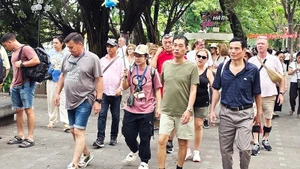
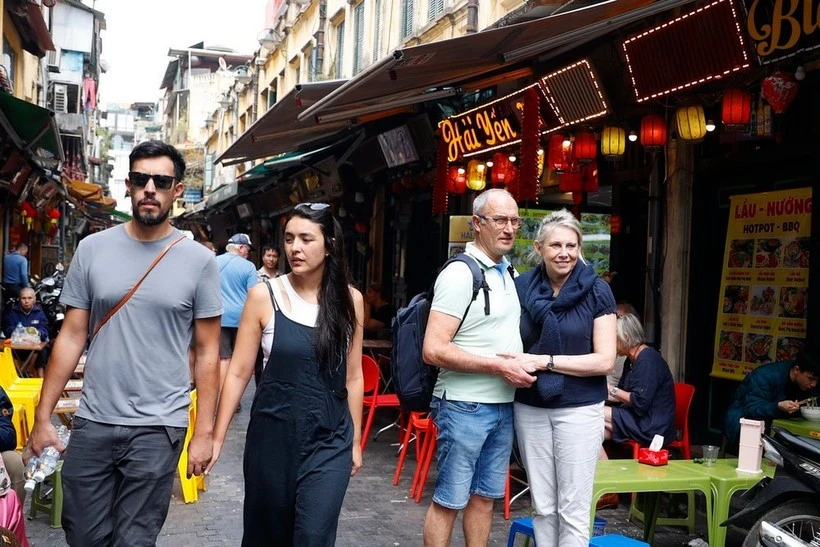
Each year, the club welcomes and supports between 5,000 and 8,000 tourists from more than 80 countries and territories. To date, over 100,000 international guests have explored Hanoi’s key landmarks—such as the Temple of Literature, Hoan Kiem Lake, the Old Quarter, the Thang Long Imperial Citadel, and President Ho Chi Minh’s Mausoleum—accompanied by the club’s young volunteers.
The difference of this model lies in creating a natural English practice environment, linked to the cultural life and history of their own homeland. Students use English to tell stories about Hanoi and Vietnamese culture with confidence, flexibility and inspiration.
Nguyen Thi Phuong Thao, a third-year student at the Foreign Trade University, shared: “I used to be shy when speaking English. But after just a few months in the club, I could fluently explain the significance of the Thang Long Imperial Citadel or the origins of the Temple of Literature. The more I learn, the prouder I feel, knowing I can directly introduce my cultural heritage to international friends.”
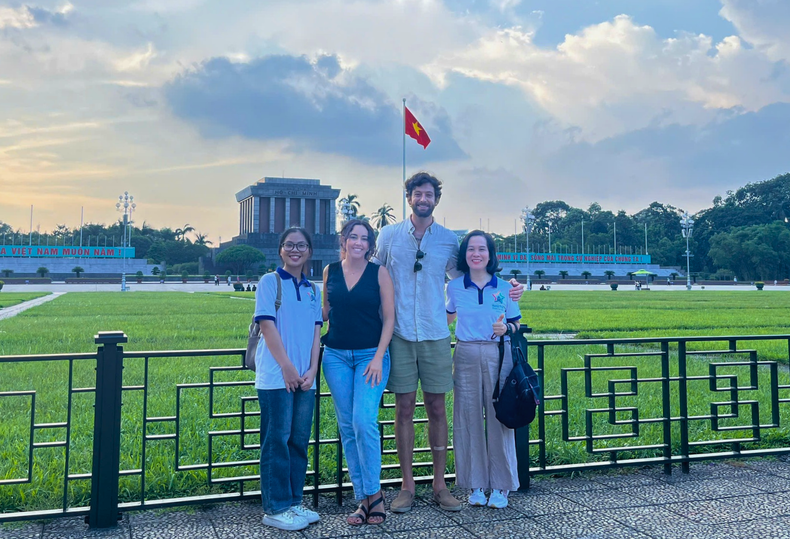 |
| Club volunteers guiding foreign tourists around President Ho Chi Minh’s Mausoleum. |
Beyond extracurricular activities, the Hanoi Free Private Tour Guide Club actively applies digital tools to enhance learning outcomes and professionalise tour operations. Its official website (www.hanoifreeprivatetourguide.com) features an intuitive design with integrated tour booking forms, an activity calendar, feedback systems, a cultural knowledge base, and tourism-specific English learning materials.
Before each tour, volunteers attend online sessions via Zoom to gain background knowledge about the sites, culture, and history. Digital teaching materials—presentations, slides, and videos—are shared via Google Drive, allowing members to prepare thoroughly before heading out.
Volunteers are also guided on how to use tools like ChatGPT or Bard to quickly research historical facts, verify place names, explore little-known stories about Hanoi, draft tour scripts, check grammar, and improve storytelling techniques.
Additionally, learners are trained to use platforms like Canva and Google Slides to create presentations, travel maps, and infographics to illustrate their narratives. After each tour, every volunteer must submit a report, share photos and videos, and receive feedback from the community on the club’s website.
Le Tai, President of the Club, said: “We aim to provide an environment where young people can learn and serve at the same time. Technology allows us to host online training sessions for new members, manage tour schedules in real time, and collect guest feedback immediately after each journey—helping us continuously refine our training and services.”
Many young people have improved their English skills through the club and gone on to apply successfully for international student exchange programmes, scholarships, or jobs at leading international travel companies. More importantly, they have become a generation of proactive cultural ambassadors, introducing Hanoi to the world in a professional and systematic manner.
Learning English through real-world experience not only enhances language proficiency, but also helps young people develop key life skills—such as adaptability, open-mindedness, and cross-cultural communication—all vital qualities for becoming global citizens in the digital age.
Vu Ha Linh, one of the club’s members, recalled: “On a recent tour, I met two young French tourists who were really into Vietnamese cuisine. I took them to try bun cha and Pho, and we made nem ran (spring rolls) together at my home. It gave me the chance to explain Vietnamese food culture in English. They were amazed to learn how deeply our dishes are tied to our way of life.”
As Viet Nam’s tourism sector rebounds—with more than 7.6 million international visitors in the first four months of 2025—the need to develop a young workforce fluent in foreign languages and knowledgeable about local culture is more urgent than ever.
Experiential English learning models like the Hanoi Free Private Tour Guide Club not only serve educational purposes but also offer a creative, sustainable approach to cultural promotion.