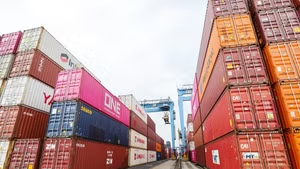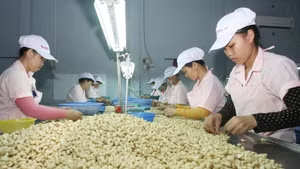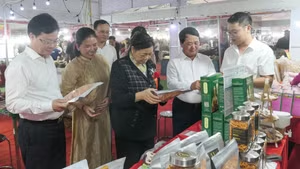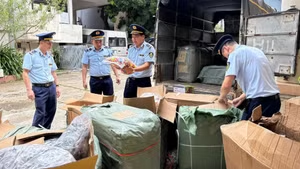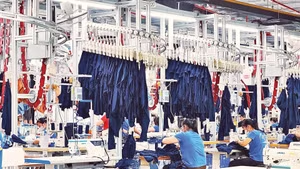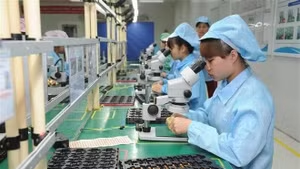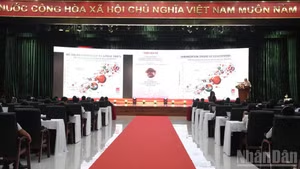
“Made in Da Nang”, as the programme is known, is expected to serve as a quality guarantee, helping local products access the market in a more sustainable, transparent, and effective manner.
Bringing local culture into products
Da Nang boasts a wide range of high-quality products and a dedicated, creative business community that actively applies science and technology and embraces digital transformation. This provides an important foundation for the development of sustainable trade, production, and consumption in the new phase.
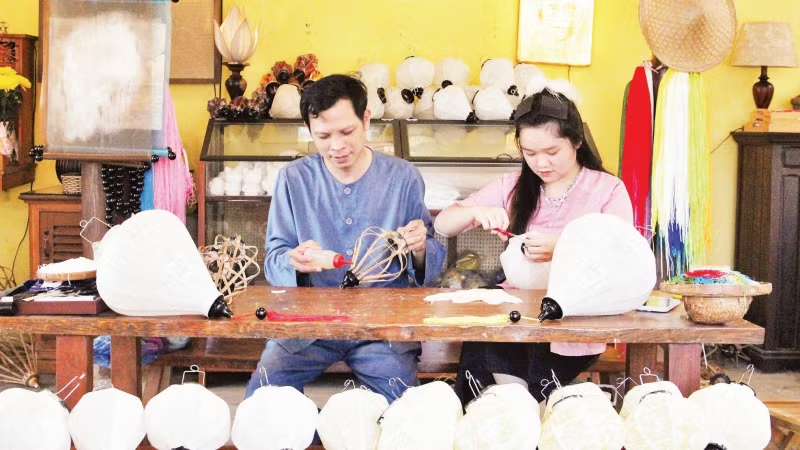
A native of the ancient town of Hoi An, Vo Dinh Hoang, Director of Hoa Nam Services Co., Ltd., is determined to develop the local traditional lantern-making craft. From learning painstakingly from artisans in the area to incorporating modern elements, Hoang has introduced a series of novel and appealing products.
At the outset, he used traditional fabric materials to make lanterns. As a young entrepreneur entering the field later than others, Hoang chose a proper and methodical approach to product development.
In 2018, his Dé Lantana lanterns became the first handicraft product in Hoi An to be packaged and barcoded, meeting high standards.
Since then, he has gradually shaped a development path oriented towards green and sustainable handicrafts. Hoa Nam’s lantern products have been continuously renewed, using environmentally friendly materials such as bamboo and coconut paper.
At the same time, in order to spread regional values and stories, he has infused local culture into his products. These include coconut-paper lantern collections featuring images of Bai Choi games, Dong Ho folk paintings, and Tuong theatre masks.
“I will continue to pursue the path of green handicraft products. In the coming time, we will invest in a decorative lantern workshop, aiming for a wider range of sizes and more diverse designs,” Vo Dinh Hoang said.
In the fishing village of Nam O (Hai Van Ward), the fish sauce production facility under the brand “Huong Lang Co” (Ancient Village Aroma) regularly welcomes visitors, who come to see how fish sauce is made and taste traditional products.
Bui Thanh Phu, a son of the coastal village, has developed the traditional fish sauce craft in close association with tourism activities.
Currently, his facility produces several lines of fish sauce aged in earthenware jars for one or two years, as well as fish sauce made from small marine shrimp.
On average, “Huong Lang Co” supplies around 25,000 litres of fish sauce to the market each year. Alongside experiential tourism, Nam O residents are gradually reviving a centuries-old traditional fish sauce craft.
Da Nang possesses a diverse and abundant system of local products, spanning mountainous areas, plains, and coastal regions. Beyond quality, each product carries its own story, reflecting local cultural identity.
The city currently has 552 products certified under the One Commune, One Product (OCOP) programme. Many products are continually being upgraded in terms of quality, design, and packaging, gradually asserting their position in the market and making an important contribution to socio-economic development.
Building a shared brand
However, in practice, the overall market recognition of Da Nang products remains limited. A unified imprint has yet to be formed, and the full potential, advantages and value of these products have not been adequately reflected. This poses significant challenges in competition and market expansion.
The Da Nang government has instructed the Department of Industry and Trade to work with the municipal Fatherland Front and the Women Entrepreneurs Association to develop a plan to build a brand for the city’s representative products.
The programme aims to establish a shared value framework, in which the government plays a facilitating role by building institutions and setting standards and operating mechanisms; enterprises act as the direct implementers, improving product quality; and consumers are placed at the centre as beneficiaries and supervisors of credibility.
Bui Thanh Phu, Vice Chairman of the Nam O Traditional Fish Sauce Craft Village Association, shared: “When the city builds a shared brand, it not only affirms the products of individual units and enterprises but also adds value and credibility to craft village products and community-based products.”
Under this orientation, the “Made in Da Nang” certification mark is not intended to replace enterprises’ own brands, but rather to serve as a quality guarantee, helping local products access the market in a more sustainable manner.

Vo Dinh Hoang, Director of Hoa Nam Services Co., Ltd., expressed his hope: “I place great trust in the city’s project. With Da Nang’s creativity, handicraft products in particular, and Da Nang products in general, will gain an additional platform to develop more strongly.”
To date, relevant units have consulted and gathered feedback from numerous delegates, experts, associations, and the business community, with a view to unifying and refining the scheme in a transparent and coherent manner with strong spillover effects and high practical feasibility.
On that basis, appropriate support mechanisms and policies are being developed to build confidence so that enterprises can feel secure in participating and accompanying the city in developing local product brands.
Le Thi Kim Phuong, Director of the Da Nang Department of Industry and Trade, emphasised that building and developing a brand for the city’s quality products is a necessary solution of strategic significance, aimed at creating unified recognition, enhancing value added, and consolidating and spreading market confidence in goods produced in Da Nang.