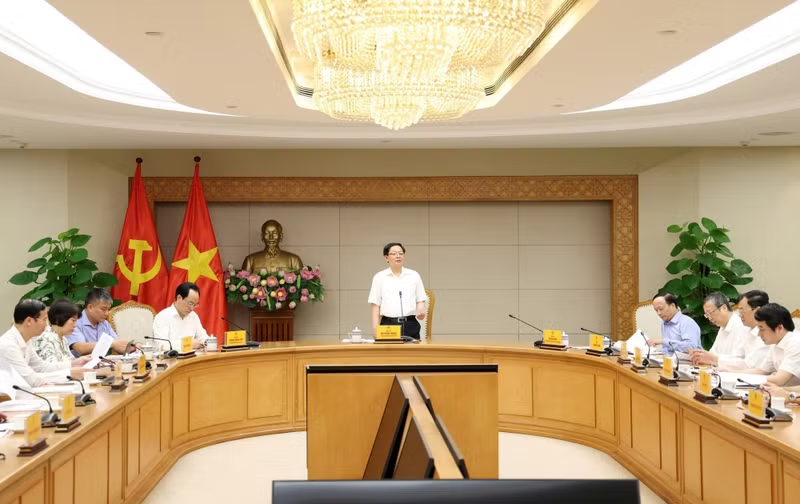
Deputy PM Dung noted that the Government has identified 20 strategic technology sectors and assigned specific tasks to 10 ministries and agencies. The order is to move aggressively beyond the preparatory phase and deliver specific products, technologies, and enterprises that generate visible, quantifiable, and substantive results.
A decree guiding the enforcement of the Law on High Technology must be finalised this month, with a sharp focus on those related to strategic technologies. He also called for research and proposals on mechanisms to identify, certify, and label strategic technology products.
To realise the PM’s decision, Dung assigned the Ministry of Science and Technology (MoST) to evaluate and provide guidance on tasks proposed by other ministries and agencies. They were instructed to proactively allocate personnel and resources, set clear goals, expected outcomes and timelines, and strive to deliver concrete products this year. Any bottlenecks exceeding their authority must be promptly reported to the Government for consideration.
The MoST was also told to fast-track a scheme to develop key national research centres, testing facilities, and labs serving strategic technology research and development. Other ministries and agencies were ordered to review the need for technical standards and regulations governing strategic technology products within their respective domains.
On workforce training, the MoST will continue to lead a support scheme for outstanding graduates through 2030. The Ministry of Education and Training was directed to review and propose high-quality manpower training courses for strategic technology fields.
The Deputy PM pressed ministries and agencies to rapidly convert their assigned tasks into concrete action plans with clearly defined responsibilities, and effectively launch projects that create strategic technology products capable of sharpening national competitiveness.
A MoST representative said the ministry immediately partnered with relevant stakeholders to provide guidance and monitor rollout after the PM’s decision was issued. In parallel, it reviewed and reinforced the necessary conditions, including legal frameworks, policies, mechanisms, technical standards and regulations, research and testing infrastructure, human capital, and oversight tools.
Assigned ministries and agencies have since identified focal points, reviewed tasks, built proposals, defined expected outputs, assessed resource requirements, and prepared conditions for execution.
The MoST noted that ministries and agencies have swiftly set up task forces, reviewed existing projects, and drawn enterprises, research institutes, universities, and experts to shape assignments despite the short implementation period. Many tasks already have identified expected outputs, participating enterprises, resource needs, and roadmaps stretching to 2030.
In total, ministries and agencies have put forward 48 strategic technology development tasks.
They also recommended the early completion of supporting mechanisms and policies to ensure the strategic technology agenda goes forward.