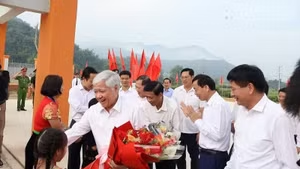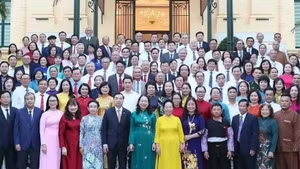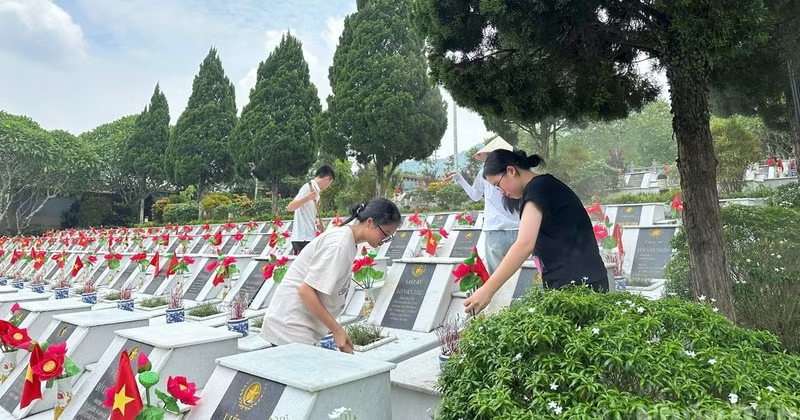
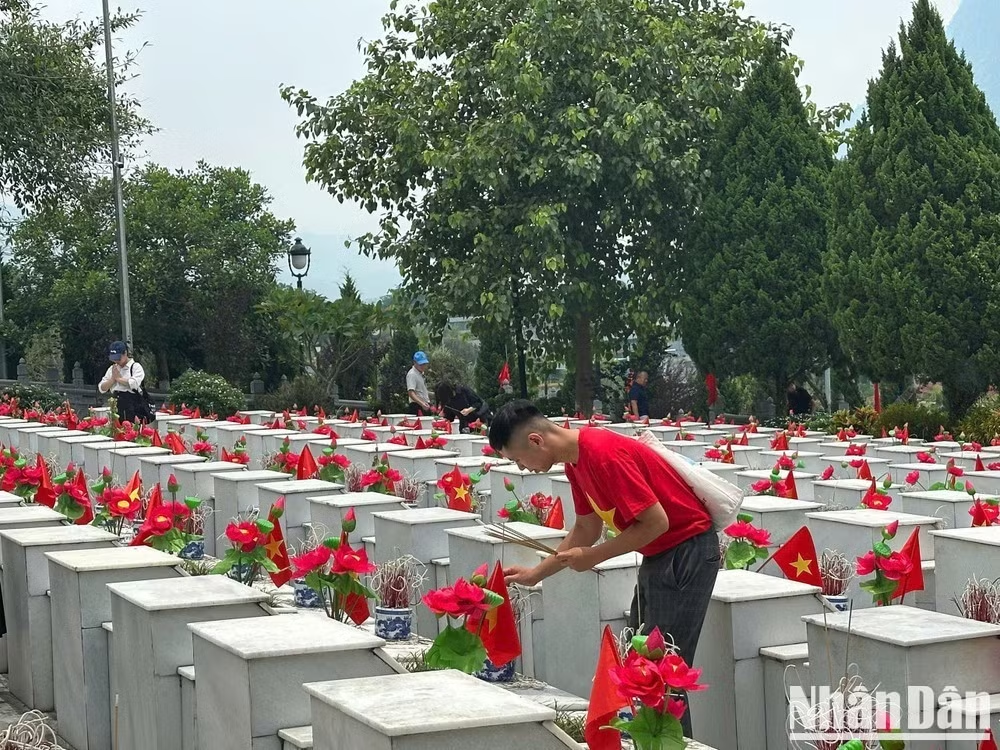
As the whole country looks towards the 79th anniversary of War Invalids and Martyrs’ Day (July 27, 1947 – July 27, 2026), the delegation took part in a series of meaningful commemorative activities, including offering incense at the Vi Xuyen Martyrs’ Cemetery, visiting the Team for the Search and Recovery of Martyrs’ Remains, paying tribute to the remains of martyrs recently recovered during the “500-Day Campaign to Intensify the Search, Recovery and Identification of Martyrs’ Remains”, and offering incense at the Temple Dedicated to the Heroic Martyrs of the Vi Xuyen Front, located at Hill 468.
Travelling to understand the value of a journey
For many years, July has become the season of remembrance throughout the country. During these days, the number of people visiting the Vi Xuyen Martyrs’ Cemetery is greater than usual. Some are veterans returning to the former battlefield to visit fallen comrades. Others are relatives of martyrs carrying the hope of finding even the smallest trace of their loved ones. There are also groups of pupils and young people standing silently before rows of gravestones, experiencing history for the first time not merely through figures and events recorded in textbooks.
Through the stories told by veteran Pham Ngoc An, the lush green mountain slopes before the survey delegation seemed to take on an entirely different appearance. Behind today's tranquillity and endless green forests lie the youth of countless soldiers who left their lives here. Many went into battle at only eighteen or twenty years of age, carrying dreams and ambitions they never had the chance to fulfil.
The history of Vi Xuyen still lives on in the memories of those who survived, in the unnamed graves, and in the footsteps of officers and soldiers who continue their determined search for fallen comrades despite rugged terrain and harsh weather.
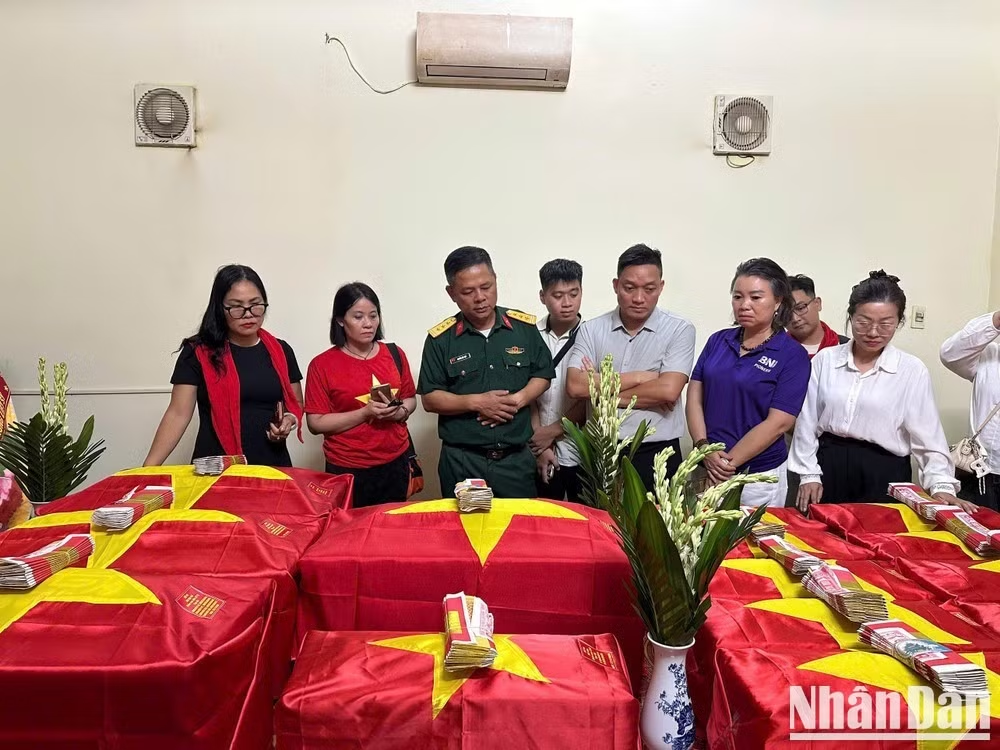
Inside the modest room of the Team for the Search and Recovery of Martyrs’ Remains under the Tuyen Quang Provincial Military Command, incense sticks burn before the remains of martyrs recently recovered. Senior Colonel Tran Quang Huy, head of the team, said emotionally: “Every day we burn incense for our comrades. At every meal, whatever we eat, we invite our comrades to share the same food.”
His simple yet heartfelt words left many members of the delegation deeply moved. Those participating in the survey, development and tourism product connection programme between Ha Noi and Tuyen Quang all shared the same aspiration: to transform these historical sites, memories and stories into meaningful journeys, so that every return-to-the-roots trip truly becomes an opportunity to express gratitude, educate future generations about tradition and nurture patriotism.
The experiences gained on site also constitute the distinctive value of the survey programme. To develop a convincing heritage tourism route, tourism product developers cannot simply study documents and assemble destinations into an itinerary. They must travel along the historical routes, listen to eyewitnesses and meet those who continue to preserve the historical sites and collective memory.
Only then can travel businesses determine which stories deserve to be told, which stops require more time, and which methods of interpretation are capable of moving visitors while maintaining historical accuracy and solemnity. A tourism product with genuine depth can only be created through profound understanding.
According to Tran Trung Hieu, Deputy Director of the Ha Noi Department of Tourism, the survey serves not only as an opportunity to remember and honour the sacrifices of the heroic martyrs and promote the tradition of “When drinking water, remember its source”, but also lays the foundation for developing distinctive tourism products.
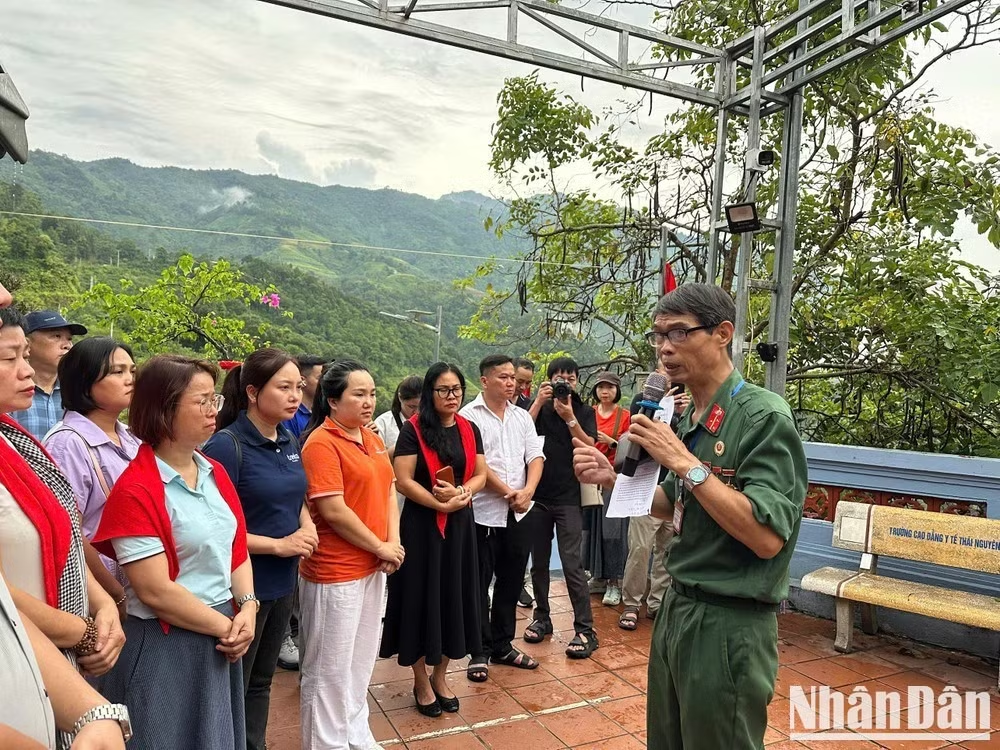
Ensuring every journey becomes a living lesson
Ha Noi is a major tourism market, home to a professional travel industry as well as numerous schools, government agencies, organisations and cultural institutions that regularly organise activities to educate younger generations about the nation's traditions. Meanwhile, Tuyen Quang possesses a rich system of historical and revolutionary sites, distinctive landscapes and deeply compelling historical stories.
Cooperation between the two localities can shorten the distance between tourism resources and marketable products, transforming the values preserved at historical sites into tourism routes capable of operating sustainably.
Ha Noi not only brings visitors to Tuyen Quang; conversely, Tuyen Quang's historical and cultural resources also enrich the range of products offered by travel companies in the capital.
However, for these tourism products to remain sustainable in the long term, destinations must be connected through a coherent narrative, tailored to different visitor groups, and supported by tour guides who possess not only extensive knowledge but also emotional sensitivity and professional competence.
Within Tuyen Quang Province, Tan Trao and Vi Xuyen have the potential to form a unique heritage tourism corridor. Tan Trao is associated with the crucial decisions made before the August Revolution, with Hong Thai Communal House, Na Nua Shack, the Tan Trao Banyan Tree, and memories of both the Capital of the Liberated Zone and the Resistance Capital. Vi Xuyen, meanwhile, bears witness to the fierce battles fought to defend the nation's frontiers and stands as a reminder of the determination to safeguard every inch of the country's sacred territory.
If organised appropriately, the Ha Noi–Tan Trao–Vi Xuyen–Hill 468 route could guide visitors through a continuous historical narrative: from preparations for seizing power, establishing and defending national independence, to the struggle to protect the country's border sovereignty. Each location preserves its own layer of memory; when brought together within a single journey, these stories complement and illuminate one another, enabling visitors to gain a more complete understanding of the nation's long history of nation-building and national defence.
The greatest value of heritage tourism lies in bringing people to the very places where history unfolded. Young people may learn about war through textbooks, documentaries or classroom lessons, but the experience is profoundly different when they stand before the rows of graves at the Vi Xuyen Martyrs’ Cemetery or look from Hill 468 towards the heights that were once engulfed by artillery fire. The true value of peace becomes apparent through the lives and destinies of real people.
Those participating in heritage journeys are becoming increasingly diverse. Alongside veterans and the families of martyrs are pupils, university students, young families, officials from government agencies and organisations, and international visitors. This requires tourism products to be designed with greater flexibility and diversity.
Along these journeys, historical sites can also be connected with natural landscapes, community life, local cuisine, traditional crafts and indigenous products. Such thoughtful integration can encourage visitors to stay longer, create additional employment and livelihoods for local people, and enable visitors to gain a more comprehensive understanding of the region. However, these complementary experiences must be positioned appropriately so that they do not overshadow the central message of remembrance and gratitude or the objective of educating future generations about the nation's traditions.
The survey programme between Ha Noi and Tuyen Quang is therefore only the beginning. The true value of the initiative will be measured by the concrete tourism products developed afterwards and by their ability to bring visitors closer to history in a manner that is authentic, dignified and deeply moving.