When people think of mobile libraries, they often imagine vehicles loaded with books travelling across regions to serve readers. Some of those journeys cover thousands of kilometres, delivering knowledge to underserved areas. But in the military, mobile libraries take a different form, distinguished by organisation and purpose.
Specifically, catalogues of books are selected to meet requirements for political education, military knowledge, law, history and life skills, enriching soldiers’ cultural and spiritual lives.
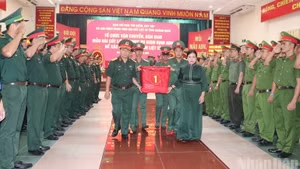
Books are rotated from higher‑level libraries to grassroots units according to scheduled plans, from central units to training grounds, firing ranges and dispersed garrisons. Thus each book‑rotation journey also forms part of educational work and the cultivation of a cultural environment within the military.
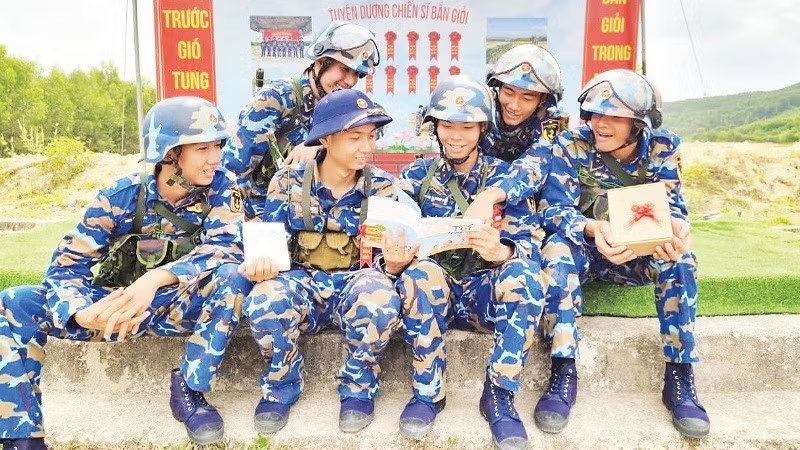
In many units, training‑field bookcases enable soldiers to reach books at their place of training, nurturing their spiritual life during short breaks between training modules.
Behind every bookcase in the training field or bookshelf lies an organised system of administration and regular rotation, contributing to the deepening of reading culture in military life.
These results stem from the efforts of the military library sector in innovating its services and developing numerous new models aimed at bringing books closer to officers and soldiers, particularly those who cannot regularly access central libraries.
Now, in many units, training‑field bookcases enable soldiers to reach books at their place of training, nurturing their spiritual life during short breaks between training modules.
The effectiveness of bringing books to the grassroots is evident in several concrete military models. At the Border Guard Training Centre, alongside a reading room holding nearly 1,500 titles and more than 2,000 volumes, the unit regularly rotates over 1,300 books between company‑level bookcases and legal‑news boxes.
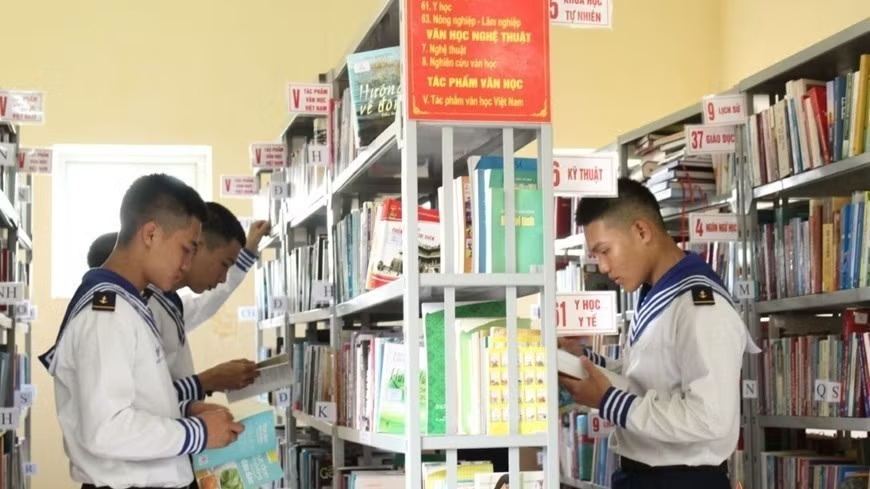
The mobile library model has had a positive impact on methods of self‑study and self‑improvement, helping soldiers gain deeper understanding of national history and military traditions, increase legal knowledge, broaden social awareness and refine character. Many units have been creative in organising effective book presentation and display activities.
At Brigade 131 of the Navy, reading culture has been promoted through creative initiatives such as “A Book by the Soldier’s Bed”, “Books Follow Soldiers to the Training Ground”, “One Book a Week” and reading clubs. The unit’s statistics show more than 1,000 officer and soldier registrations to borrow books and over 600 book borrowings recorded.
Encouraging signs from these new models indicate that the appetite for reading in the armed forces remains persistent and strong when books are brought to the right place, at the right time, and matched to soldiers’ needs.
In the context of digital transformation and intense competition from modern entertainment media, maintaining and developing these models further highlights the enduring value of books in the process of building a revolutionary, regular, elite and modern army.
Colonel Mac Thuy Duong, Director of the Military Library, notes that the mobile library model is also part of the military’s process of building a new knowledge ecosystem.
Alongside traditional reading methods, the shared digital library system on the military’s data network has now connected more than 40 library points across the armed forces, enabling the sharing of learning resources and serving the growing study and research needs of officers and soldiers.
In the context of digital transformation and intense competition from modern entertainment media, maintaining and developing these models further highlights the enduring value of books in the process of building a revolutionary, regular, elite and modern army.


![[Video] Renewal and growth milestones of Ha Noi through the lens](https://en-cdn.nhandan.vn/images/1XgBTSIw0KyfD4abQsg-hd4ly6fBUHXC7_OAKyN4YwPfAhBw0Xs6rVX3rF0up9Tr6rLNn30Muc4bzp90E7yOqg/10-10-hanoi-cover.jpg.avif)