Inspiring resilience and a spirit of dedication
At the age of 76, Nguyen Thi Sanh, from Long Huong Ward, Ho Chi Minh City, vividly recalls her youth as a revolutionary activist. She remembers the immense hardships of living under the control and repression of the former regime. Witnessing the enemy's brutality and inspired by revolutionary cadres, she and her family devoted themselves wholeheartedly to the Party and President Ho Chi Minh.
Her duties included gathering intelligence in urban areas, delivering food and medicine to revolutionary forces, and guiding cadres safely through enemy encirclements. Whatever assignment she received, she carried it out faithfully until the country's reunification.
She joined the revolution officially in 1971 at the age of 19. Two years later in 1973, she married a local Youth Union secretary whom she had met through the resistance movement.
Their happiness, however, was short-lived. In 1974, her husband was killed in action when their first daughter was only four months old. Suppressing her grief, she repeatedly told her daughter that her father had gone on a long assignment in Ha Noi and would return one day. She loved her child deeply but understood that sacrifice was an unavoidable reality of wartime.
As her daughter grew older, Sanh eventually revealed the truth, hoping she would understand that countless people had laid down their lives for the country's independence and freedom, and take pride in her father's sacrifice.
After reunification, Sanh devoted herself to local women's affairs, continuing to serve the community quietly for decades. Her message to younger generations is simple: cherish history, value peace, continue learning and working diligently, and contribute to the country's development in honour of those who sacrificed before them.
Although the wounds of war have never fully healed, many former soldiers continue to inspire others through their resilience and lifelong commitment to society.
One such example is Le Quang Trinh, a Class 3/4 war invalid who participated in the Dong Khoi movement, joined the Liberation Army in southeastern Viet Nam and fought in numerous major battles.
Following national reunification, he helped build local government and, after retirement, remained active in the Fatherland Front and the Veterans' Association of the former District 5. Together with fellow veterans, he has supported disadvantaged comrades while educating younger generations about patriotism and the nation's revolutionary traditions.
Now 84, Trinh still suffers pain from a head wound caused by a B-52 bombing raid whenever the weather changes. Yet he says the pain is insignificant compared with his greatest wish: to recover the remains of fallen comrades, including those of his own son, so that they may finally return to their homeland and their loved ones.
Fulfilling a moral obligation
Guided by the nation's enduring tradition of gratitude, Ho Chi Minh City's Party organisation, authorities, the Viet Nam Fatherland Front and its people have consistently placed great importance on caring for national contributors through the most timely, comprehensive and practical support policies within the country's social welfare system.
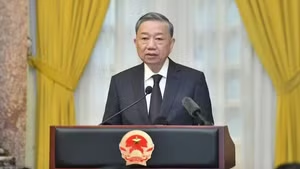
Vo Van Minh, Deputy Secretary of the municipal Party Committee and Chairman of the municipal People's Council, said that alongside fully and promptly implementing all national policies for people with meritorious service, the city has introduced a range of additional local initiatives, mobilising the entire political system and society to further improve the material and spiritual well-being of beneficiary families.
The "Paying gratitude" movement has become a widely embraced cultural value and a voluntary social commitment. Every gratitude house built, every memorial project completed and every act of compassion reflects the nation's tradition of remembering those who sacrificed for the country through meaningful and practical actions.
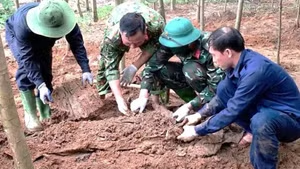
The city has also devoted special attention to preserving historical heritage by restoring martyrs' cemeteries and memorial sites. At the same time, it is actively implementing the 500-Day Campaign to accelerate the search for, recovery and identification of the remains of fallen soldiers.
Building on these achievements, Ho Chi Minh City will continue to implement Party guidelines and State policies for national contributors fully, promptly and effectively. The city also plans to refine mechanisms and policies in line with its development needs while further mobilising the entire political system and the wider community to improve the quality of life of beneficiaries and their families.
In addition, the city will strengthen education on the nation's revolutionary traditions, particularly among young people, helping nurture ideals, aspirations to contribute, and a strong sense of responsibility towards the homeland.
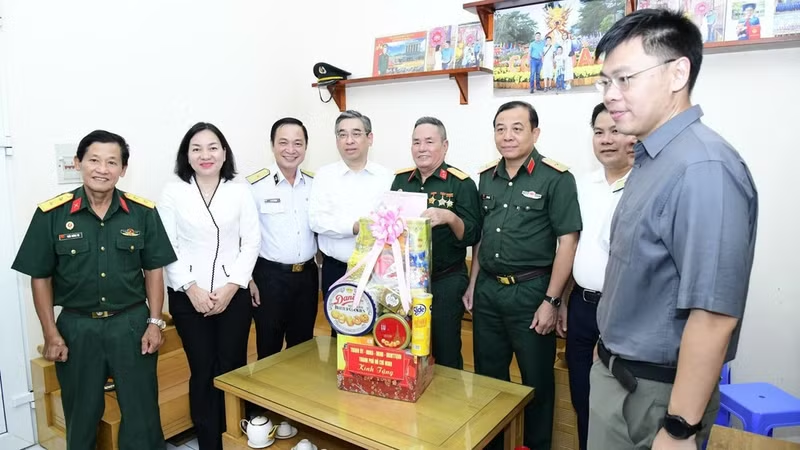
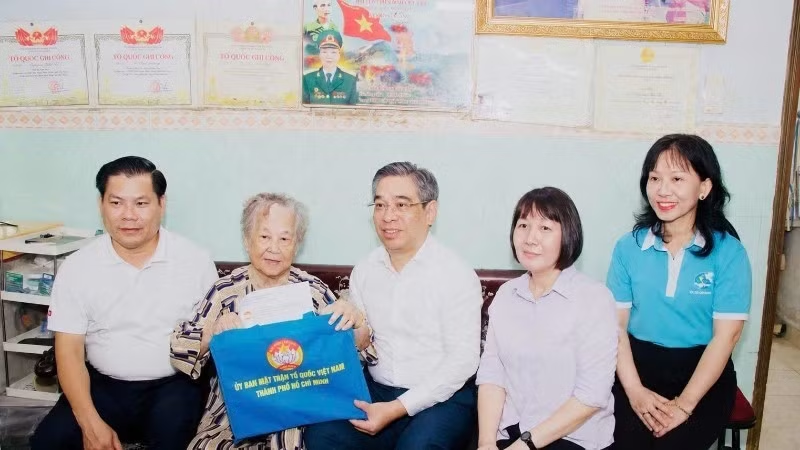
Marking the 79th anniversary of Wounded and Fallen Soldiers' Day (July 27, 1947–2026), Ho Chi Minh City organised extensive commemorative activities across all localities, allocating more than 154.1 billion VND (5.88 million USD) from the State budget, excluding funding earmarked for activities in the Con Dao Special Zone. Senior city leaders also visited and presented gifts to outstanding national contributors and policy beneficiary families.
Through these practical actions, Ho Chi Minh City continues to uphold the nation's cherished tradition of gratitude. Paying tribute to those who served the nation is not only a moral responsibility but also a solid foundation for the city's continued development in the new era.