The “Roi Teu Nho” project was carried out by Dr Nguyen Thu Hue and five students from FPT University Ha Noi: Hoang Quoc Dat, Nguyen Lan Phuong, Mai Lan Phuong, Bui Thao Vy, and Nguyen Quang Truong.
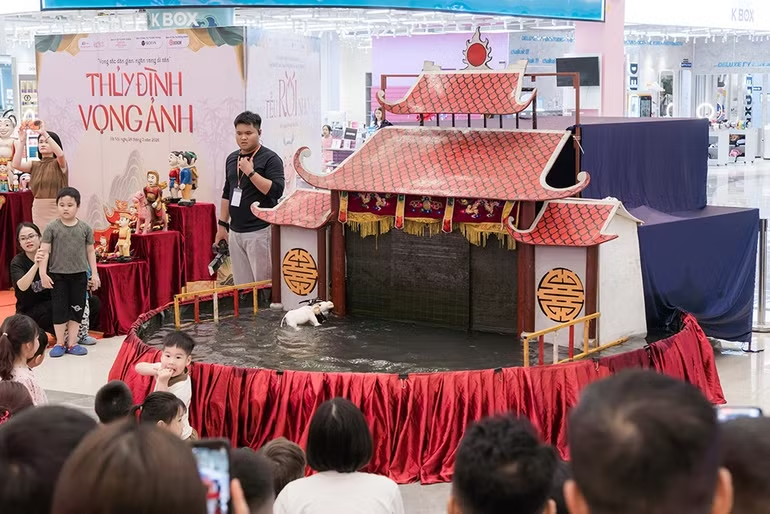
Recently, the “Thuy Dinh Vong Anh” event in Hung Yen Province, organised by the team, officially marked the conclusion of the project’s journey. The event attracted thousands of visitors, underscoring the strong appeal of water puppetry when approached in innovative ways.
Young people as “translators” of heritage
The project team approached water puppetry not only with a love for culture but also with a clear sense of their role as “translators”— reinterpreting traditional artistic language into storytelling formats that resonate with Gen Z audiences.
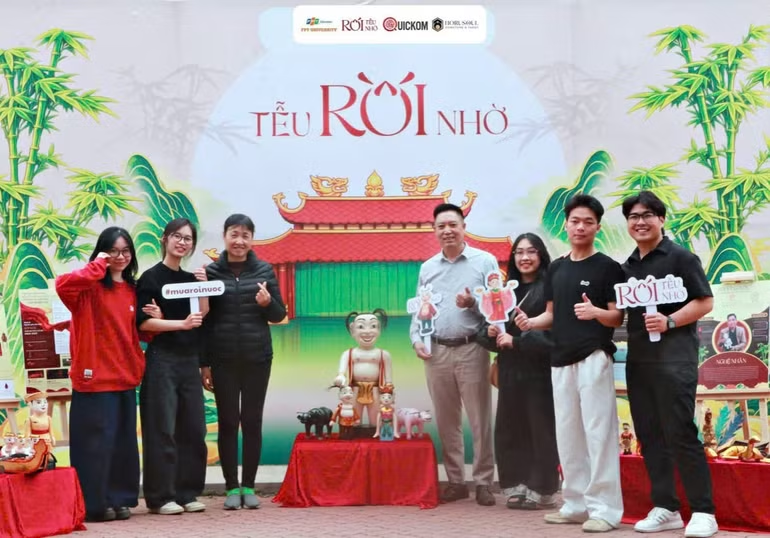
“Roi Teu Nho” is a rather unusual name, often prompting curiosity upon first hearing. According to the team, the title underwent multiple revisions before reaching its final form. What may seem like just trendy wordplay actually conceals a layered narrative reflecting tensions between contemporary reality and nostalgia.
Read forwards as “Roi Teu Nho”, the phrase sounds like a heartfelt confession — a contemplative exclamation from young people addressed to Chu Teu (the most iconic character in traditional Vietnamese water puppetry). Here, “Roi” refers both to the art of water puppetry — a vibrant heritage now facing the paradox of declining engagement among young Vietnamese audiences — and to a sense of confusion amid a rapidly changing world, where young people may lose their way among global trends and overlook the unique cultural treasures of their homeland.
Read in reverse, however, the phrase becomes “Nho Teu Roi” (“Missing Teu”), an emotive expression of remembrance and gratitude. It reflects a longing for a folk cultural icon and a desire to preserve and revive the value of water puppetry in contemporary life.
The “Roi Teu Nho” project was conceived to address this very paradox. The team identified the key barrier not in the art form itself, but in its mode of presentation, which often remains overly didactic and disconnected from contemporary audiences. “Our goal is to help young people realise that water puppetry is not an ‘antique’, but essentially a creative ‘technological show’ developed by our ancestors nearly 2,000 years ago,” said Hoang Quoc Dat, the project manager.
According to the team, the greatest paradox facing water puppetry today is that while it is widely appreciated by international audiences, many young Vietnamese remain indifferent. The issue lies not in the art itself, but in the way it is communicated — still overly academic in tone and lacking relevance to contemporary life.
From this, the project set out three main objectives: raising awareness, enhancing audience experience, and encouraging engagement and action.
To achieve these aims, “Roi Teu Nho” adopted a renewed expressive language while preserving the traditional essence. The familiar character Chu Teu was “reborn” as a video jockey (VJ) — a humorous and relatable social media figure aligned with youth culture.
At the same time, multi-platform content was developed, including the entertainment series “Teu Ti Te” and the more in-depth “Teu Tam Tinh”, distributed via TikTok and Facebook to bring heritage closer to audiences in a more accessible and engaging manner.
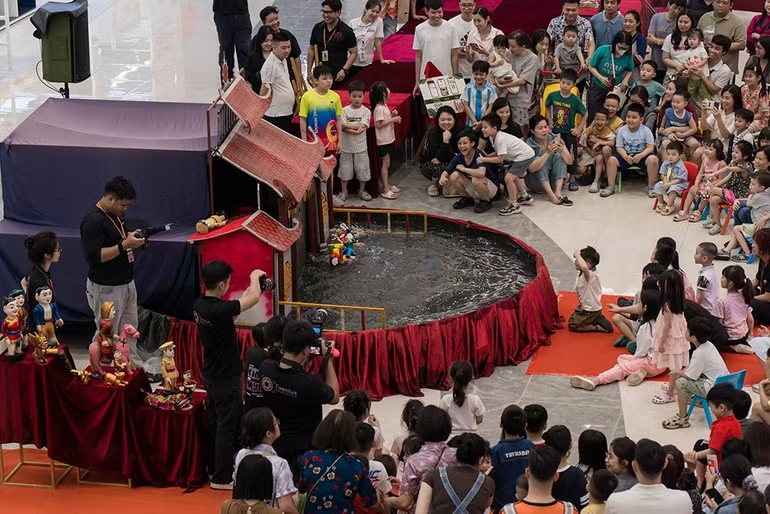
Beyond the digital space, the project also introduced a mobile water stage to schools and shopping centres, allowing young people not only to watch but also to engage in a hands-on manner by controlling puppets and interacting directly with artisans.
Guardians of tradition and agents of innovation
A key pillar of the project was the involvement of artist Phan Thanh Liem, a seventh-generation descendant of a family with a long-standing tradition of water puppetry in Nam Dinh (now Ninh Binh Province). He is widely recognised as a pioneer in bringing miniature water puppet stages to audiences around the world.
“As a traditional artist, Phan Thanh Liem possesses remarkably progressive thinking. Through our interactions with him, the most valuable lesson we learned from the ‘father’ of miniature water puppet theatre is proactive innovation. He broke the spatial constraints of the traditional water pavilion, bringing puppetry to schools, homes, and across the globe.
That spirit of change has helped us understand that preservation does not mean placing heritage in a glass case. If we want young people to embrace culture, we must ‘dress it in new clothes’ and integrate it into modern life,” said Nguyen Lan Phuong.
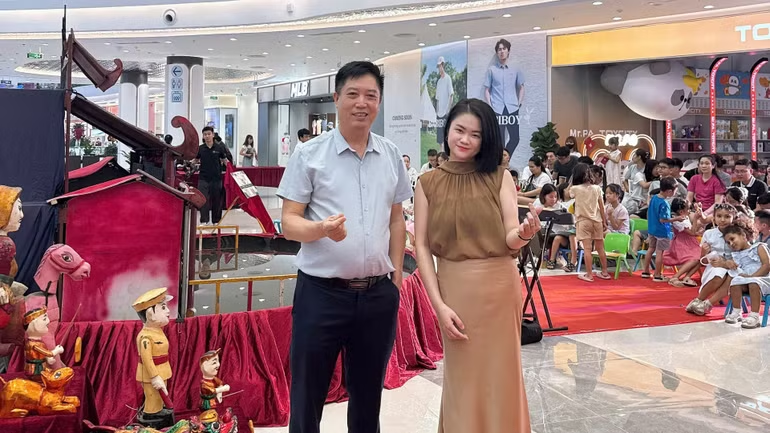
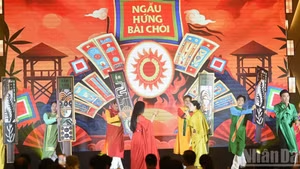
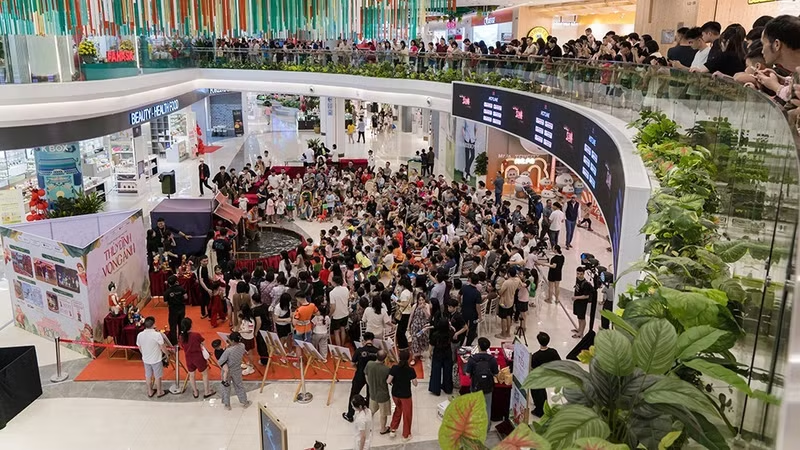
This spirit was vividly reflected in the “Thuy Dinh Vong Anh” event held at Vincom Mega Mall Ocean City (Hung Yen Province). The relocation of an art form traditionally rooted in rural settings into a bustling commercial centre created a striking contrast.
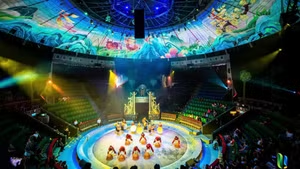
The highlight of the programme was the live performances by artist Phan Thanh Liem. The audience response exceeded expectations: nearly 200 seats were constantly filled, with hundreds more spectators standing in the main hall and even spilling into upper-level corridors to watch.
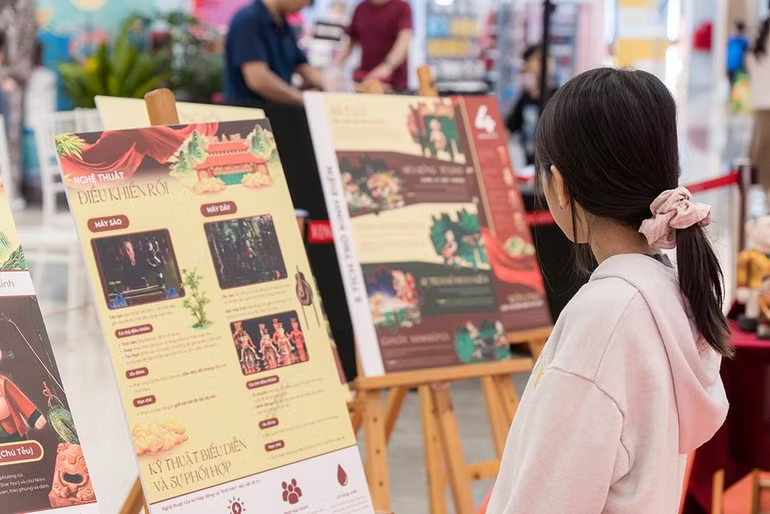
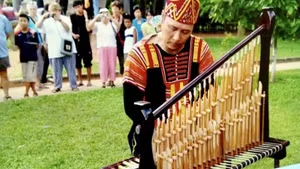
Alongside the stage, the event space was divided into multiple experiential zones: an infographic exhibition offering visual insights into the history and techniques of water puppetry; traditional game stations such as “o an quan”, puppet colouring and folk riddle-solving; creative workshops; and performances of traditional instruments by the FTIC Club (FPT University), all contributing to a multi-sensory cultural experience.
The success of “Thuy Dinh Vong Anh” sends a positive signal: when placed in the right context and approached appropriately, heritage can become an integral part of modern life, and even a renewed source of inspiration for younger generations.
From a graduation project, “Roi Teu Nho” has moved beyond academic boundaries to become a noteworthy cultural experiment. More importantly, it has helped to open new pathways for young people to better understand and appreciate their heritage.