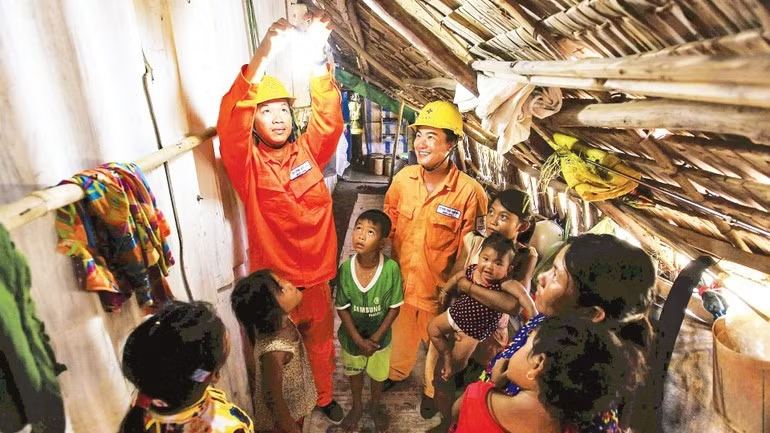
Therefore, improving institutions and policies, together with upgrading power system infrastructure, will create favourable conditions for a green and sustainable energy transition.
Improving the policy framework
In recent years, the policy framework in the power sector has been continuously reviewed and supplemented to encourage the development of renewable energy, while creating more favourable conditions for various economic sectors to invest in energy.
One of the notable policies is the direct power purchase agreement (DPPA) mechanism between renewable energy generators and large electricity consumers, as stipulated in Decree No. 57/2025/ND-CP, dated March 3, 2025, of the Government. This mechanism is considered an important tool to promote the greening of production activities, support manufacturers in implementing greenhouse gas emission reduction commitments, and contribute to Viet Nam’s Net Zero target. At the same time, DPPA expands the right of renewable energy producers to choose their electricity buyers, gradually eliminating the previous single-buyer mechanism.
According to Tang The Hung, Deputy Head of the Electricity Authority of Viet Nam (EAV) under the Ministry of Industry and Trade, the new mechanism will allow renewable energy producers to sell electricity directly to large consumers through appropriate trading arrangements. The DPPA mechanism can be implemented via dedicated connection grids or through the national grid, with detailed requirements on infrastructure investment, registration, reporting obligations, and payment to ensure transparency, consistency, and feasibility. This helps manufacturing enterprises, especially exporting businesses, to access green electricity sources to meet international standards and requirements of the global supply chain.
In addition, the Law on Electricity 2024, which took effect from February 1, 2025, has supplemented many important provisions related to renewable energy development, identifying types of power sources classified as renewable energy, thereby creating a unified legal foundation for investment incentive mechanisms. Based on this law, Decree No. 58/2025/ND-CP, dated March 3, 2025, was issued to detail several contents of renewable and new energy electricity development, emphasising incentives for self-produced and self-consumed electricity, particularly rooftop solar power, as well as support for offshore wind power development.
Along with the improvement of the legal framework, state management agencies have also issued circulars and decisions on pricing frameworks for various types of power sources, including renewable energy, to provide a basis for determining electricity prices, attracting investment, and ensuring a balance of interests among the State, investors, and electricity users.
At the macro level, Resolution No. 253/2025/QH15, dated December 11, 2025, of the National Assembly continues to adjust and complete some key mechanisms to promote energy development in the 2026–2030 period. These include provisions on approving investment policies simultaneously with investor approval, as well as removing obstacles related to enterprises wholly owned by the State in conducting offshore wind power surveys.
These adjustments are expected to shorten procedures, reduce compliance costs, and promote resource mobilisation for renewable energy development. Enterprises in the power sector are also gradually stepping up investment in environmentally friendly power sources. According to Pham Viet Thach, Deputy Head of the Environment and Sustainable Development Department of Viet Nam Electricity (EVN), these projects are expected to help ensure long-term energy security while gradually reducing dependence on high-emission power sources.
In addition, enterprises in the power sector are increasingly investing in environmentally friendly energy sources. According to Pham Viet Thach, EVN is currently implementing or preparing to invest in 23 environmentally friendly and renewable energy projects with a total capacity of 12,663 MW, including gas-fired power, expanded hydropower, pumped-storage hydropower, wind power, and nuclear power projects. These projects are expected to ensure long-term power supply security while gradually reducing dependence on high-emission power sources.
Modernising the power system
Along with institutional improvements, upgrading grid infrastructure and enhancing power system operation capacity are considered important conditions for effectively integrating renewable energy sources.
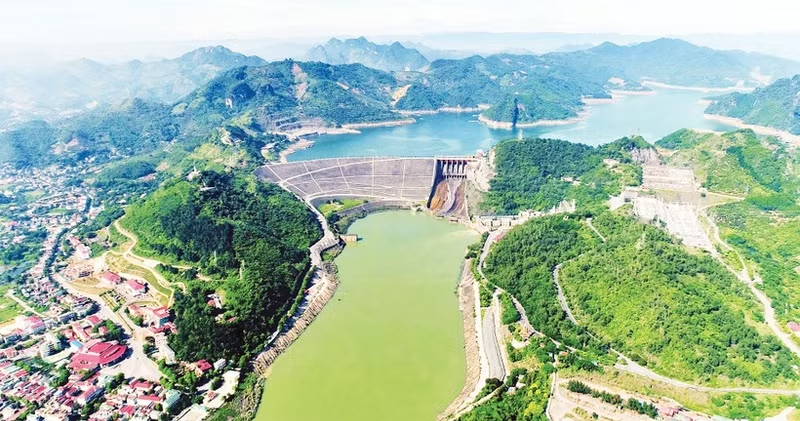
The power system operations in recent years have revealed many new challenges. Extreme weather phenomena such as prolonged heatwaves, droughts, and storms are increasingly affecting the national power system. At the same time, the rapid growth of renewable energy sources such as wind and solar power has posed additional challenges for power system operation. Due to their dependence on weather conditions, the output of these sources fluctuates significantly throughout the day, requiring traditional power sources such as hydropower and thermal power to frequently adjust their output to compensate, placing considerable pressure on maintaining stable power system operation.
In light of this situation, the EAV has implemented a range of coordinated solutions to ensure safe and stable power system operation given the increasing proportion of renewable energy. Priority has been given to improving the legal framework for system dispatch and operation, with various legal documents and technical regulations issued and amended to place power system safety and stability at the forefront, thereby providing a legal basis for integrating large-scale renewable energy sources.
These regulations clarify the principles of centralised and unified dispatch, under which the system and electricity market operator is responsible for planning and adjusting the output of power sources, including renewable energy, when necessary to ensure the safety and reliability of the national power system. At the same time, technical requirements for wind and solar power plants — such as voltage and frequency control, grid connection and operation — have been clearly specified, along with the responsibilities of stakeholders in complying with dispatch orders and coordinating operations when the proportion of renewable energy is high.
In addition, short- and medium-term load forecasting and renewable energy output forecasting have been strengthened to support the building of appropriate power system operation methods, thereby reducing operational risks and minimising sudden adjustments or unnecessary power cuts.
Regarding technical solutions in power dispatch, maintaining an appropriate proportion of traditional power sources and base-load power sources capable of rapid and stable frequency and voltage regulation, such as hydropower, thermal power, and gas turbines, is crucial. Simultaneously, gradual investment in and installation of energy storage systems (BESS) and the implementation of demand response (DR) programmes are also being promoted to support power system operation in the context of increasing renewable energy proportion.