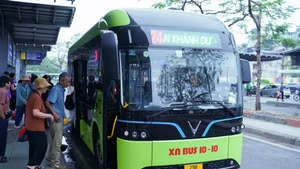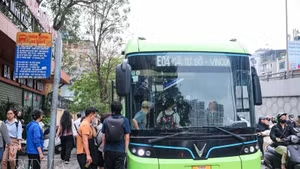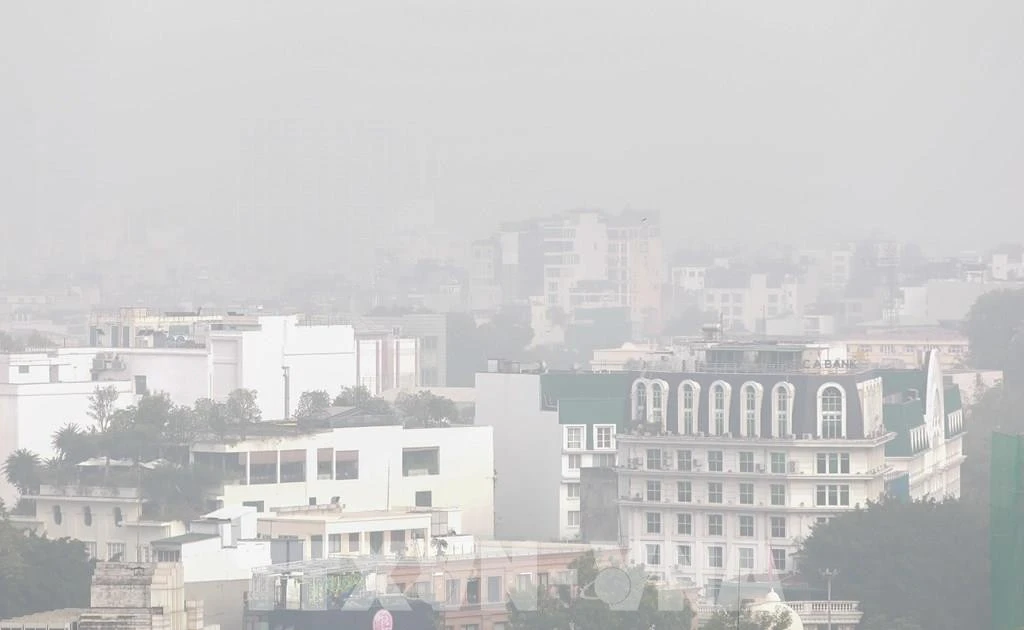
The goal was emphasised at a January 6 seminar on tackling air pollution in Ha Noi, set against the backdrop of new Government and city policies aimed at improving air quality, reducing emissions, and fostering green, sustainable urban growth.
Truong Manh Tuan, Deputy Head of the Division of Environmental Quality Management under the Ministry of Agriculture and Environment’s Viet Nam Environment Agency, said air pollution is most acute in Ha Noi and neighbouring provinces, particularly during the dry season when PM2.5 levels frequently exceed safe limits. The situation is worsening, posing significant health risks, especially for children, the elderly and people with respiratory and cardiovascular diseases.
According to the Ha Noi Department of Agriculture and Environment, air quality index (AQI) readings have at times reached poor and very poor levels. Key pollution sources include transport, industrial and construction activities, along with the burning of straw and household waste.
The Government has issued a national action plan on air pollution mitigation and air quality management for 2026–2030, with a vision to 2045. Under the plan, Ha Noi targets a 20% reduction in PM2.5 by 2030, while neighbouring provinces are expected to cut levels by over 10%. The focus will be on controlling major emission sources and improving the accuracy and usefulness of monitoring data.
At the local level, Ha Noi has affirmed its commitment not to trade environmental protection for economic growth. The city is moving to establish low-emission zones (LEZs) as a core measure to control emissions and promote green, sustainable urban development, in line with Resolution No. 57/2025/NQ-HDND of the municipal People's Council and the 2024 Capital Law.
Participants at the event agreed that tackling air pollution is a long-term task requiring coordinated action by authorities, businesses and the public. Effective implementation of the national action plan and Ha Noi’s targeted measures, including LEZs, aims to deliver tangible improvements in air quality and public health while supporting sustainable urban development.




![[In Pictures] Bridge columns and underpasses in Ha Noi begin to turn green](https://en-cdn.nhandan.vn/images/nyM650OGFWrOVWc-xajqN-rTZ68Rlmc1fiGJOhBRYHH_N-Xs0TE8Psnfce7ORTs-KVfoJaEblqjNufFrgeF3e2xFkGtLQVaXm04VcmMKBEkANUyiOkpz4zAuIKgydVrrfBxmGez0E_YJIag0u_Uil0E7jpuJXsIxeMmGjoY1-W4/1791863309074-2994714492692222878-2994714492692222878-adb9ff3f4175c70066ed8bb80cfbead9.jpg.avif)