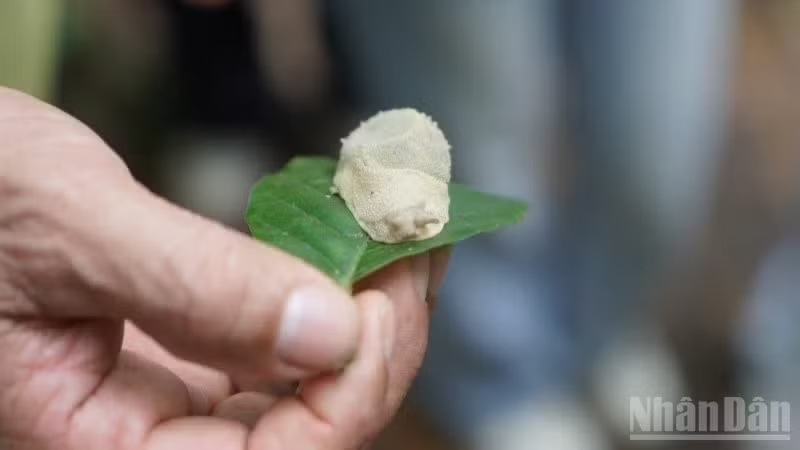
According to the Ninh Binh Department of Tourism, within its 22,408 hectares of primary forest, Cuc Phuong National Park is home to 2,234 species of vascular plants, 336 bird species, 122 reptile and amphibian species, around 2,000 insect species, and trees that are thousands of years old.
The presence of these thousands of species has created a tightly interconnected ecological network, sustaining the natural balance and vitality of Viet Nam’s oldest primary forest.
Speaking about the park’s distinctive features, Do Tien Dung, Head of the Mobile Forest Ranger Station, said: “Visitors to Cuc Phuong National Park can encounter three highlights: fireflies, butterflies, and forest leeches. While fireflies and butterflies have always been draws for visitors, forest leeches often provoke groans, as many people regard them as a nuisance along forest trails. However, few realise that the presence of forest leeches is not necessarily a bad thing; on the contrary, they serve as an indicator of healthy wildlife populations.”
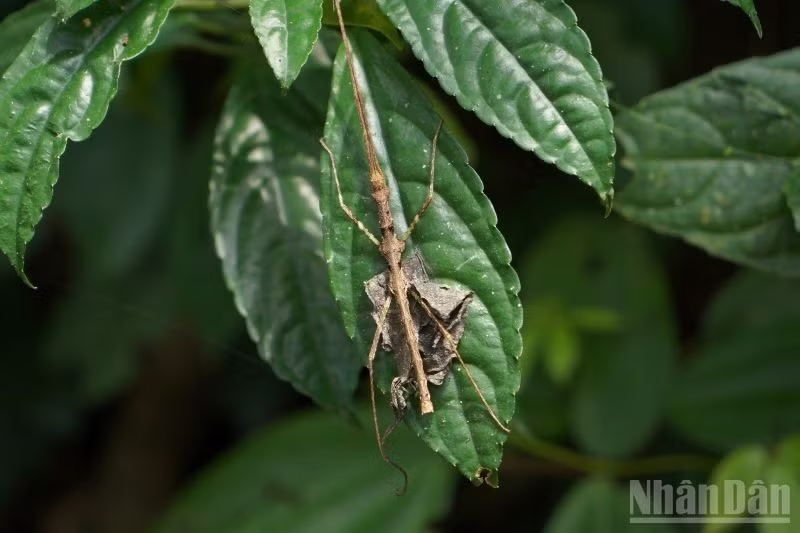
To survive, forest leeches must feed on the blood of various animals. This means that behind these tiny creatures lies an entire web of life at work, encompassing mammals, birds, reptiles, insects, and vegetation, all of which contribute to maintaining the balance and vitality of the forest ecosystem.
At Cuc Phuong, every organism plays a role in the ecosystem. Dung explained: “When a species disappears, it is not simply the loss of a living organism; it also breaks a link in the chain.”
Every species in Cuc Phuong National Park, whether large or small, represents a vital link that must be protected.
According to ecologists at Cuc Phuong National Park, a tropical rainforest ecosystem on limestone mountains such as Cuc Phuong is highly stratified and specialised, meaning that damage to a single link can trigger a domino effect.
For example, if populations of small carnivorous mammals decline, rodent populations may surge, leading to excessive consumption of forest seeds and directly undermining the forest’s natural regeneration.
Within this ecosystem, even death in the forest gives rise to new life. A decaying tree trunk can become a habitat for fungi, bacteria, insects, and birds.
Every fallen leaf, fallen tree, or dying organism becomes part of a regenerative process that supports countless other species. It is this continuous cycle of life that maintains the balance and enduring vitality of the forest.