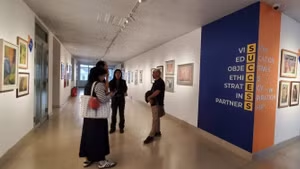
With the message of creative design awakening industrial heritage, Hanoi is a pioneer in piloting the idea of turning industrial heritages into creative cultural complexes, affirming cultural resources from old industry grassroots. In just a short time, a number of old production facilities in the inner city such as Gia Lam Train Factory and Hang Dau Water Tower were converted into cultural and artistic spaces, showing the potential of multi-purpose entertainment complexes and cultural and tourism destinations in combination with performing arts and educational space about history and culture suitable for many audiences.
Creative playgrounds based on heritages
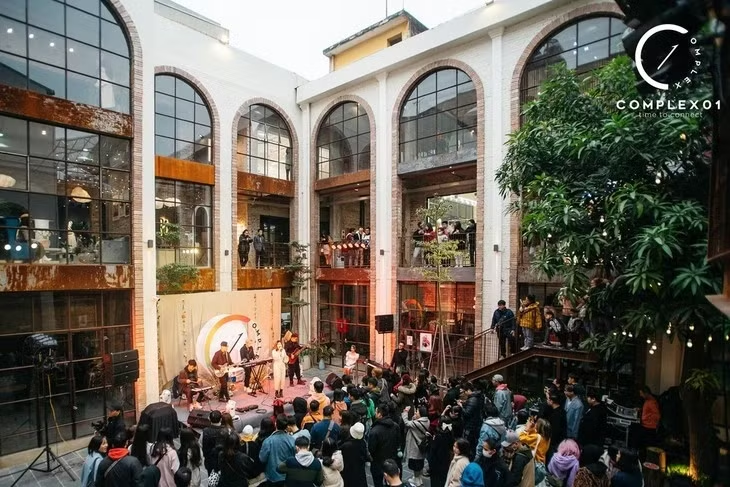
Looking back many years ago, Hanoi appeared a few models of converting old factories into creative spaces. The Complex 01 located on Tay Son Street is a community complex reconstructed on the grounds of the Trade Union Printing Factory. 282 Workshop on Phu Vien Street was formed and operated in an old helmet factory in Long Bien District. Although they were invested and renovated on a small scale, spontaneously and have been facing many difficulties in operation due to lack of supportive policies and experience in strategic development, these reused spaces have formed the creative communities, the highlights in the urban space and the interesting cultural rendezvous addresses. Despite great efforts made to transform hundred-year heritage sites into exhibition spaces, installations, performances, and display spaces, the models on regenerating industrial heritage across the country have remained fragmented and are still operating moderately. The reason is the lack of master plan or legal corridor for this type of industrial architecture.
Vietnam once had many factories, plants, and factories which were symbols of the country's development stages, preserving cultural imprints of each period. During the urban development planning process, many industrial facilities were demolished and replaced with new urban areas, apartments, and shopping centres such as Nam Dinh Textile Factory (Nam Dinh Province), Ba Son Shipyard (Ho Chi Minh City), Hai Phong Cement Factory (Hai Phong City), and Dong Xuan Knitting Factory, Tien Bo Printing Factory, Yen Phu Power Plant, and Cao-Xa-La Area (in Hanoi). Hanoi has also repurposed the Hoa Lo Prison relic site as a tourism and traditional patriotic educational site with many tours and displays.
Currently, some provinces and cities such as Hanoi, Ho Chi Minh City, and Quang Ninh Province have early developed industries and a quite large fund of industrial works with outstanding historical and architectural value. Hanoi has Hanoi Brewery - Hanoi Beer Alcohol and Beverage Joint Stock Corporation (HABECO), Thang Long Tobacco One Member Company Limited, and Gia Lam Train Factory. Meanwhile, Quang Ninh has the Quang Yen Zinc Factory. Instead of relocating or erasing, it is essential to reconsider the value of these works to make a proper restoration and conservation plan, contributing to preserving the historical urban areas in the heart of the modern city. However, the current legal issue a barrier to protecting these works because Vietnam has not recognised any works as industrial heritage.
Giving opportunities for community to create
The 2001 Law on Cultural Heritage and the 2009 Law Amending and Supplementing a Number of Articles of the Law on Cultural Heritages do not provide regulations on industrial heritage. The Law on Architecture does not provide guidance on industrial heritage nor the assessment and cataloguing of valuable architectural works.
Architect Pham Thuy Loan, former Deputy Director of the National Institute of Architecture under the Ministry of Construction, a representative from the Asian Industrial Heritage Conservation Network, noted that it is necessary to affirm that industrial heritage is an inseparable part of cultural heritage in general, reflecting a remarkable progress in the history of human civilisation and an important milestone in the development of modern society.
Industrial heritage is a new issue in Vietnam. In the world, there are many models for successful transformation of creative hubs. Regardless of referencing or “importing” models and methods from any country, the problem of recreating rebuilding industrial spaces into multidisciplinary cultural and creative arts complexes in Vietnam will face issues of environmental sanitation, fire and explosion prevention, reinforcement to ensure safety for the project and people accessing them.
Not every industrial heritage can be turned into a creative area, but in the context of the creative community's "thirst" for sustainable spaces, the city has many old unused industrial facilities. If the old facilities are converted and reused to adapt to urban development, this is a solution that both preserves historical works and creates new spaces suitable for the development of modern urban areas, creating the foundation and infrastructure for the development of cultural industries such as cinema, performing arts, culture, tourism, and fine arts.