Three drivers behind the breakthrough momentum in industrial production
According to a report by the Statistics Office under the Ministry of Finance, industrial production (IIP) in the third quarter of 2026 continued to maintain double-digit growth, estimated at 14.8% year on year. Overall, IIP in the first nine months of 2026 is estimated to have increased by 12.3% year on year, the highest nine-month growth rate since 2019, with manufacturing and processing industries rising by 12.9%.
Overall, IIP in the first nine months of 2026 is estimated to have increased by 12.3% year on year, the highest nine-month growth rate since 2019, with manufacturing and processing industries rising by 12.9%.
According to Phi Thi Huong Nga, Head of the Industrial and Construction Statistics Department, the broad-based spillover effects of the industrial sector in the first nine months of 2026 are clearly reflected in three positive factors.
First, the spillover effects have extended across the entire economic landscape and all level-I industries. All 34 provinces and cities nationwide have maintained positive growth in the Industrial Production Index (IIP) over the first nine months. Alongside major FDI centres such as Thai Nguyen (+23.2%), Bac Ninh (+20.2%), and Hai Phong (+15.2%), very high growth was also recorded in localities developing domestic industry, energy infrastructure, and materials, such as Ha Tinh (+40.2%), Ninh Binh (+25.0%), Nghe An (+21.5%), Phu Tho (+21.5%), and Quang Ninh (+18.6%).
At the same time, nationwide, all four level-I industrial sectors recorded positive growth: manufacturing and processing, the sector accounting for the largest share of the entire industrial sector, increased by 12.9%; electricity rose by 10.6%; water supply increased by 9.3%; and mining grew by 8.0%.
Second, a deeper analysis shows that industrial production growth has taken place across all level-II industrial sectors, rather than being locally dependent on the FDI sector.
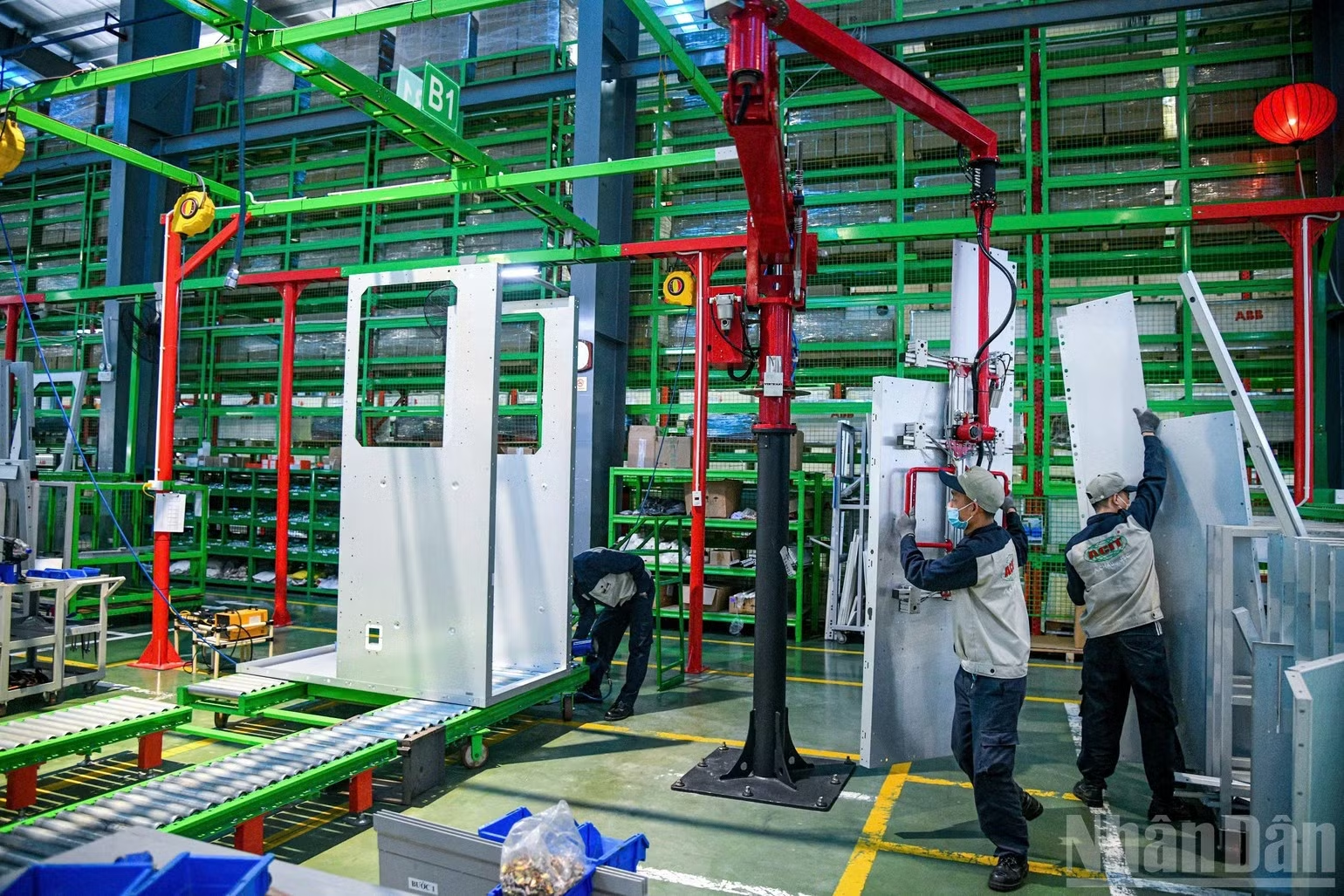
The manufacture of electronic products and computers recorded growth of 15.2%, serving as a technological driver. In addition, thanks to the spillover effects of accelerating the progress of public investment projects as well as numerous major private investment projects, domestic industries producing materials and machinery also achieved high growth rates: the manufacture of basic metals increased by 25.5%; the manufacture of products from non-metallic minerals (cement, concrete, etc.) rose by 12.2%; and the manufacture of motor vehicles increased by 15.3%.
Alongside increased production in manufacturing industries, processing industries serving mainly domestic consumption demand also recorded high growth: beverage production increased by 17.4%; and food production and processing rose by 12.5%.
Third, in addition to the acceleration in output, the quality of growth is also reflected in shifts in the product structure towards expanding long-term production capacity.
By the intended use of industrial products, the group producing industrial products classified as means of production maintained a high growth rate of 15.4% (far exceeding the 11.5% growth rate of the group producing industrial products for household consumption). This demonstrates that investment capital from the whole society and new-generation FDI capital are penetrating deeply into the expansion of production capacity, rather than merely serving short-term consumption cycles.
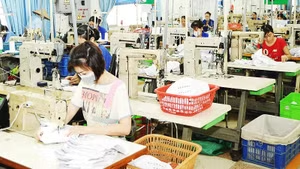
Phi Thi Huong Nga further analysed that, alongside the above-mentioned positive factors, there remains a trend of differentiation among manufacturing sectors. High-tech industries (electronics) and industries producing materials for construction investment activities have absorbed capital flows effectively and accelerated rapidly, while traditional labour-intensive processing industries such as textiles and garments (up only 7.8%) and leather and footwear (up 3.4%) have recovered more slowly. The main reason for this is pressure from persistently high sea freight rates and new trade barriers, which have affected the competitiveness of enterprises in the textile, garment, leather, and footwear sectors.
Expectations for continued improvement in final months of the year
The results of the quarterly business production and trading trend survey conducted by the Statistics Office, following the positive results recorded in the third quarter of 2026, show that optimism in the fourth quarter of 2026 continues to spread clearly. Accordingly, overall confidence has risen sharply: as many as 83.9% of enterprises forecast that their production and business activities in the fourth quarter of 2026 compared with the third quarter of 2026 will improve or remain stable, while only 16.1% of enterprises expect greater difficulties.
83.9% of enterprises have forecast that their production and business activities in the fourth quarter of 2026 will improve or remain stable compared with the third quarter of 2026, while only 16.1% of enterprises expect greater difficulties.
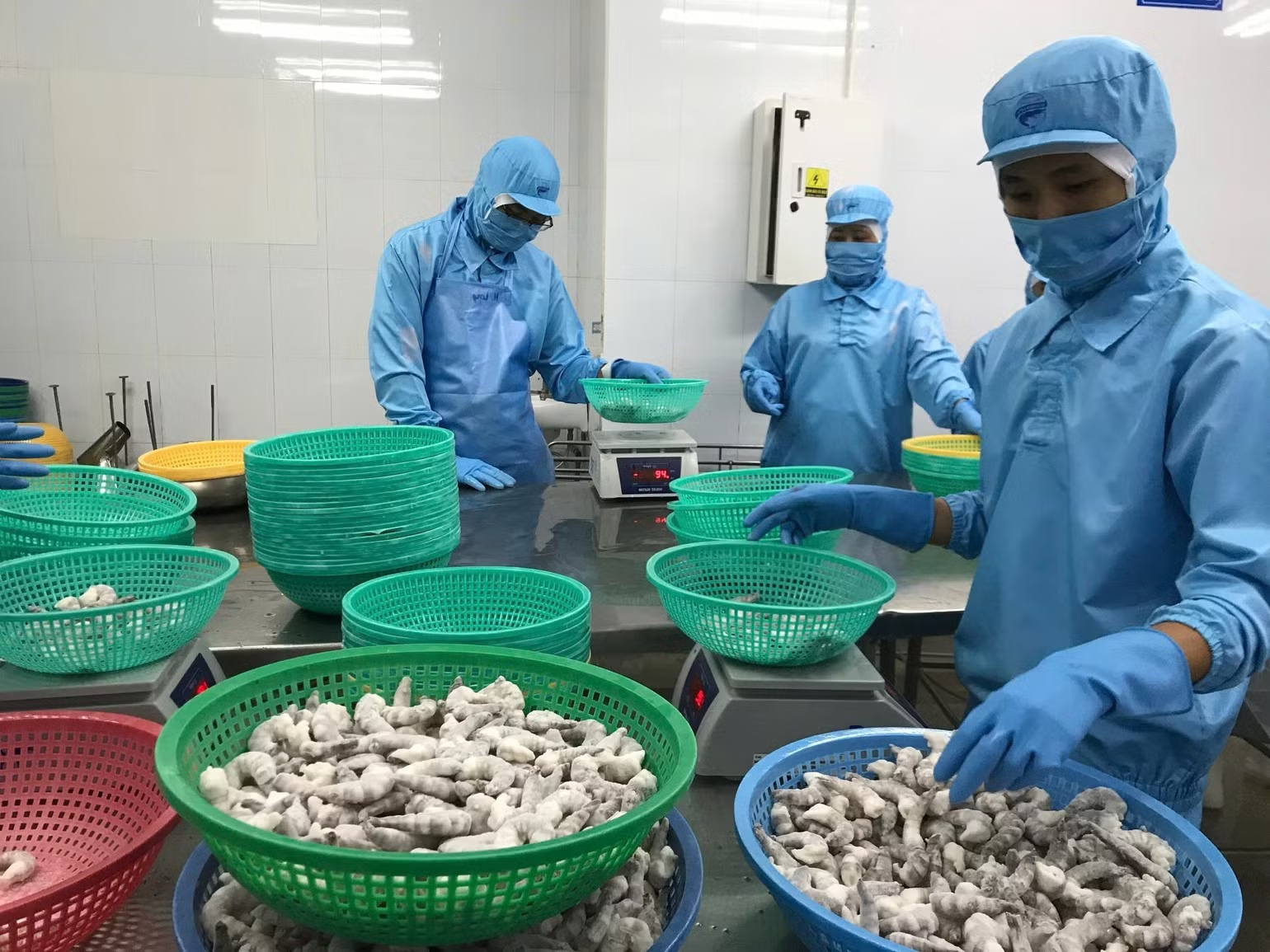
Positive expectations cover orders, output, and labour, with 85.6% of enterprises forecasting that new orders in the fourth quarter will increase or remain unchanged, while 85.0% of enterprises are forecasting that export orders will increase or remain unchanged. In terms of production volume, 85.2% of enterprises have forecast an increase or no change. Regarding labour utilisation, 90.2% of enterprises expect employment to increase or remain unchanged. Average machinery and equipment utilisation in the third quarter reached 76.1%, providing a good springboard for increasing output towards the end of the year.
Phi Thi Huong Nga said that, overall, industrial production growth in the first nine months of 2026 has been broad-based and has had substantive spillover effects.
To safeguard growth momentum in the fourth quarter of 2026, key orientations that need to be addressed immediately include focusing on logistics supply chain risk management in order to respond swiftly to fluctuations in international markets, continuing to accelerate the progress of major public and private investment projects to stimulate demand for industries producing materials for construction projects, and supporting enterprises in making maximum use of FTAs.
Alongside the efforts of enterprises, businesses also greatly need the support and companionship of state management agencies to provide better assistance and enable them to maintain the current growth momentum.