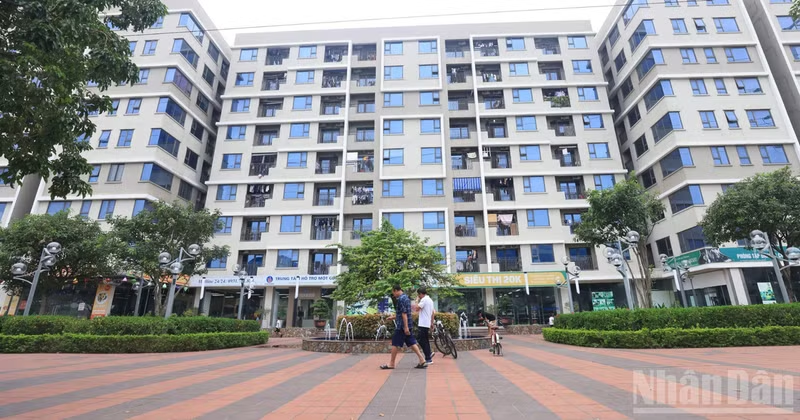
Promoting the development of social housing is not only aimed at meeting socio-economic targets, but also clearly demonstrates the Party and state’s determination to ensure social welfare and progressively realise the goal of “secure housing and stable livelihoods” for the people.
In recent times, under the decisive direction of the government and the prime minister, together with the concerted efforts of the entire political system, social housing development has achieved a number of positive results. Immediately following the issuance of Resolution No. 07/NQ-CP (dated January 12, 2026), many localities proactively allocated land funds, selected investors, and commenced new projects, closely adhering to the target of completing more than 158,700 units in 2026.
According to the Ministry of Construction, in the first four months of 2026, a total of 40 social housing projects were launched nationwide, comprising 36,590 units. Cumulatively, 226 projects are currently under implementation with a total scale of 228,725 units, reaching 144% of the assigned target, with 5,426 units having already been completed. Notably, 25 provinces and cities have met or exceeded their 2026 project commencement targets, including Hai Phong, Hue, Da Nang, Can Tho, Quang Ninh, and Dong Nai.
Alongside these achievements, the ministry also pointed out a number of shortcomings and limitations affecting progress in several localities. Some areas have not devoted sufficient attention or resources to compensation, support, and resettlement, leading to a shortage of cleared land for project development.
The quality of land funds in certain projects remains limited, with locations far from city centres and lacking synchronised technical and social infrastructure, thereby affecting residents’ living and working conditions. In addition, administrative procedures in some localities have not been handled under “fast-track” or priority mechanisms, resulting in prolonged project timelines.
Furthermore, some localities have yet to meet their project commencement targets or have not been sufficiently proactive in urging and monitoring investors’ implementation progress.
To ensure the fulfilment of the 2026 targets, the Minister of Construction has requested that chairpersons of provincial and municipal People’s Committees focus on implementing a range of key solutions in a coordinated manner. These include urgently reviewing and consolidating provincial steering committees for housing policy and the real estate market and completing the establishment of local housing funds in the second quarter of 2026.
Local authorities are required to work directly with each investor to clearly determine the progress of projects expected to be completed within the year, ensuring their completion before 31 December 2026. For projects facing difficulties, proactive measures should be taken to resolve bottlenecks while also applying modern construction technologies to shorten timelines and prioritising administrative procedures under special mechanisms.
In terms of planning, the Ministry of Construction has called on localities to prioritise the allocation of land in favourable locations, ensuring synchronised connections with transport, healthcare, and education systems, thereby improving the quality of life of residents. Amid fluctuations in the prices of construction materials, localities are also urged to promptly announce market-aligned material prices to support enterprises in controlling costs.