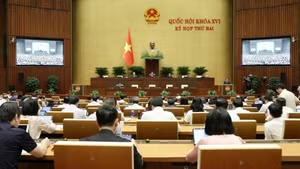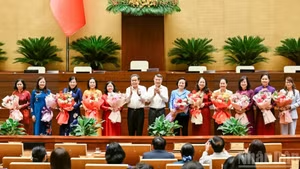
On June 27, in Ha Noi, the Ministry of Public Security, in coordination with the Ha Noi People's Committee, organised a meeting and a mass running event in response to the 2026 Action Month for Drug Prevention and Control. The event demonstrated the strong determination of the entire political system and the public to prevent and eliminate drug-related crimes and social evils.
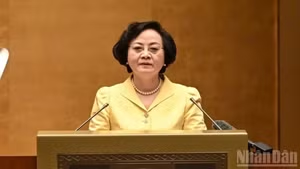
Deputy Prime Minister, Chairwoman of the National Committee for AIDS, Drug and Prostitution Prevention and Control, Pham Thi Thanh Tra, attended the event and made a speech.
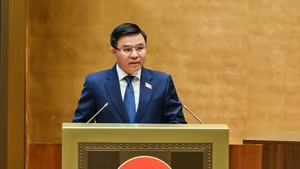
Also in attendance were Senior Lieutenant General Nguyen Van Long, Deputy Minister of Public Security, and leaders of Ha Noi.
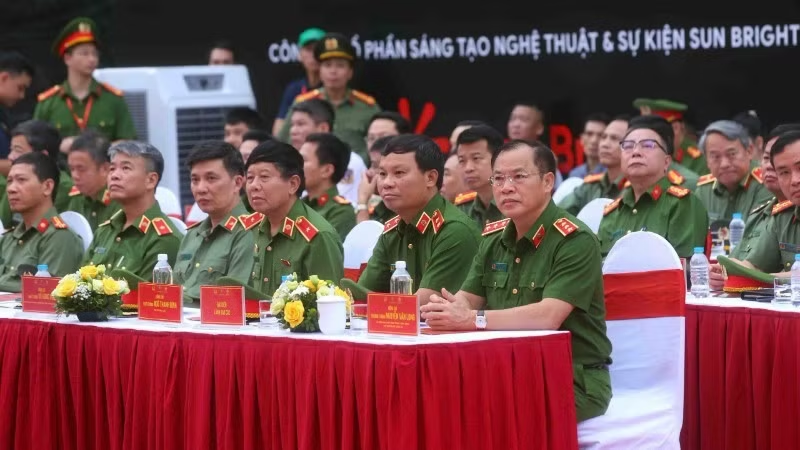
Under the theme “United in Determination to Build Drug-Free Communes, Wards and Special Zones”, the 2026 meeting marked the first time the event had been organised simultaneously online nationwide. From the central venue at Dong Kinh Nghia Thuc Square in Ha Noi, the programme was livestreamed to 33 provinces and centrally governed cities and 3,321 communes, wards and special zones across the country.
In particular, the live broadcast of the flag-raising ceremony from Ba Dinh Square-Ho Chi Minh Mausoleum to all participating venues created an atmosphere of solemnity and reverence.
Speaking at the event, Deputy Prime Minister Pham Thi Thanh Tra, Chairwoman of the National Committee for AIDS, Drug and Prostitution Prevention and Control, expressed profound appreciation and gratitude to the People's Public Security Force, the Border Guard Force, other competent agencies, and officers and soldiers for their resilience, dedication and willingness to make the ultimate sacrifice on this particularly important front.

The Deputy Prime Minister also acknowledged the determined leadership of ministries, sectors, relevant agencies and People's Committees at all levels, as well as the active participation of all sections of society in drug prevention and control over many years.
Deputy Prime Minister Pham Thi Thanh Tra affirmed that comprehensive measures to reduce the supply of drugs, curb demand and minimise drug-related harm had been implemented in recent years. She stressed that building “drug-free communes, wards and special zones” is a core policy aimed at bringing drug prevention and control efforts directly to the grassroots level while enhancing the proactive role of local authorities and the public.
Although many large transnational drug trafficking networks have been dismantled and significant progress has been achieved in drug rehabilitation and international cooperation, Viet Nam continues to face enormous challenges in drug prevention and control. Cross-border drug trafficking and transportation have become increasingly sophisticated, with close collaboration among international criminal organisations.
In particular, the rapid development of digital technology, social media, e-commerce, express delivery services and anonymous payment methods has fundamentally changed the operating methods of drug traffickers. They not only transport drugs across borders but also infiltrate residential communities and individual households, posing a direct threat to the future of the younger generation.
The Deputy Prime Minister noted that the country is confronting not only drug-related crime itself but also the danger of drugs penetrating every family and community, depriving part of the younger generation of its future.
The Government has identified drug prevention and control not merely as the responsibility of law enforcement agencies, but as a shared responsibility of society as a whole, placing prevention at the forefront, focusing on grassroots communities, and putting people at the centre of building a safe, drug-free living environment.
To achieve this objective, the Deputy Prime Minister called on ministries, sectors, localities and all citizens to focus on grassroots communities, strengthen the core role of the People's Public Security Force, and mobilise the combined strength of the entire political system, society and every individual in the determination to build drug-free communes, wards and special zones.
According to the Deputy Prime Minister, this must represent a commitment by authorities to the people, accompanied by the active participation of the public to create tangible results, while also serving as a criterion for assessing the quality of local governance in the new context.