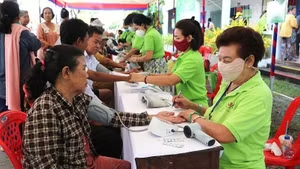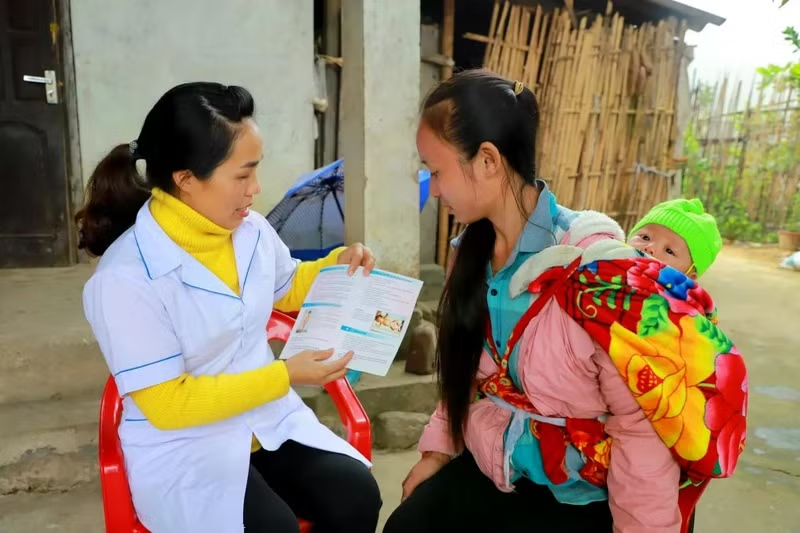
The Population Law, approved at the 10th session of the 15th National Assembly, focuses on four key policy areas: maintaining replacement fertility levels; addressing gender imbalance at birth; improving population quality; and adapting to population ageing.
Tackling gender imbalance and demographic challenges
Viet Nam is undergoing profound shifts in population size, structure, and quality. Fertility rates have declined sharply, gender imbalance at birth remains persistent, and population ageing is accelerating.
Through family planning policies, the country’s total fertility rate has dropped significantly, with the average number of children per woman of childbearing age falling from 3.2 to 1.96.
Yet this achievement has brought new challenges: fertility rates below replacement level in many provinces, faster-than-expected ageing, persistent gender imbalance at birth, regional disparities in fertility, and labour fluctuations driven by migration.
The Population Law, comprising eight chapters and 31 articles, completes the legal framework, contributing to improvements in indicators such as physical and mental health, stature, life expectancy, and quality of life for Vietnamese people.
By 2025, Viet Nam will have more than 10.3 million people aged 65 and above, accounting for over 10% of the population. Fertility rates in major cities hover around 1.5 children per woman, far below the level required to sustain population structure.
The first National Report on Civil Registration and Vital Statistics for 2021–2024 revealed that gender imbalance at birth is worsening, with 111.4 boys born for every 100 girls last year.
According to the Ministry of Health, if this imbalance continues, Viet Nam could face a surplus of 1.5 million men aged 15–49 by 2034, rising to 1.8 million by 2059.
If these issues are not addressed promptly, they will have serious consequences for socio-economic development, particularly in maintaining human resources and social security.
To overcome shortcomings in the Population Ordinance and align with current development trends, the Population Law introduces more detailed policies and measures to enhance population quality.

The law, comprising eight chapters and 31 articles, completes the legal framework, contributing to improvements in indicators such as physical and mental health, stature, life expectancy, and quality of life for Vietnamese people.
Importantly, local authorities will integrate population objectives into their annual socio-economic development plans, ensuring population issues are not treated solely as a health sector concern. This integration is seen as crucial to bringing the law into practice.
On gender imbalance, the law prohibits all forms of foetal sex selection (except for diagnosing and treating sex-linked genetic conditions); suspends licences of practitioners who disclose or reveal foetal sex information; and encourages communities to include commitments rejecting son preference and sex selection in local covenants and regulations.
The law also introduces policies to encourage childbirth in areas with low fertility, strengthens communication and education to promote gender equality and human value, and sets out measures for rational population distribution and migration regulation.
These provisions aim to address sparse populations in mountainous regions while easing pressure on overcrowded major cities, laying the foundation for balanced demographic development across regions.
Ensuring sustainable fertility and adapting to ageing
Le Thanh Dung, Director of the Population Department, emphasised that maintaining replacement fertility levels is one of the four major policy groups enshrined in the Population Law.
In line with the Prime Minister’s directives on digital transformation, the law mandates the integration of the national population database with resident data systems and social insurance
In addition to upholding provisions on the rights and obligations of couples and individuals regarding childbirth from the Population Ordinance, the law introduces measures to encourage and support families in having and raising children.
It particularly highlights policies to sustain reasonable fertility levels, including financial support, maternity leave, and prioritised access to social welfare for families with exactly two children.
To address population ageing, the law outlines solutions such as developing long-term care systems, expanding geriatric services in communities, promoting “active ageing” models, and increasing employment opportunities for older people.
In line with the Prime Minister’s directives on digital transformation, the law mandates the integration of the national population database with resident data systems and social insurance. This breakthrough is expected to improve forecasting accuracy, reduce administrative procedures, and enhance management efficiency.
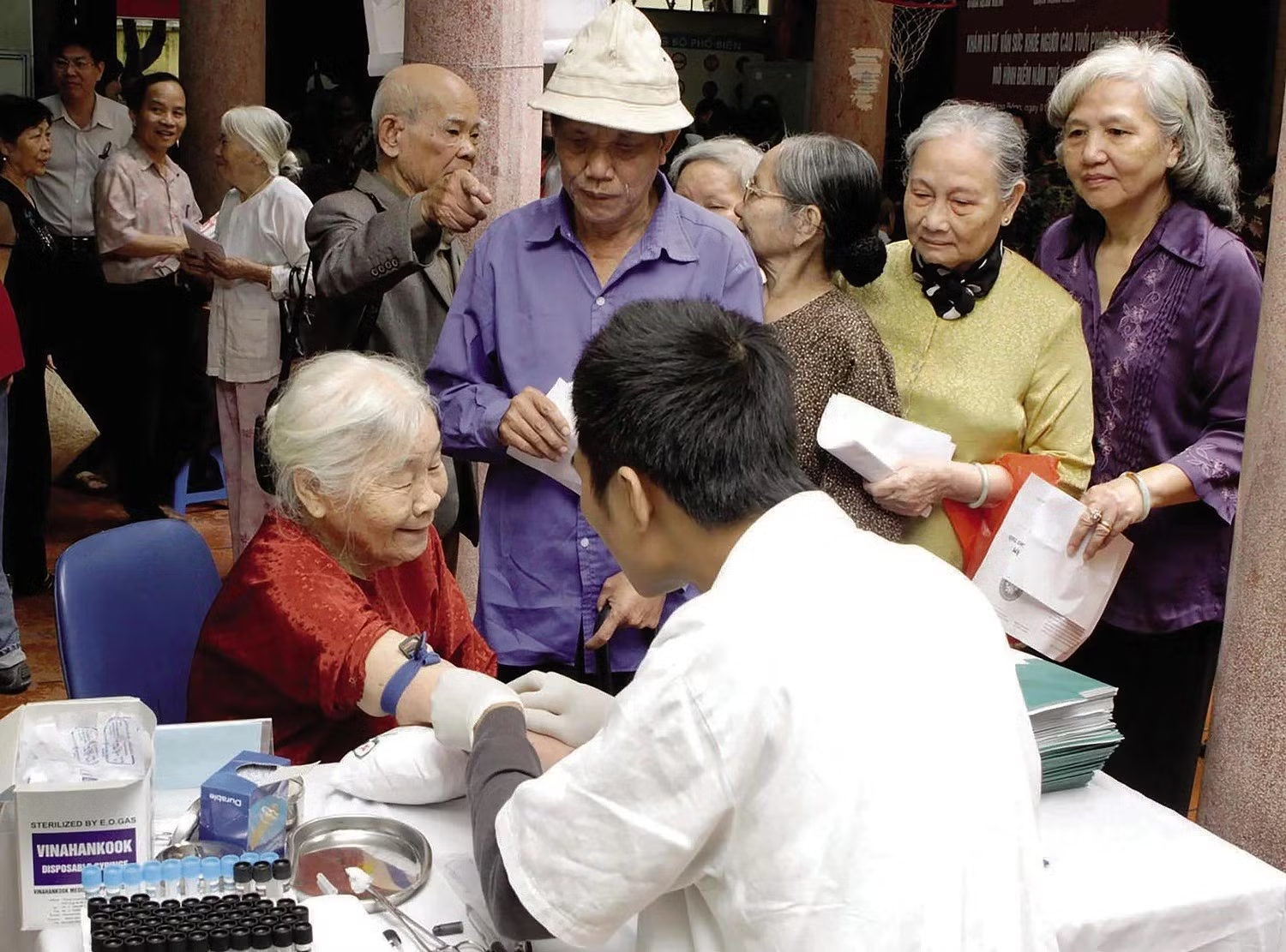
Before submission to the National Assembly, the draft law underwent extensive consultation with experts and scientists to ensure feasibility and practical alignment.
Once in effect, the Population Law is expected to generate positive impacts, stabilising population structure, size, and quality. The political system, mass organisations, and citizens will gain deeper awareness of the role of population in development.
The nationwide population and family planning network, from central to grassroots levels, will act as the “extended arm” to bring policies into everyday life.
Meanwhile, digital transformation infrastructure—particularly resident databases and personal identification codes—will enable more accurate and rapid population management and forecasting.