Amid this process of transformation, the press continues to affirm its role as a bridge between the Party, local authorities, and the people, fostering social consensus, spreading positive values, and inspiring aspirations for development at the grassroots level.
Alongside the operation of the two-tier local government system, remote communes and ethnic minority areas are facing new opportunities to unlock their potential, attract investment resources, and improve local livelihoods.
Press contributes to bring policies closer to the people
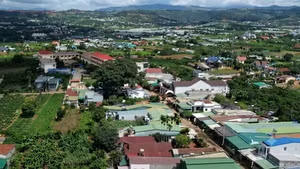
These days, productive activity remains vibrant along the rural roads of Dak Ui Commune. Lush coffee plantations, clean concrete roads, and well-maintained residential areas stand as evidence of the remarkable transformation of a locality that once faced many difficulties.
Starting from a modest foundation, Dak Ui has gradually mobilised public participation and leveraged investment resources to improve infrastructure, develop production, increase incomes, and move towards becoming a model new-style rural area. These achievements are the result of the combined determination of the entire political system and the strong support of residents.
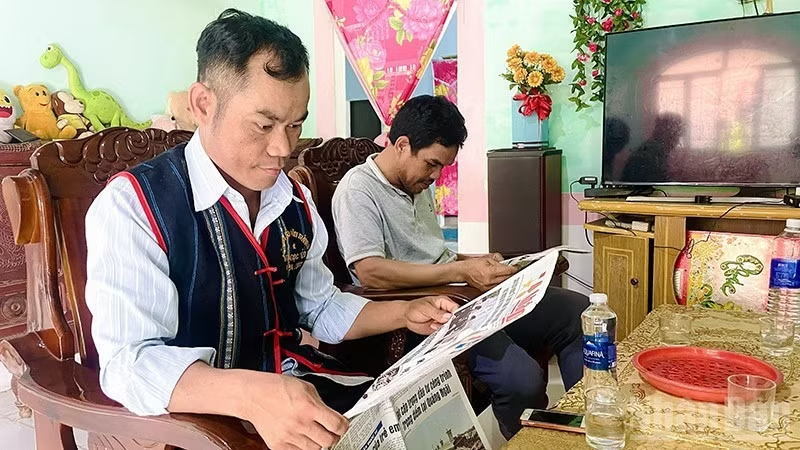
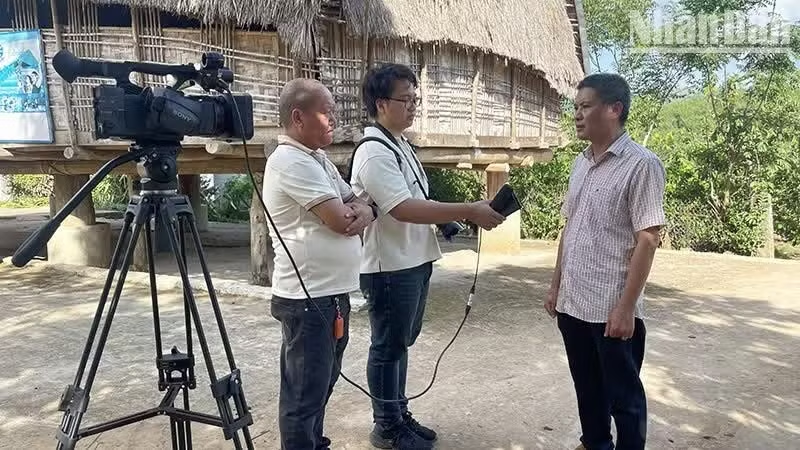
Throughout this process, the press has become an active partner. Through daily radio broadcasts, television programmes covering local affairs and in-depth articles in print and online newspapers, information on rural development, digital transformation, production enhancement, and the preservation of traditional culture has been delivered promptly, clearly, and accessibly to local people.
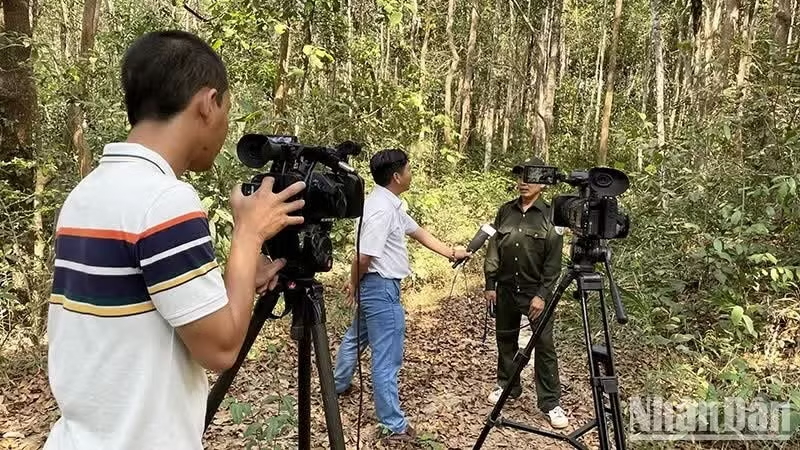
Pham Van Lap, Chairman of the People's Committee of Dak Ui Commune, noted that under the two-tier local government model, alongside communication efforts by mass organisations and village officials, the support of the press plays a particularly important role. “The press is the fastest channel through which people can access the Party’s policies and guidelines. News and reports are shared widely, helping to spread awareness, build consensus, and mobilise public participation in rural development,” he said.
Beyond reflecting social life, the press has also contributed to local economic development. In recent years, numerous reports and feature stories have highlighted the application of science and technology, crop and livestock restructuring, OCOP products, and high-tech agricultural production in remote communes across the Dak Ha area.
Spreading good models and promoting rural economic growth
Following the administrative restructuring and implementation of the two-tier local government model, Dak Ha Commune has entered a new phase of development with a larger territory, a bigger population, and higher governance requirements. The locality has identified key priorities including stabilising its administrative apparatus, improving state management efficiency, and accelerating administrative reform and digital transformation, while effectively harnessing land resources, agricultural potential, and social capital.
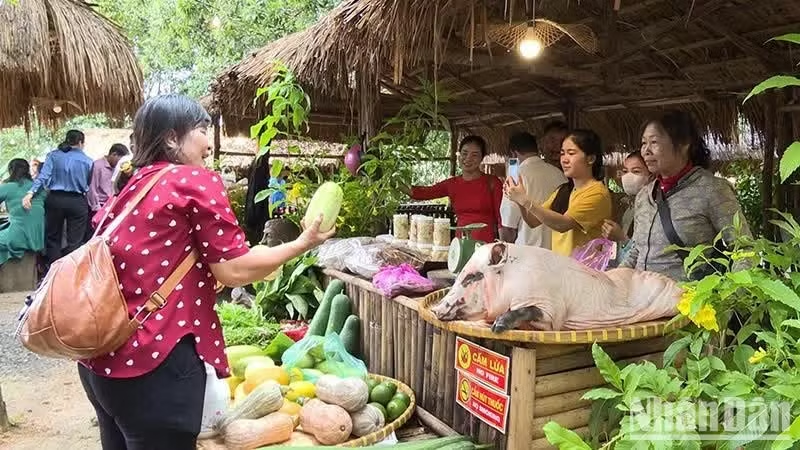
According to Nguyen Minh Vuong, Chairman of the People's Committee of Dak Ha Commune, with strengths in coffee production, fruit cultivation, OCOP products, and cooperative economics, Dak Ha continues to be recognised as one of the key agricultural production areas in western Quang Ngai. Alongside production development, the locality is investing in rural transport infrastructure, schools, and cultural facilities to improve residents’ quality of life.
“In the context of operating a two-tier local government system, enhancing public service quality and ensuring timely and effective communication are essential. The press plays an important role in both disseminating policies and reflecting people’s aspirations so that authorities can develop appropriate solutions. It also serves as a rapid channel for social feedback, helping local governments make timely adjustments while recognising and promoting effective models,” he emphasised.
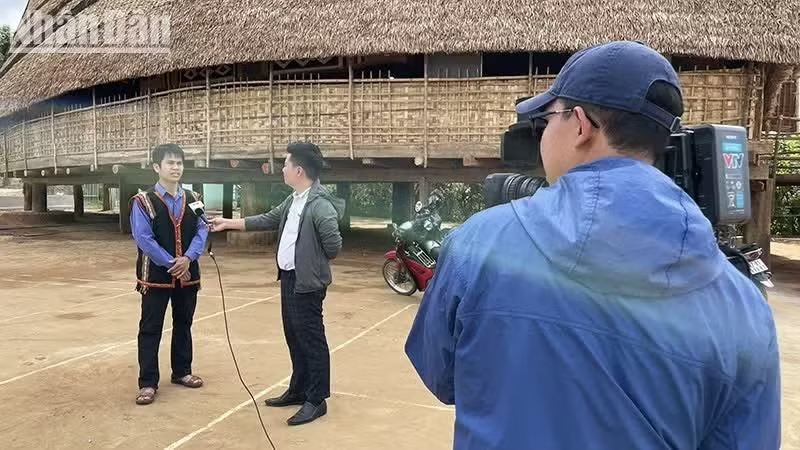
The press has become more than a communication channel; it has also become a companion to local people in economic development. Over the years, reports on scientific and technological applications, production restructuring, OCOP development, and value-chain linkages have been carried out in remote communes throughout the Dak Ha area. Many successful examples have been discovered, documented, and shared widely by the media. As a result, local people have gained valuable information and confidence to adopt new production methods and improve economic efficiency.
Nguyen Van Dan, an official of the Dak Ha Farmers’ Association, shared: “I have worked with the Farmers’ Association for many years, and almost every year media organisations visit to report on production models, particularly OCOP products and high-quality agricultural products. Thanks to media coverage, many successful models have become widely known. Some initiatives were previously unfamiliar even to people in the same locality, but after being featured on television or online news platforms, many residents came to learn from them. This has created a positive ripple effect in the movement promoting productive and successful farming.”
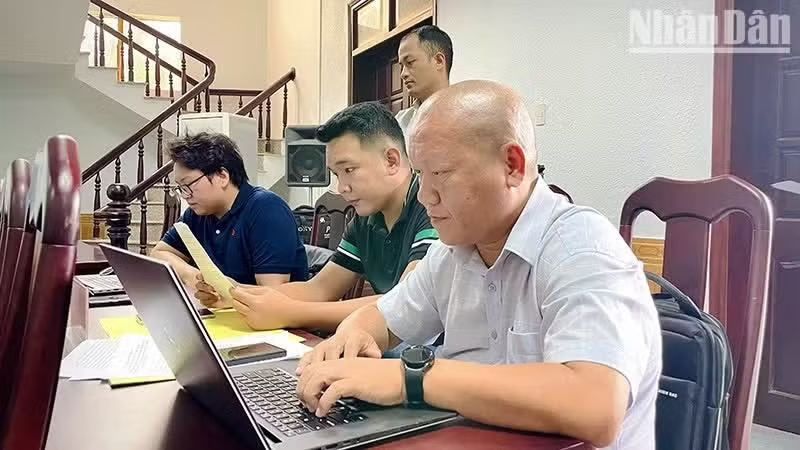
From a market perspective, the press also acts as a bridge for brand promotion and market expansion. Many of Dak Ha’s OCOP products have gained wider recognition through media campaigns and promotional programmes.
Nguyen Tri Sau, Director of Sau Nhung Agricultural Production, Trade and Services Cooperative, believes that media support has enhanced brand recognition and strengthened consumer confidence, encouraging cooperatives to invest further in product quality improvement.
Accompanying ethnic minority and remote communities
As with Dak Ha, Dak Pxi Commune is a remote ethnic minority area that has witnessed positive changes in recent years. With more than 90 per cent of its population belonging to ethnic minority groups, the locality focuses on implementing national target programmes, supporting livelihoods, sustainably reducing poverty, improving infrastructure, and raising living standards.
Throughout this process, the press has helped bring Party and state policies closer to local people while identifying and promoting innovative and effective models in socio-economic development, rural development, public security, and cultural preservation.
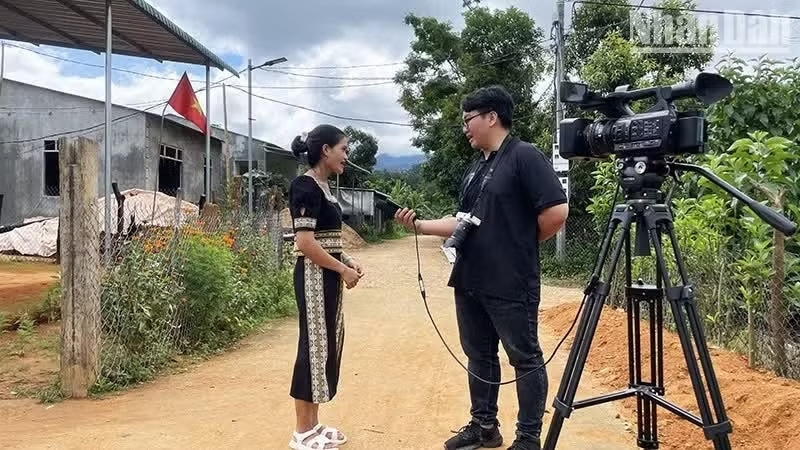
Pham Thi Thuong, Secretary of the Dak Pxi Party Committee, observed: “By promptly reflecting Party and state policies, the press has become an effective bridge between government and citizens. It highlights good practices and innovative approaches while also fulfilling its role in social supervision and criticism, helping local authorities improve governance effectiveness and build public consensus.”
As the two-tier local government model officially comes into operation, the role of the press has become even more evident. With increasing demands for rapid, accurate, and timely information, radio, television, and online news platforms have become essential sources of information, enabling people to stay informed about new policies, national target programmes, and issues directly affecting their lives.
Notably, during the implementation of socio-economic development programmes for ethnic minority and mountainous areas, campaigns to change outdated mindsets and practices, initiatives to eliminate temporary and dilapidated housing, and efforts to build advanced and model new-style rural areas, the press has played a significant role in generating consensus and encouraging active community participation.
From reports on daily life to in-depth features on economic development, Party building, and the preservation of ethnic cultural identity, the press has contributed to positive changes in both awareness and action among people in remote areas.
Returning to the remote ethnic minority communes of western Quang Ngai after a period of operating under the two-tier local government model, one can clearly see transformation taking place day by day. Along this journey are the footprints of journalists who quietly document the new rhythms of local life, helping connect the Party’s vision with the people’s aspirations, inspiring progress, and supporting the development of remote communities in a new era.