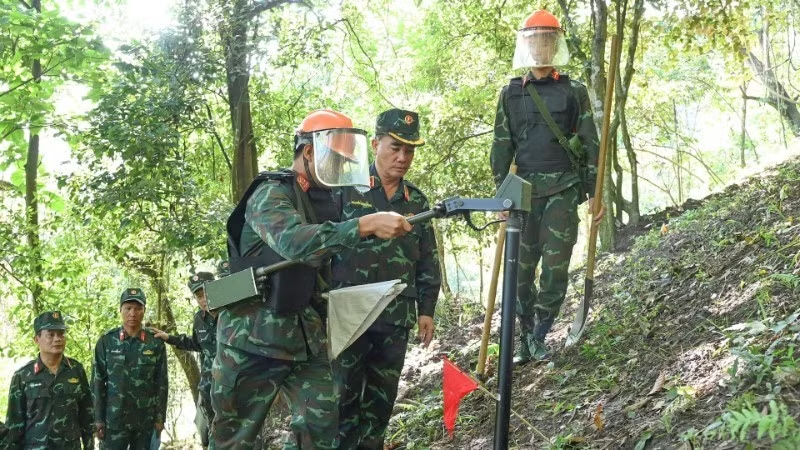
Pain and challenges beneath the surface
Across the country, some 5.6 million hectares of land remain contaminated by bombs and mines left over from the war, equivalent to 17.7% of Viet Nam’s natural land area. Since 1975, leftover ordnance has claimed more than 40,000 lives and injured over 60,000 people, most of them main breadwinners, ethnic minority citizens and children. The central region, once the fiercest battlefield, has recorded over 22,800 victims, including more than 10,500 deaths.
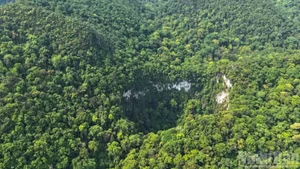
In the northern mountainous region, Lang Son Province alone still has around 21,000 hectares of contaminated land. Such areas have become barriers to development: millions of hectares lie abandoned; many infrastructure, energy and tourism projects face delays; and local livelihoods are constrained by constant safety concerns.
According to VNMAC, during 2023-2024 more than 73,000 hectares of land were cleared to support socio-economic development, of which the armed forces handled over 59,000 hectares, with the remainder carried out by VNMAC in collaboration with international organisations.
Areas once heavily contaminated, including Ha Giang, Quang Tri, Thua Thien Hue, Quang Ngai and Gia Lai, have gradually been brought back to life. A notable example is the “Mine Action for the Korea-Viet Nam Peace Village” project, funded by the Korean government through the Korea International Cooperation Agency (KOICA), with a total budget of 25 million USD. The project has helped transform contaminated areas into safe residential zones and farmland, enabling communities to work with confidence and stabilise their lives.
Strengthening cooperation to overcome the legacy of war
Over the past five years, VNMAC and local authorities have mobilised 44 international projects worth 138.5 million USD, funded by partners including the US, the Republic of Korea, Japan, Norway, Germany, France, the United Kingdom and Canada, as well as international organisations such as the UN Development Programme (UNDP), the UN Mine Action Service (UNMAS), the Geneva International Centre for Humanitarian Demining (GICHD), and the International Committee of the Red Cross (ICRC).
Expanding cooperation not only brings financial resources but also enhances technical capacity, provides access to international standards, and facilitates the sharing of safe and effective mine action practices. Numerous training courses and workshops have been organised for thousands of Vietnamese officers and technicians, helping develop a highly skilled national mine action workforce.
In addition to clearance work, Viet Nam also focuses on education to prevent accidents among children and communities in heavily contaminated regions. Between 2023 and 2024, VNMAC and international organisations held more than 1,900 in-person awareness sessions and reached millions through online platforms, alongside the “School Ambassador” competition which attracted over 25,000 pupils.
A national digital library for mine-risk education, developed with support from the US-based organisation CRS, now provides a comprehensive repository of online materials to promote awareness and safe living skills. Support for victims has also been expanded: over the past two years, 40 mine survivors have received livelihood assistance, healthcare and rehabilitation support totalling 240 million VND.
The Ministry of National Defence is currently drafting an ordinance on overcoming post-war explosive remnants of war in Viet Nam, expected to be submitted to the government at the end of 2025. A national strategy for mine accident prevention and education is also being finalised, aiming to eliminate deaths and injuries caused by mines and ERW in the coming decade.
Towards a Viet Nam free from wartime ordnance
In 2025, the Ministry of National Defence approved a project on strengthening capacity for overcoming post-war ERW in Viet Nam, which targets completing the nationwide clearance of leftover ordnance by 2065. With 5.6 million hectares of contaminated land, the estimated cost of full clearance is around 203.6 trillion VND.
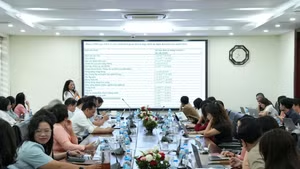
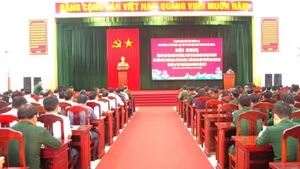
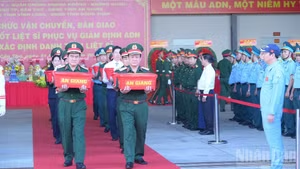
On October 21, 2025, the Ministry of National Defence and VNMAC held a conference to mobilise resources for addressing the consequences of wartime bombs and mines, bringing together businesses, international organisations and the public to join hands.
During the conference, VNMAC provided livelihood support to 10 mine survivors from central and northern mountainous provinces. One recipient, Le Van Thanh, 56, from Quang Tri, recounted that in 1992, he accidentally struck a mine while cultivating land near the Quang Tri Citadel. The explosion cost him one leg, four fingers, one eye, and left many lasting wounds.
Once a healthy young man, he became disabled and now survives by selling lottery tickets with an unstable income, relying on a monthly allowance of 750,000 VND. Recently, his daughter received a scholarship from PeaceTrees Viet Nam, giving the family renewed motivation to overcome hardship.
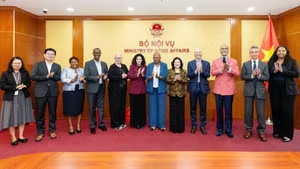
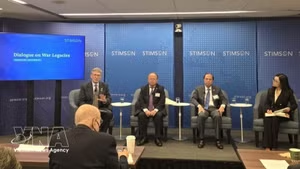
Speaking at the conference, US Ambassador Marc Evans Knapper and Japanese Ambassador Ito Naoki highly commended Viet Nam’s efforts in addressing the aftermath of wartime ordnance, affirming continued cooperation, experience-sharing and resource support in the years ahead.
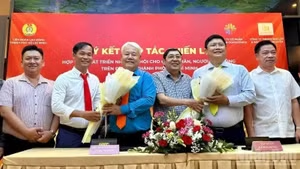
At the event, the Ministry of National Defence also launched the Viet Nam Bomb and Mine Action Assistance Fund, signed memoranda of international cooperation, and presented the Friendship Order and the Prime Minister’s Certificates of Merit to international organisations with significant contributions.