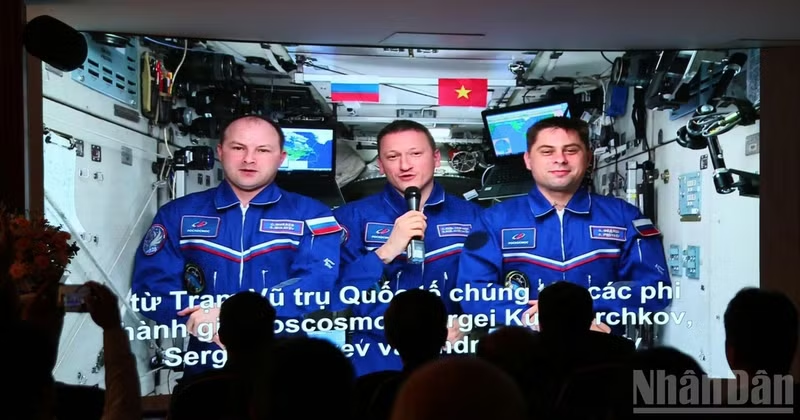
At the exhibition entitled “Soyuz 37 Mission – A Symbol of Viet Nam–Russia Space Cooperation” held on April 10, organisers unveiled a video message from cosmonauts currently stationed on the ISS — the largest international space cooperation project to date.
In the video, cosmonauts Sergei Kud-Sverchkov, Sergei Mikayev, and Andrei Fedyaev extended warm greetings to Ha Noi and the Vietnamese people. Behind them, the national flags of Viet Nam and Russia appeared side by side, clearly conveying a message of enduring friendship between the two nations.
The cosmonauts stressed that the joint mission in 1980 was not only a scientific achievement but also a symbol of shared trust and aspiration. “We wish the Comprehensive Strategic Partnership between Viet Nam and Russia to be further strengthened and developed,” the message from the ISS stated.
The message from space carries added significance as it was released within the framework of events marking the 65th anniversary of humanity’s first spaceflight (April 12, 1961–2026). This milestone is associated with the historic journey of Yuri Gagarin aboard the Vostok 1, which opened the era of human space exploration.
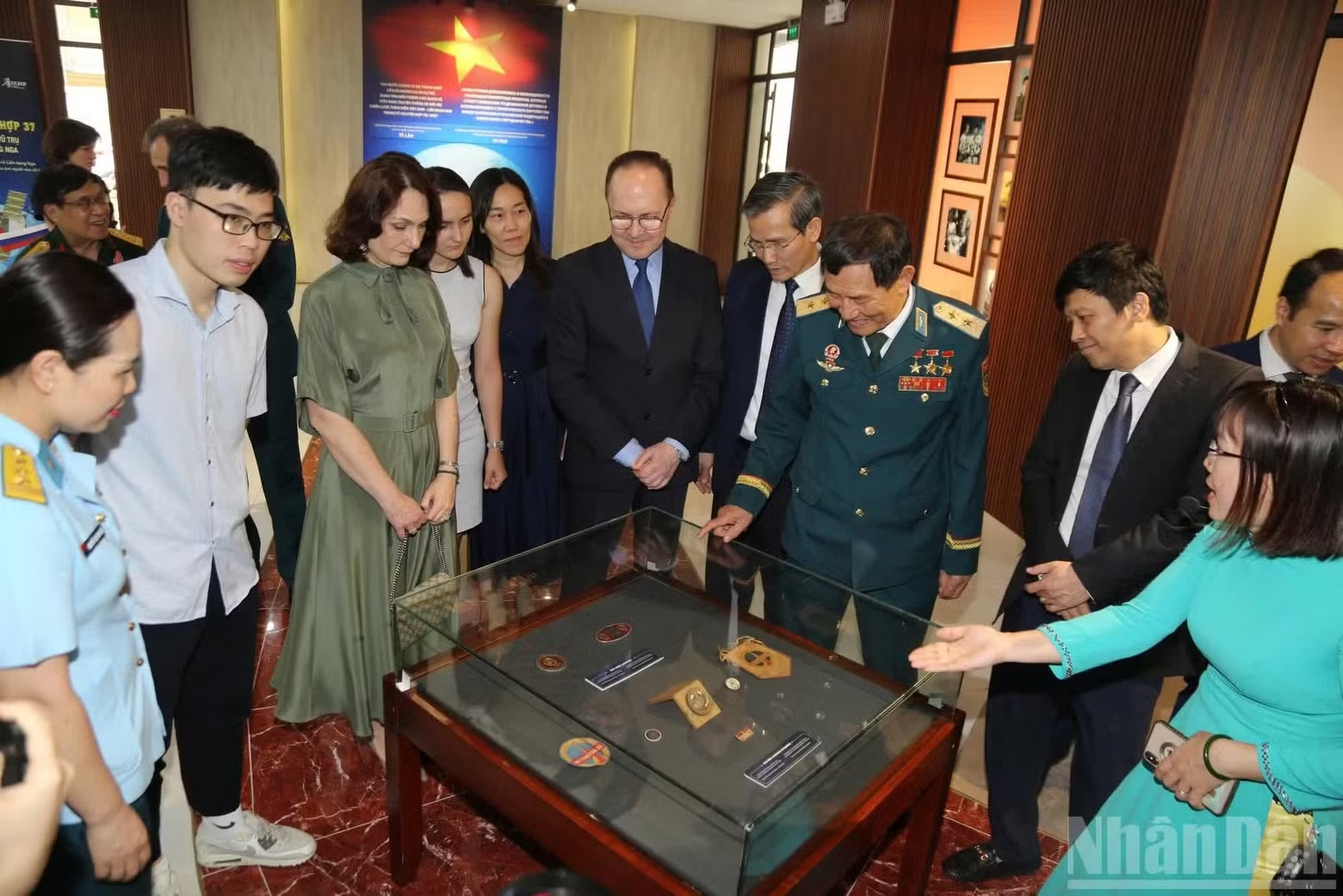
Within that broader context, the Soyuz 37 mission in 1980 holds special significance for Viet Nam. For the first time, a Vietnamese citizen — Lieutenant General, Hero of the People’s Armed Forces Pham Tuan — flew into space alongside Soviet cosmonaut Viktor Gorbatko.
The mission not only marked a scientific milestone but also became a vivid symbol of friendship, political trust, and effective cooperation between Viet Nam and the former Soviet Union, now the Russian Federation.
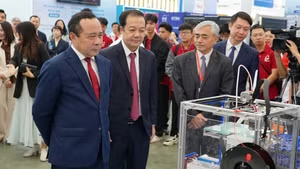
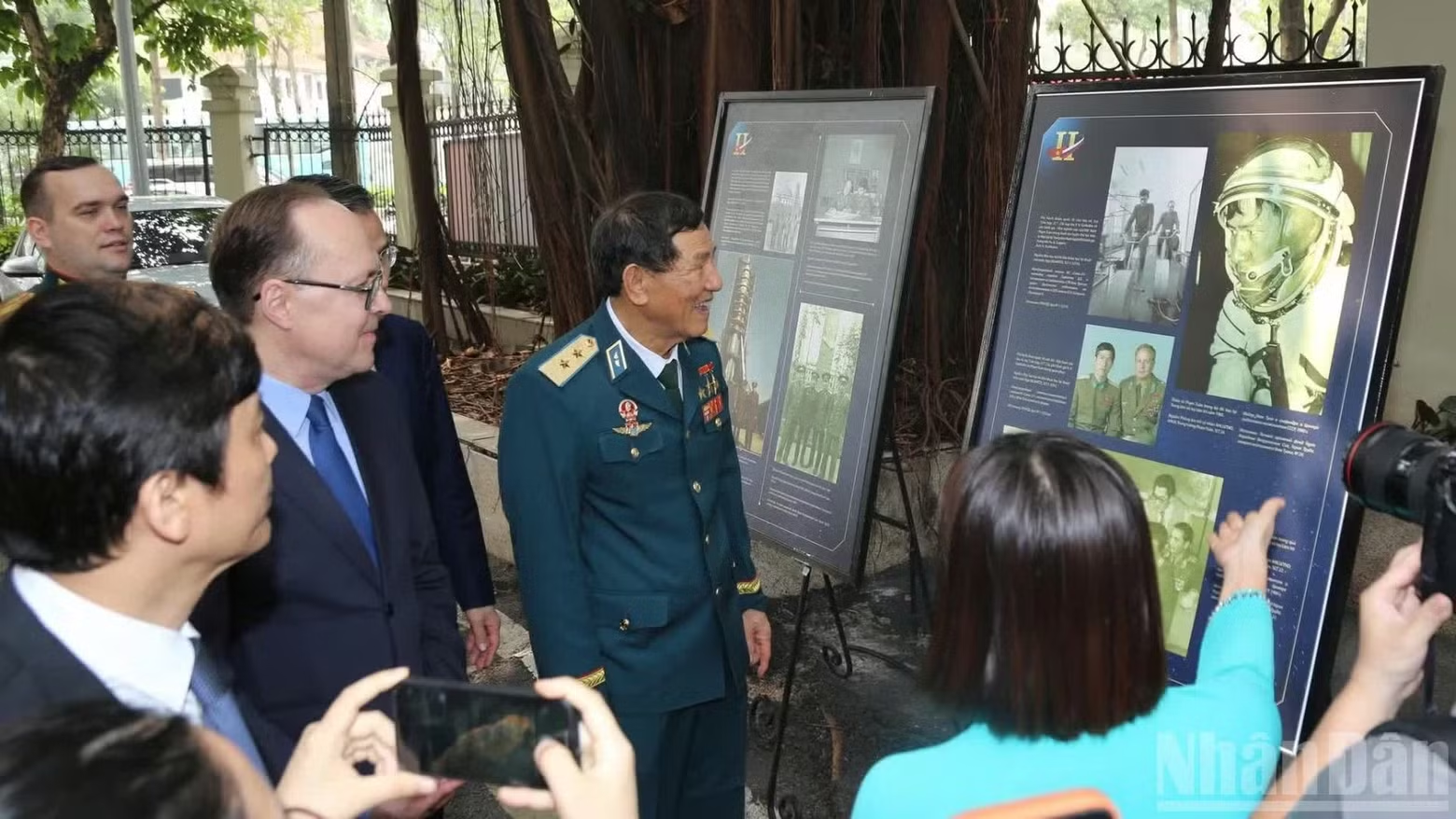
The exhibition, jointly organised by the State Records and Archives Department of Viet Nam in coordination with Vietnamese and Russian agencies, presented a rich collection of documents, images, and artefacts, comprehensively retracing the journey of Soyuz 37 — from selection and training to mission execution and return to Earth.
A highlight of the exhibition was its rare archival materials, documentary footage, and memorabilia associated with the mission, including items carried into space by Pham Tuan — valuable “space relics” of significant historical importance.
Speaking at the event, Pham Tuan recalled his space journey with deep emotion, describing a wide range of experiences — from the anticipation at launch to the perilous moments during docking and re-entry.
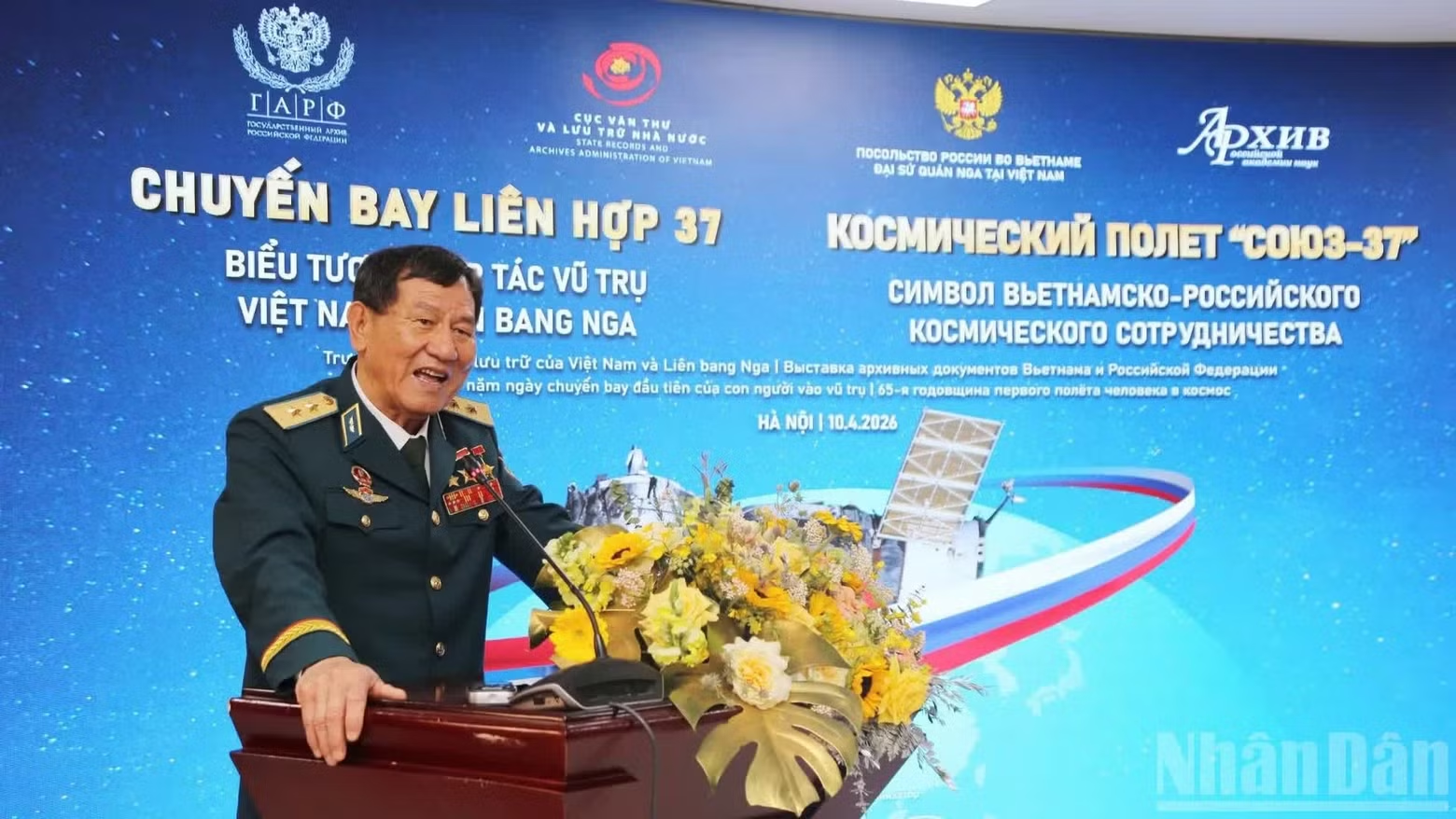
According to him, the mission was the culmination of decades of research by Soviet scientists and a realisation of Viet Nam’s aspiration to stand shoulder to shoulder with the world in science and technology.
Russian Ambassador to Viet Nam Gennady Bezdetko also affirmed that the Soyuz 37 mission stands as vivid evidence of close bilateral cooperation and an important chapter in humanity’s history of space exploration. He noted that the event carries profound symbolic significance, particularly in the context of the Viet Nam–Russia Year of Cooperation in science and education.
Speaking at the ceremony, Deputy Minister of Home Affairs Cao Huy noted that the event was held on a particularly meaningful occasion, marking the 65th anniversary of humanity’s first spaceflight, while also recalling the historic milestone in 1980 when Lieutenant General, Hero of the People’s Armed Forces Pham Tuan became the first Vietnamese to travel into space.
“This event not only evokes the shared pride of the Vietnamese people but also serves as compelling evidence of the depth and enduring vitality of the friendship and multifaceted cooperation between Viet Nam and the former Soviet Union, now the Russian Federation,” the Deputy Minister emphasised.
According to Dang Thanh Tung, Director General of the State Records and Archives Department, in order to preserve and promote these valuable historical memories, the archival agencies of Viet Nam and Russia have worked closely in recent years to research, declassify, and publish numerous valuable documentary collections.
“The exhibition not only recreates a remarkable historical event but also affirms the enduring value of archival materials — authentic evidence that connects the past with the present, helping to strengthen trust and expand cooperation in the future,” Tung stated.