Pressure during the final stretch
According to Dang Thanh Mai, Deputy Director of the Department of Meteorology and Hydrology under the Ministry of Agriculture and Environment, forecasts indicate that El Niño developed in June, is expected to intensify through the remainder of the year and could persist into early 2027.
Current projections place the probability of a very strong El Niño at 60–65%, with characteristics similar to the 2023 event and an intensity comparable to the powerful 2015–2016 El Niño, potentially ranking among the strongest episodes recorded since 1950.
If this scenario materialises, average temperatures across Viet Nam could rise by 0.5–1.5°C above normal levels, while temperatures during the October–December period may increase by 1–2°C. Rainfall in key agricultural regions, including the South Central Coast, the Central Highlands and southern Viet Nam, could decline by 25–50%, significantly increasing the risk of both localised and widespread drought, particularly in areas with high agricultural water demand.
These developments are especially concerning because the regions expected to experience severe drought are also among the country's major agricultural production hubs. The final months of the year represent the sector's most critical period for crop management, harvesting, processing and export activities to meet annual growth objectives.
Water shortages and prolonged drought could directly reduce the yield, quality and output of major crops such as rice, fruit and perennial industrial crops, thereby limiting export supplies.
In addition, El Niño is likely to increase production costs as greater investment will be required for irrigation and disease control, reducing production efficiency and the competitiveness of Vietnamese agricultural products.
Maintaining output while capturing market opportunities
Tran Gia Long, Deputy Director General of the Department of Planning and Finance under the Ministry of Agriculture and Environment, said the agricultural sector is implementing a range of measures to safeguard growth in anticipation of a potentially severe El Niño. Accordingly, the department is directing local authorities to adjust planting schedules, promote drought-tolerant crop varieties, review and upgrade irrigation systems, expand water storage capacity and improve water management to support agricultural production.
In recent years, many localities have gradually shifted from reactive disaster response to proactive climate adaptation through farming practices better suited to changing environmental conditions. Water-saving irrigation systems, climate-smart agriculture and digital technologies have become increasingly widespread.
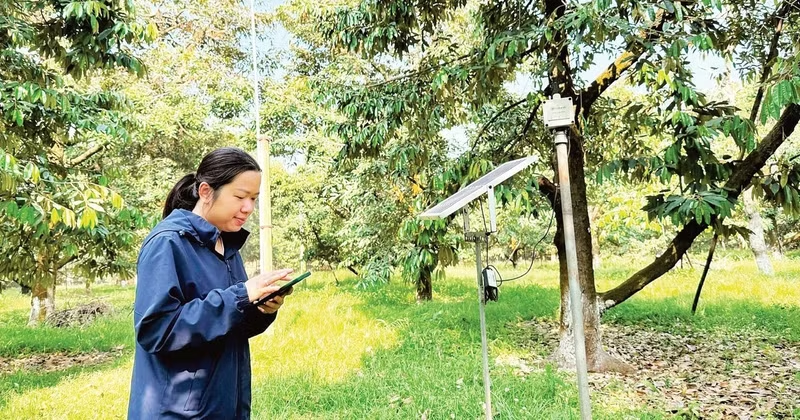
Phan Thi Phuoc, a durian grower in Krong Pac Commune, Dak Lak Province, said her family has installed a water-efficient irrigation system integrated with Enfarm sensors to monitor soil moisture and nutrient levels.
“As a result, irrigation is based on the actual needs of the trees rather than experience alone, allowing us to significantly reduce water consumption while maintaining healthy crop growth,” she said.
Agricultural experts note that although such technologies cannot completely eliminate the impacts of El Niño, they enable more efficient use of water resources and improve crops' resilience to prolonged drought. This is considered a crucial factor in maintaining both productivity and product quality.
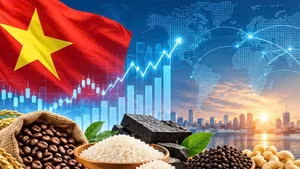
Despite the challenges, El Niño may also create new market opportunities for Vietnamese agricultural exports. According to Tran Gia Long, as El Niño affects agricultural production in many countries around the world, declining global output is likely to tighten supplies and push international commodity prices higher. Rice provides a clear example. Export prices have already risen since reports of the emerging El Niño phenomenon began circulating earlier this year. Similarly, coffee prices are expected to recover to previous highs after a period of weakness.
However, these opportunities can only be fully realised if Viet Nam succeeds in maintaining agricultural production despite increasingly severe climate change and extreme weather conditions.
The agricultural sector therefore needs to accelerate climate adaptation measures to mitigate the impacts of El Niño, secure stable agricultural output, preserve Viet Nam's position in global export markets and contribute significantly to achieving the country's agricultural growth targets.