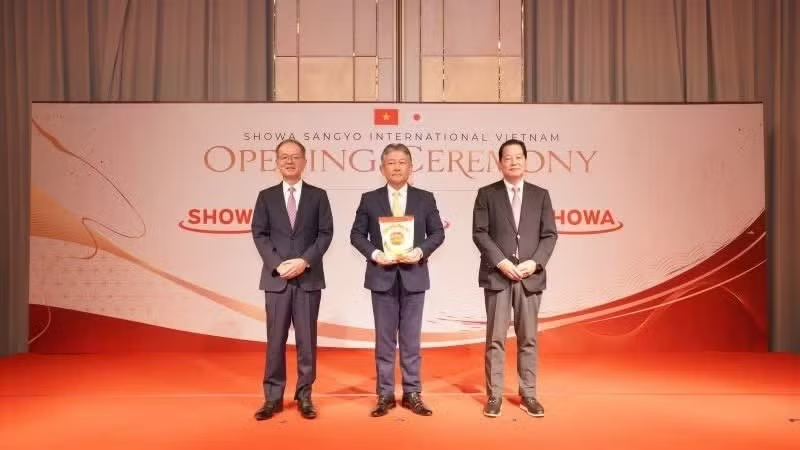
The plant began operations in March 2026 and has since started distributing its first locally produced product, Showa Tempura Batter Mix.
Spanning more than 1.3 hectares and backed by a total investment of approximately 21 million USD, the facility is positioned as the company’s key premix production hub in ASEAN, serving the domestic market while targeting exports to neighbouring countries.
Speaking at the event, Maruyama Shinji, Chairman and General Director of Showa Sangyo International Viet Nam, noted that Viet Nam’s young population, rapidly expanding middle class, dynamic food market, and increasingly quality-conscious consumers make the country a cornerstone of the company’s regional expansion strategy.
According to JETRO data, the value of Japan’s agricultural, forestry, fishery, and food exports to Viet Nam rose from 29.3 billion JPY in 2013 to 86.2 billion JPY in 2024.
The number of Japanese restaurants in Viet Nam also grew from approximately 680 in 2015 to approximately 2,500 in 2022, reflecting rising demand for Japanese food products and ingredients.
Beyond market factors, the development of Viet Nam’s cold-chain logistics system has been providing favourable conditions for improved product preservation, quality control, and efficient food distribution.
At the event, Chef Oyama, Head Chef at Hotel Nikko Saigon, gave a live cooking demonstration using Showa Tempura Batter Mix, the company’s first product manufactured in Viet Nam.
In the initial phase, the company will focus on the business-to-business (B2B) market, targeting restaurant chains, seafood processors, meat processors, and confectionery and bakery producers.
The company also plans to expand into the business-to-consumer (B2C) segment through packaged product lines tailored to local consumer preferences.