Over the years, the themes of World Environment Day have reflected the most pressing challenges of each era. In 2026, the global message of collective action for the climate once again places a strong responsibility on nations, organisations, communities, and every citizen. This is not merely a call associated with a commemorative occasion. It is a warning that the Earth’s capacity to endure is being tested and a reminder of humanity’s responsibility in the face of climate change, which is unfolding faster, more intensely, and closer to everyday life than ever before.
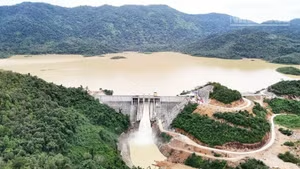
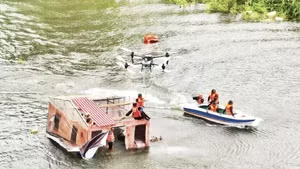
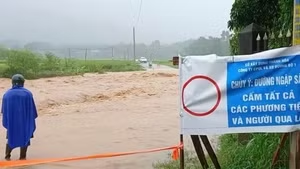
Heatwaves are lasting longer, while storms and rainfall patterns have become increasingly unpredictable. Droughts, floods, landslides, and saltwater intrusion are occurring more frequently. These impacts are visible in every harvest season, urban area, river system, and household affected by natural disasters. They influence public health, livelihoods, food security, and the quality of life of every individual.
In Viet Nam, a country highly vulnerable to climate change, the call to action carries even greater significance. The Mekong Delta is facing saltwater intrusion, land subsidence, and freshwater shortages, while the central region regularly endures storms and flooding. Major cities are under increasing pressure from air pollution, waste management challenges, and urban flooding. These issues are no longer confined to policy reports; they have become part of everyday life.
What is worth reflecting on is that much has been said about environmental protection. There have been inspiring commitments, yet rivers continue to be polluted by untreated waste. Green slogans are promoted, but waste is still not properly sorted, green spaces continue to shrink, and environmentally harmful activities are not always dealt with rigorously. What the environment needs, therefore, is not simply words or broad slogans.
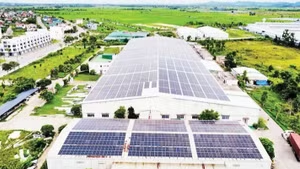
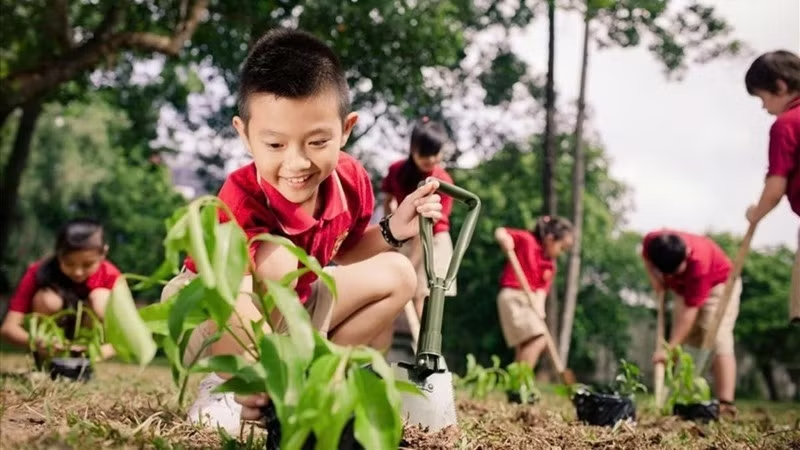
Climate action begins with practical measures: a government office that reduces electricity consumption, a household that sorts its waste responsibly, a business committed to cutting emissions, an industrial park that strictly controls wastewater and emissions, and a citizen who changes consumption habits.
World Environment Day 2026 highlights the urgent need for climate action and reaffirms the responsibility of governments, organisations, communities and individuals alike.
These actions may appear small, but if carried out consistently, they can bring about significant change. Protecting the environment is not a short-term campaign. It is a way of life, a culture, and a responsibility to ourselves and future generations.
It must also be recognised that citizens cannot act alone. Effective waste sorting requires appropriate collection and treatment systems. Greener businesses need clear, fair, and enforceable regulatory frameworks. More climate-resilient cities require sound planning and sustained investment.
World Environment Day is therefore more than an annual event. It is an opportunity to pause and ask ourselves how we live with nature, how we consume, and what path of development we are pursuing. It is a chance to consider whether today’s actions will become tomorrow’s burden for future generations. The Earth does not need more promises without action. The environment needs thoughtful choices, responsible policies, and perseverance in every effort.
One day each year may remind us of the importance of the environment. Yet the environment — our air, water, soil, forests, seas, and ecosystems — is present in every day of our lives. Protecting it is therefore not the task of a single day. It is reflected in the way we make more responsible and considerate choices for our living environment every day.