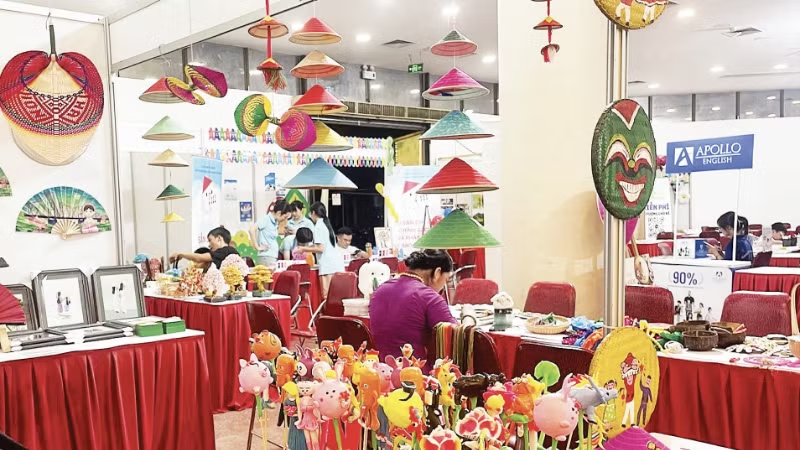
The government has recently issued the Strategy for Communications and Promotion of Viet Nam's Image Abroad for the 2026–2030 Period, with a Vision to 2045, under Decision No. 173/QD-TTg, dated January 27, 2026. The strategy requires the effective use of the "Viet Nam Story", represented by exemplary models, individuals, events, and products across various fields, to promote the country's image internationally.
Unlocking potential
Recently, the Temple of Literature–Imperial Academy Centre for Cultural and Scientific Activities has developed a wide range of souvenir products based on the heritage values and distinctive characteristics of the historical site. These products emphasise practicality and designs that suit visitors' preferences.
The centre’s Deputy Director Duong Ngoc Ha said: "Souvenirs are not merely tourism products that visitors take home after their trip. Each souvenir serves as a medium for conveying cultural knowledge, telling the story of the site's long tradition of learning and the imperial examination system. The centre has developed its products through a collaborative model involving researchers, young designers, and traditional craft artisans. The combination of young people with dynamic thinking and modern design language, together with artisans possessing traditional craftsmanship and production expertise, has opened new ways of storytelling, bringing heritage closer to contemporary audiences."
In truth, the concept of souvenirs has changed. Viet Nam's image is no longer confined to a few familiar symbols such as the ao dai, the conical hat, or the Cai Rang Floating Market. Some domestic brands have chosen to tell more familiar stories that reflect the pulse and rhythm of contemporary life. Trinh Ha Mien, founder of Liu Lo Arts & Craft, believes: "Souvenirs are a point of contact between visitors and Viet Nam. Product creators should take the initiative in introducing a modern Viet Nam closely connected with everyday life. A postcard or a small, handcrafted item can tell emotionally engaging stories about Viet Nam and its people, becoming an effective channel for cultural communication."
Although there have been encouraging developments, the souvenir and gift market has yet to fully exploit the strengths of Viet Nam's abundant cultural resources, traditional craft villages, and highly skilled artisans. Many products remain monotonous in design, lack distinctive identity, and fail to clearly reflect the cultural identity and craftsmanship of the communities that own the heritage. Many localities possessing famous heritage sites have yet to develop signature souvenir product lines. The absence of compelling stories and unique identity makes it difficult for souvenirs to convey messages about Viet Nam's land, people, and culture.
If development is guided by market demand, with greater attention to functionality, storytelling for each product, and the participation of designers, businesses, and market-linking organisations, souvenirs can certainly become a bridge connecting Viet Nam with the world while creating additional opportunities for the development of the cultural and creative industries.
Developing an integrated ecosystem
Current consumer trends show that both domestic and international visitors are increasingly interested in products that embody cultural values, are environmentally friendly, and are closely connected with local communities. Nguyen Nhu Quynh, founder of the Nghe Nghe Art Fair Ha Noi handicraft art fair series, observed that: "A souvenir is the beginning of a story, preserving memories of a place and personal emotions. From observing customers' needs, I have found that visitors look for gifts that reflect local identity, care about contemporary cultural life, and want to understand the perspectives of the artisans or communities that create the products. They value handcrafted work and appreciate products that demonstrate craftsmanship and community knowledge. The value of a product no longer lies solely in its practical function but in its ability to tell stories, create emotional connections, and inspire empathy between users and the destination."
At the same time, souvenir products must strike a balance between tradition and modernity, meeting market demand while preserving core cultural values. Dr Lu Thi Thanh Le, a lecturer at the Faculty of Cultural Industries and Heritage, School of Interdisciplinary Sciences and Arts, Viet Nam National University, Ha Noi, commented: "Some craft communities and artists continue producing familiar items because there is already stable market demand. However, those involved in the creative design, production, and supply of souvenir products need to develop strategies that anticipate market demand, study domestic and international trends, invest in the development of new products, nurture artistic communities, and commission artisans to create products that meet consumer needs."
To develop a souvenir industry capable of conveying Viet Nam's cultural messages and national image, experts believe that Viet Nam needs a long-term orientation and strategy, together with a comprehensive supporting ecosystem. With a dedicated community of artisans, a dynamic young creative workforce, and an abundant heritage treasure, stronger collaboration among researchers, product developers, artists, and local communities will provide fresh momentum for Viet Nam's souvenir industry, helping to make effective use of indigenous knowledge, enhance commercial value, and expand market opportunities.
In addition, mechanisms and policies supporting the development of souvenir products need to be further improved. Clear regulations should be introduced regarding product origin, quality standards, and safety requirements; the capacity of artisans should be strengthened; and supply chains should be developed to meet market demand. These measures should both preserve the traditional products that continue to enjoy strong consumer demand and foster the development of new products combining local materials with contemporary design trends.