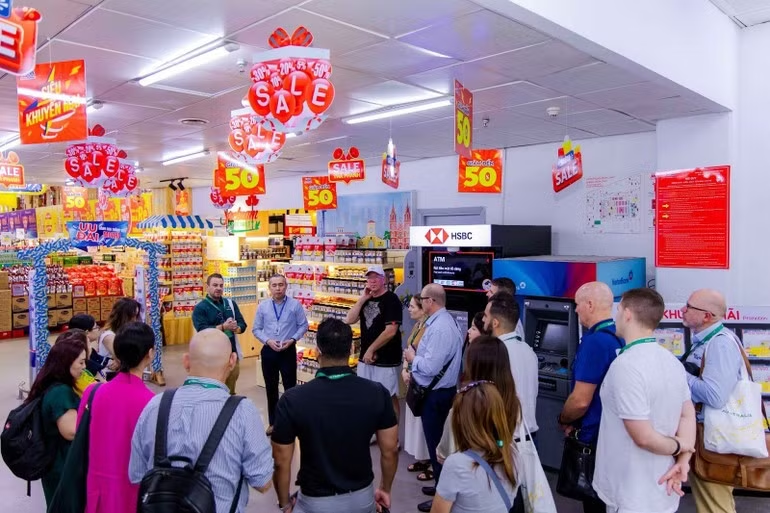
As part of the programme, the Australian business delegation conducted field visits and worked with domestic retailers and agricultural enterprises to gain a direct understanding of the local market, supply chains and consumer trends.
Through these activities, the Australian side has obtained further information on demand for high-quality agricultural and food products, while also identifying opportunities for cooperation in processing, distribution and the application of technology across supply chains.
The networking activities were supported by representatives of industry associations, experts and businesses from both countries, with participating entities falling into two main groups: food and beverages, and food supply chains.
In addition to showcasing products such as meat, seafood, dairy and agricultural produce, businesses also introduced technological solutions aimed at enhancing productivity, quality and traceability in agricultural production.
According to Chris Morley, Australia’s Trade and Investment Counsellor, Australia has strengths in producing high-quality, safe and sustainable agricultural and food products, backed by stringent biosecurity and traceability standards.
These capabilities can help Viet Nam enhance the value of its agricultural supply chains.
He added that considerable potential remains for cooperation in high-quality product export, technology transfer, innovation and investment, all of which could contribute to the sustainable development of the agricultural sector.
Viet Nam is currently one of the region’s most dynamic markets, with growing demand for high-quality, safe food, while its agricultural sector is shifting towards higher value-added production, stricter standards and greater resilience to climate change.
This shift is driving strong demand for quality breeding stock, animal feed, advanced production management solutions and cutting-edge technologies, opening up significant opportunities for businesses from both countries to cooperate and invest.