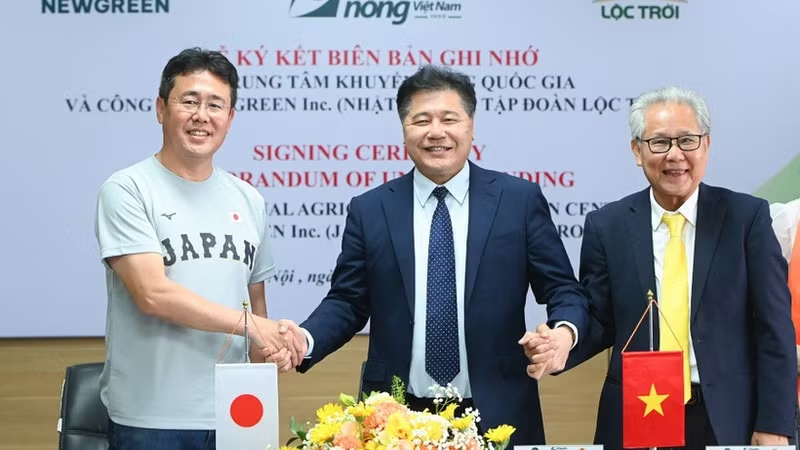
Under the MoU signed on March 3, the three parties will coordinate to conduct joint research, pilot models and refine low-emission rice cultivation processes based on the Aigamo Robot system and other advanced agricultural technologies from Japan.
The partners also aim to localise the production and assembly of this technology in Viet Nam and promote its wider adoption, contributing to the expansion of high-quality and sustainable rice cultivation areas.
Currently, the Japan International Cooperation Agency (JICA) is implementing its Sustainable Development Goals (SDGs) Business Supporting Survey Programme for Small and Medium-Sized Enterprises (SMEs), which aims to help address socio-economic challenges in developing countries. Within this framework, JICA has approved a proposal by Newgreen Co., Ltd. (headquartered in Koganei City, Tokyo) entitled “Survey on establishing a solution for supporting high-quality, low-emission rice cultivation through Aigamo Robot technology (weeding robot)”.
Viet Nam is vigorously implementing its action plan to reduce methane emissions. In particular, the project on developing one million hectares of high-quality, low-emission rice associated with green growth in the Mekong Delta by 2030, approved by the Government in November 2023, demonstrates strong commitment to transforming the agricultural model towards sustainability.
The Aigamo Robot has been developed to suppress weeds without the use of plant protection chemicals, thereby reducing input costs and limiting environmental impacts. The device operates on a motor powered by solar panels and rechargeable batteries, combined with specially designed paddles that agitate water and mud to block sunlight from reaching weeds.
The robot is equipped with global positioning system (GPS) and artificial intelligence (AI), enabling automatic operation within designated paddy field boundaries while recording operational data. The agitation of mud also promotes the growth of aerobic bacteria, contributing to the reduction of methane emissions from paddy fields—one of the major sources of agricultural greenhouse gas emissions.
JICA expects that this survey will facilitate the practical application of Japanese technology, support Viet Nam in improving productivity, advancing smart agriculture solutions and promoting low-emission farming practices.