Accordingly, the authroity has requested units to proactively develop, implement, and closely monitor service plans for the peak period and mobilise personnel, especially those with appropriate experience and expertise. They must review and inspect the technical condition of the entire infrastructure system and promptly repair or replace equipment to ensure no disruptions to transport chains and aviation service quality. The authority also instructed units to provide attentive and professional services for Party Congress delegations.
Officials and employees across the sector must strictly comply with aviation safety and security regulations, place passengers and the public at the centre of service delivery, demonstrate civilised conduct, respect, listen, and promptly support and address passengers’ legitimate requests. They should prioritise assistance for the elderly, children, pregnant women, persons with disabilities, and revolution contributors.
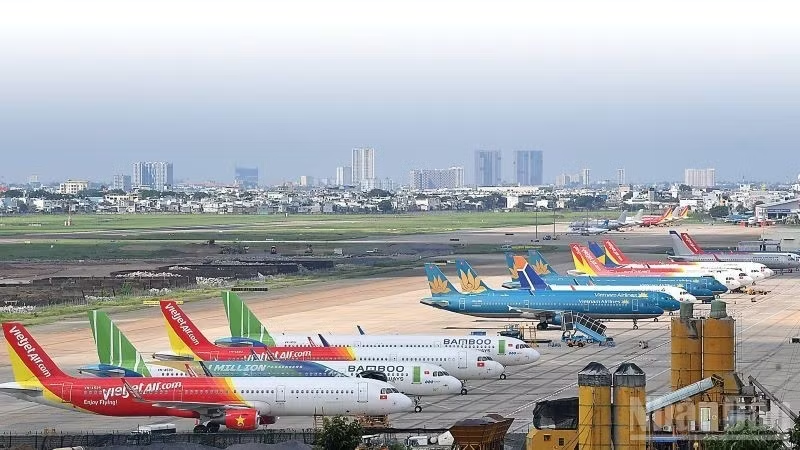
Vietnamese airlines are required to develop passenger transport plans, optimise aircraft fleet operations and manage flight schedules in strict compliance with allocated slots. They are also asked to monitor booking and ticket sales to promptly adjust operational plans and add or increase flights on high-demand routes and minimise flight delays and cancellations due to technical reasons. At the same time, airlines must inspect and supervise ticket sales of agents, ensure ticket prices comply with regulations, strictly handle violations and coordinate with competent authorities to address cases of overcharging when reported.
“Airlines must fulfil their responsibilities and obligations as carriers towards passengers in cases of flight delays or cancellations; provide passengers with full information on causes and flight status in such situations; and enhance the quality of receiving and handling information, feedback, and complaints related to the use of air transport services, ensuring passengers’ legitimate rights and the prestige of airlines,” said Uong Viet Dung, Head of the Civil Aviation Authority of Viet Nam.
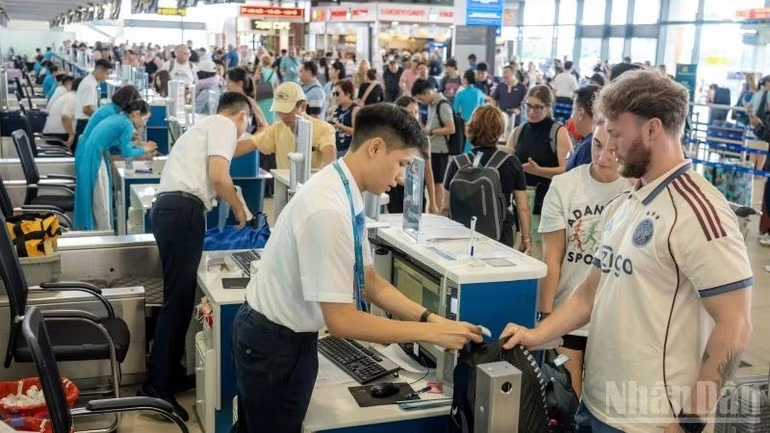
The authority has also assigned the Airports Corporation of Viet Nam, Van Don International Airport, and Phu Quoc International Airport to develop service plans, strengthen manpower, and review infrastructure, equipment, and vehicles to ensure absolute aviation safety, security, and order at airports; organise services for night flights; and closely coordinate with air traffic service providers, airlines, ground service units, and aviation service providers to optimise terminal operations, aircraft parking stands, and runways, preventing congestion at airports.
The Viet Nam Air Traffic Management Corporation (VATM) must manage and operate air traffic in a scientific, flexible, and timely manner, consistent with airspace capacity, airport infrastructure capacity, and actual operational conditions; optimise the use of airspace and air traffic control capacity; minimise delays and air traffic congestion; ensure smooth, continuous, and stable flight operations; and enhance forecasting quality, early warning capabilities, and proactive operational plans in abnormal situations such as adverse weather, infrastructure overload, or technical incidents.