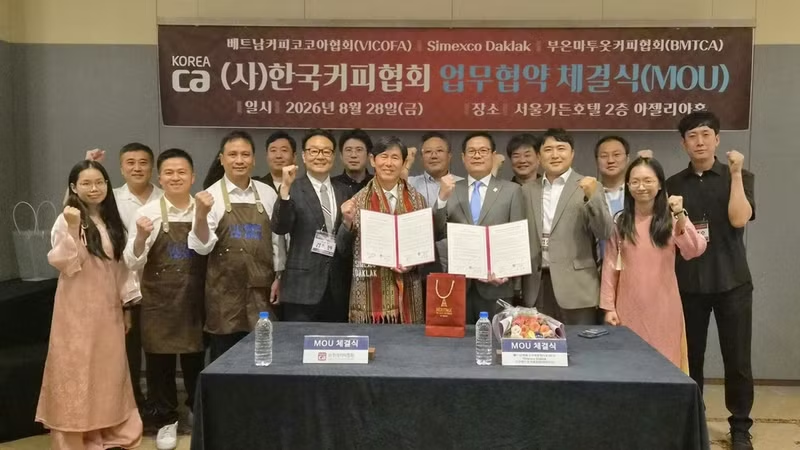
The information was released by leaders of Dak Lak September 2 Import-Export One Member Company Limited (Simexco Dak Lak) on the same day.
Under the MoU, the two sides committed to cooperating in the following areas: exchanging technology, personnel, and equipment for coffee expert training; conducting joint research and development; implementing education programmes related to the coffee industry; supporting and exchanging human resources; improving the welfare of coffee workers; and promoting the development of the coffee industry and coffee culture in Viet Nam and the RoK.
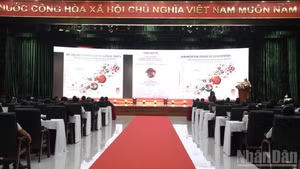
Also on August 28, as part of the Korea Coffee Association’s annual conference, Simexco Dak Lak introduced Vietnamese coffee and the potential of Fine Robusta to around 200 Korean coffee experts, roasters, baristas, lecturers, and businesses.
In 2025, the RoK imported around 200,000 tonnes of coffee, of which Viet Nam supplied approximately 36,000 tonnes, equivalent to 18% of total imports. Viet Nam is currently the RoK’s second-largest coffee supplier, after Brazil.
From an annual output of only around 100,000 tonnes more than three decades ago, Viet Nam has now become the world’s second-largest coffee producer and the global leader in Robusta, with annual output of nearly 1.9 million tonnes.
Over the past decade, Viet Nam has gradually developed Fine Robusta through improvements in cultivation and processing techniques, farmer training, the development of quality criteria, and the organisation of national-level competitions. Vietnamese Fine Robusta is now exported to more than 20 markets worldwide.
Alongside trade promotion activities, Simexco Dak Lak also introduced a specific investment cooperation opportunity in Dak Lak, the centre of Viet Nam’s largest Robusta-producing region.

Under this cooperation model, Simexco can contribute raw material supplies, its network of farmers, infrastructure, local experience, and market connections. Korean partners can contribute technology, product research capabilities, brand development, and experience in developing consumer markets.
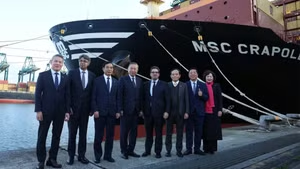
During the working trip, the delegation also visited and worked with the Embassy of Viet Nam in the RoK to discuss directions for cooperation in developing spaces for showcasing Vietnamese products, culture, and specialities to local consumers. Coffee was proposed as one of the key products for promoting Viet Nam’s national image in the RoK.