Digital customs driving reform
Tran Duc Hung, Deputy Director General of the Customs Department, confirmed that the sector is developing a unified digital customs platform to replace the current VNACCS/VCIS system. This forms a central pillar in implementing Resolution No. 57-NQ/TW on science, technology, innovation and national digital transformation.
Hung stressed that digital customs is not simply a technological upgrade, but a foundation for renewing management processes, handling procedures more efficiently, enhancing data connectivity and improving services for citizens and businesses.
Since early 2026, the Customs Department has rolled out a plan for science, technology, innovation and digital transformation, prioritising resources for building the new IT system.
In parallel, the sector is advancing phase three of the National Single Window (NSW) project and its integration with the ASEAN Single Window (ASW). This platform is designed to strengthen data sharing among regulatory agencies, reduce duplication in dossier processing and facilitate trade flows.
Digital customs is not simply a technological upgrade, but a foundation for renewing management processes, handling procedures more efficiently, enhancing data connectivity and improving services for citizens and businesses.
Tran Duc Hung, Deputy Director General of the Customs Department
Efforts are also underway to deliver tasks under the Prime Minister’s Project 06 on resident data, electronic identification and authentication applications, serving national digital transformation through 2025 with a vision to 2030. These include systems for receiving administrative procedures, user registration and management, and integration with the national population database.
Supporting systems are being upgraded, such as centralised operations management, Electronic Clearance version 6, and data processing for low‑value consignments sent via courier services.
Significantly, the Customs Department is piloting an AI chatbot to assist officers and businesses, marking a new step in applying artificial intelligence to operations for faster lookups, responses and information processing.
Beyond digital transformation, institutional reform is also being accelerated. In the first months of 2026, the department submitted 19 proposals to the Government, 21 to the Ministry of Finance and 53 at departmental level. These resulted in two decrees and four circulars issued. Draft amendments to the Customs Law are currently being finalised.
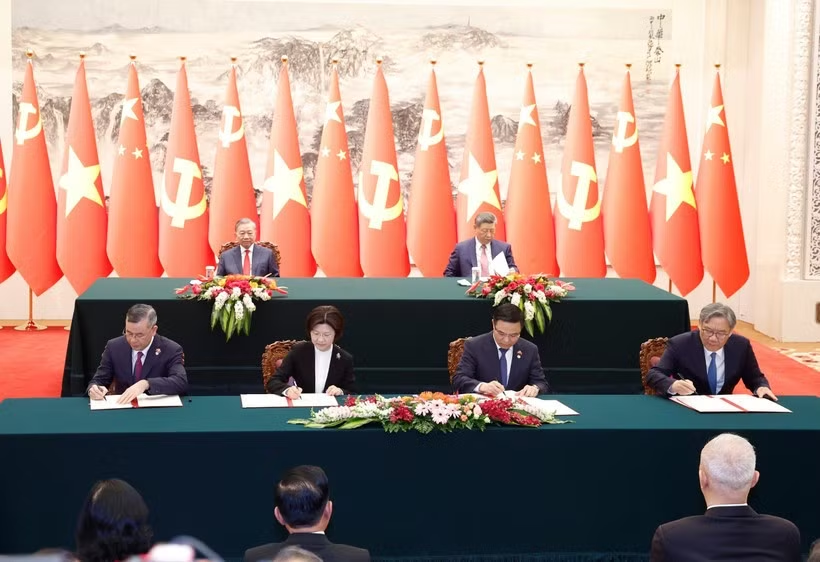
On the international front, the sector has launched a cooperation and integration plan for 2026–2030. A highlight was the April 2026 signing of an agreement with China on cooperation and mutual administrative assistance in customs matters, paving the way for collaboration on single‑window mechanisms, priority enterprises and data exchange.
Cutting red tape, lowering costs
Alongside digital transformation, administrative‑procedure reform remains a core focus.
In line with Resolution No. 68‑NQ/TW on private sector development, the Customs Department has reviewed regulations governing customs business activities, eliminating cumbersome procedures and conditions to speed up clearance and support enterprises.
Altogether, 66 procedures have been streamlined—39 abolished and 27 simplified—amounting to a 30% reduction in customs procedures. This achievement surpasses the Government’s target, reaching 117.94%.
Leadership emphasises that reducing procedures reflects a shift from ex‑ante control to post‑clearance control, placing compliance and risk management at the heart of a modern model.
The department also works closely with ministries and sectors to resolve issues arising from new regulations, maintaining mechanisms to swiftly address challenges in import–export activities and ensure smooth goods flows.
Centralised clearance enhances transparency in dossier handling and lays the groundwork for a customs database that is “accurate, complete, clean and live,” serving management in a digital environment.
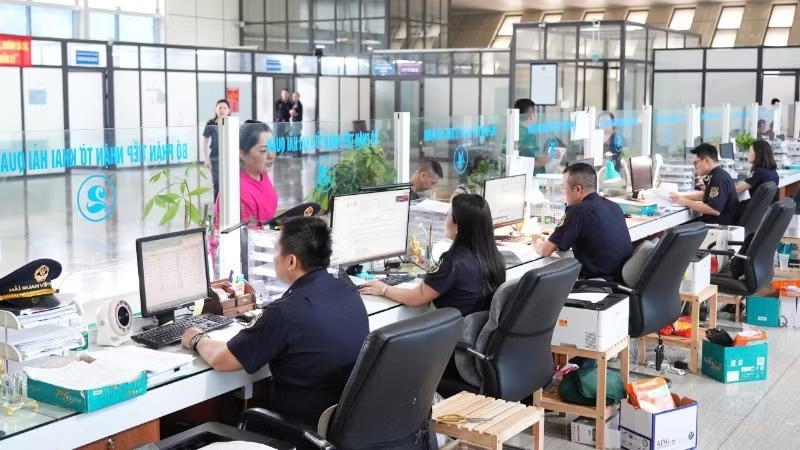
A notable milestone came on June 1, 2026, when the department piloted a centralised clearance model for imports and exports at Customs Sub‑department Region III. Combined with digitised dossiers, this model has shortened processing times, cut costs and reduced manpower for both customs authorities and businesses.
Officials assess that centralised clearance enhances transparency in dossier handling and lays the groundwork for a customs database that is “accurate, complete, clean and live,” serving management in a digital environment.
From now until the end of 2026, the customs sector will continue to focus on finalising draft amendments to the Customs Law, implementing the new digital customs IT system, and advancing phase three of the National Single Window and its integration with the ASEAN Single Window. Building on the pilot results of centralised clearance at Region III, the department will evaluate and refine a roadmap for rolling out the model across the sector.
All of these measures are designed to strengthen state management, facilitate trade and foster a transparent, modern business environment that better serves the needs of enterprises.