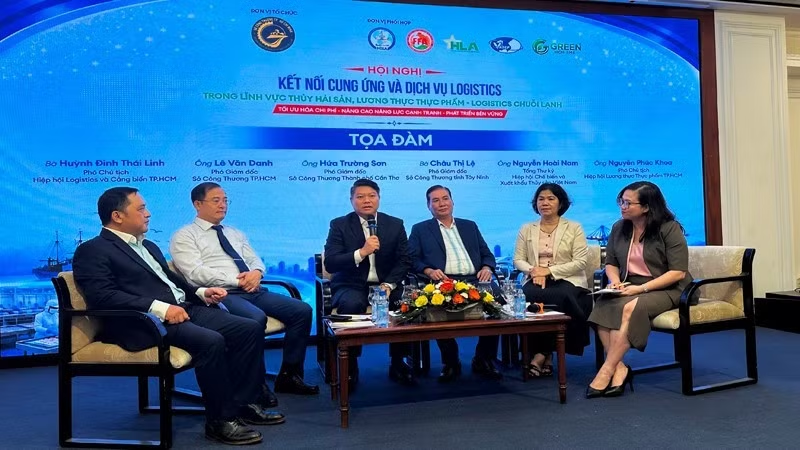
The conference sought to identify solutions for optimising logistics costs, enhancing competitiveness, and promoting more sustainable development for businesses operating in the seafood, food, and agricultural sectors in Ho Chi Minh City.
It also aimed to strengthen meaningful and long-term connections between producers, processors, import-export enterprises, and providers of logistics services, cold storage, refrigerated transport, port operations, and technology solutions. At the same time, it sought to reinforce links between raw material production areas in the Mekong Delta and the Southeast region and the city's processing, storage, distribution, and export businesses.
The organisers also expressed the hope that the conference would help improve operational efficiency, ensure the smooth movement of goods and enhance businesses' participation in supply chains. In the longer term, it aims to support the development of a modern, integrated, and intelligent cold chain logistics ecosystem; increase added value; promote sustainable exports; and strengthen the competitiveness of businesses in Ho Chi Minh City and the southern region.
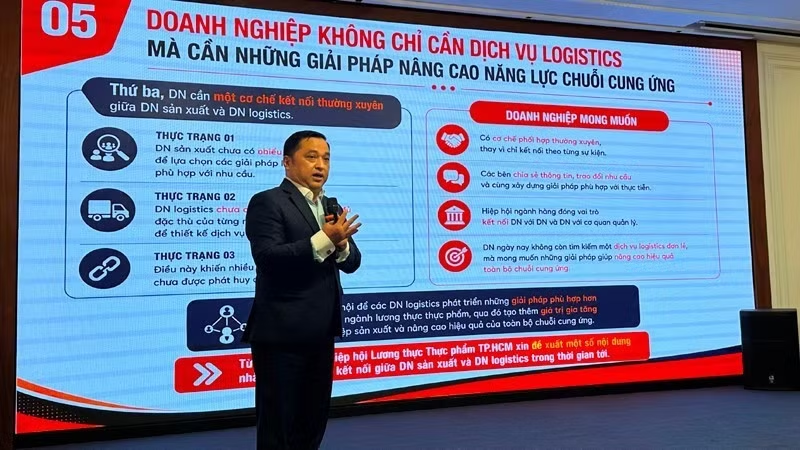
Speaking at the event, Nguyen Phuc Khoa, Vice Chairman of the Ho Chi Minh City Food and Foodstuff Association (FFA), said the food supply chain covers a broad range of activities, requires a high level of coordination, handles products with diverse characteristics, and demands flexible organisation to respond to market fluctuations.
The FFA representative proposed establishing a regular coordination mechanism between manufacturers and logistics providers; developing sector-specific logistics solutions; accelerating digital transformation and information sharing; and building a long-term, efficient, and sustainable cooperative ecosystem.
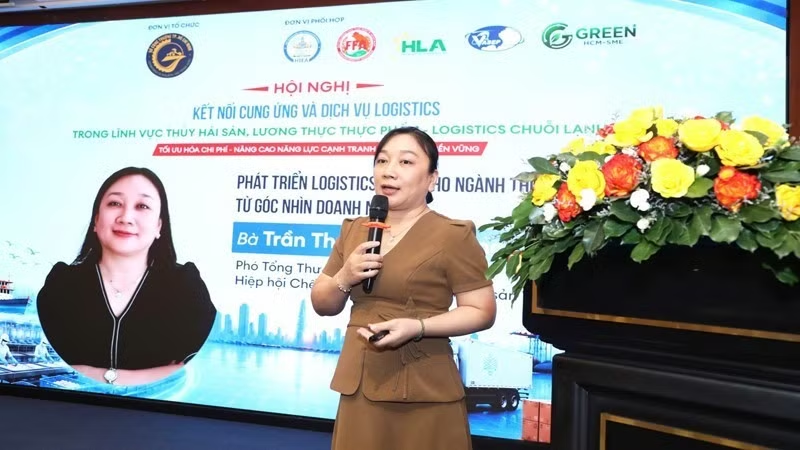
From another perspective, Tran Thuy Que Phuong, Deputy Secretary General of the Viet Nam Association of Seafood Exporters and Producers (VASEP), noted that all export shipments in the seafood industry depend on the cold chain logistics system.
As a result, any failure to maintain the required temperature or delivery time at a single stage can lead to lower product quality, customer complaints, reduced selling prices, returned shipments, and the loss of clients.
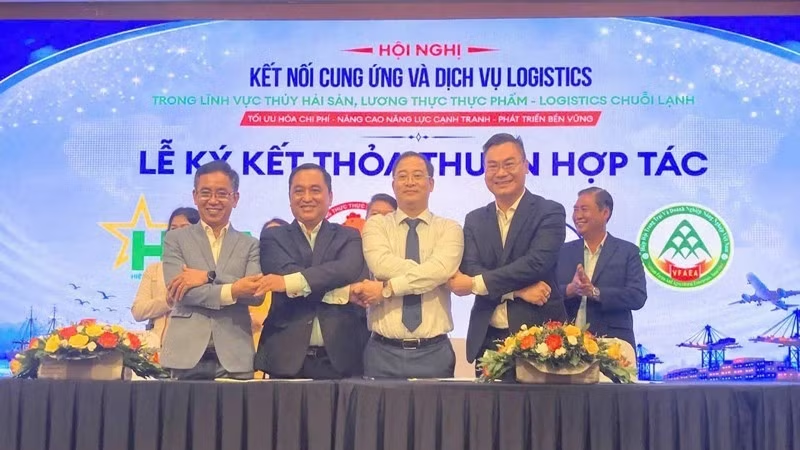
Meanwhile, Dang Quy Nhan, Vice Chairman and Secretary General of the Ho Chi Minh City Import-Export Association (HIEA), said that the green transition in cold chain logistics is becoming an increasingly important prerequisite for accessing demanding international markets. New-generation free trade agreements and increasingly stringent environmental standards require businesses to reduce post-harvest losses, improve energy efficiency, cut greenhouse gas emissions, ensure food safety, and enhance data transparency.
Addressing the conference, Le Van Danh, Deputy Director of the Ho Chi Minh City Department of Industry and Trade, said the department regards the development of modern, smart, and green logistics as a key solution to strengthening the city's role as the logistics hub of southern Viet Nam while gradually positioning it as an international logistics service centre.
He added that the department will continue to work closely with the business community, strengthen coordination with relevant agencies, local authorities, and industry associations; develop cold chain logistics infrastructure; accelerate digital and green transformation; and effectively implement business support programmes in the coming years.