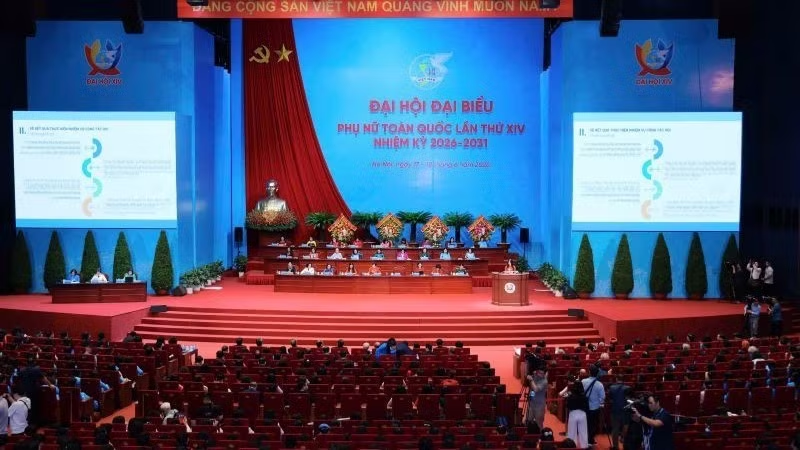
As the country accelerates the building of a socialist rule-of-law state, improves development institutions, and promotes the people’s right to mastery, participation in the policy-and-law-making process is not only a responsibility but also an opportunity for women to contribute more actively to political and social life.
Through supervision and social criticism activities, the union can better understand the aspirations and concerns of its members and women, promptly reflect issues arising in practice, and contribute to improving mechanisms and policies, ensuring their feasibility and effectiveness in implementation.
The orientation for the 2026–2031 term clearly identifies the need to promote women’s role in participating in Party building, strengthening a clean and strong political system, engaging in state and social management, and advocating for gender equality.
This serves as an important foundation for enhancing the quality of supervision and social criticism activities while further expanding women’s participation in policy formulation and implementation processes.
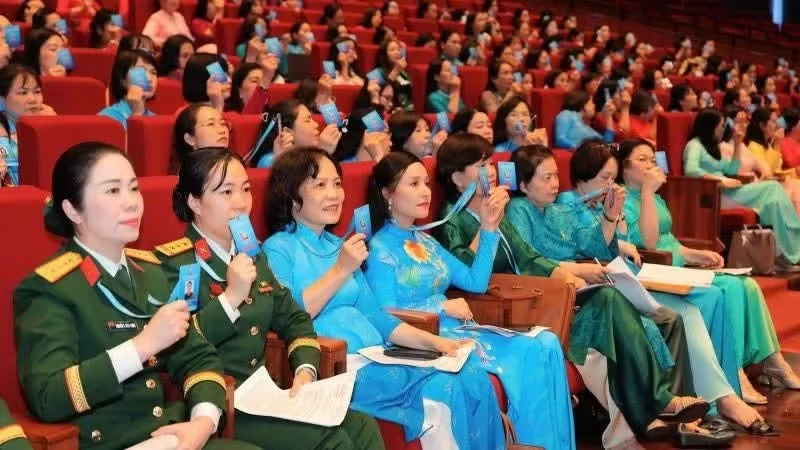
To realise these orientations, the congress has set out clear targets for supervision, social criticism, and policy participation. Accordingly, each year, the central and provincial levels of the Viet Nam Women’s Union will take the lead in supervising at least one policy and conducting social criticism on at least one draft legal document or policy related to women, children, families, gender equality, and the union itself. These are areas directly linked to the union’s representative role and the rights and interests of women.
At the grassroots level, commune-level women’s unions will participate in supervising at least one policy and contribute opinions to at least two draft documents issued by local Party committees and authorities. Establishing specific targets not only provides a basis for evaluating performance but also enhances the responsibility of all levels of the union in policy participation from the grassroots level, where policies are most closely connected to the daily lives of members and women.
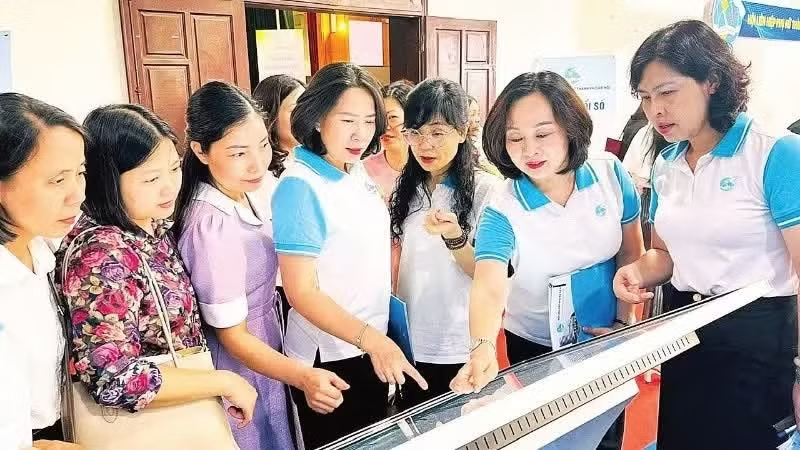
A notable feature of the new term’s orientation is the requirement to strengthen the union’s proactive role in policy proposals. By the end of the term, the central-level Viet Nam Women’s Union aims to propose at least two policies, while provincial-level women’s unions aim to propose at least one policy related to women, gender equality, social welfare, or family affairs. This objective reflects a shift from merely providing comments and criticism to actively researching and proposing policy solutions based on the realities of women’s lives.
Alongside supervision and social criticism, the 2026–2031 orientation also emphasises expanding channels for receiving opinions and recommendations from members, women, and the public.
Accordingly, 100% of women’s union organisations at all levels will implement the “Digital Front Portal” to receive recommendations 24 hours a day, seven days a week, while also organising a “Month of Listening to the People” to strengthen dialogue and engagement at the grassroots level.
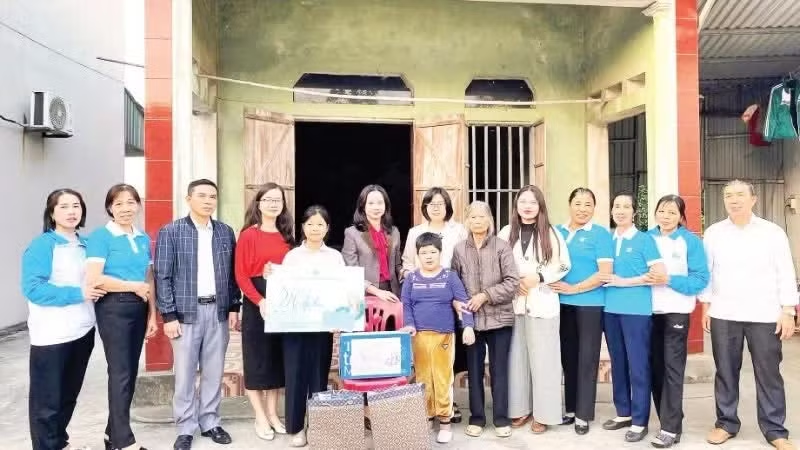
The application of digital platforms for receiving information not only enhances the effectiveness of Viet Nam Women’s Union activities but also creates greater opportunities for women to participate in community and social affairs. Through these interactive channels, women’s concerns, difficulties, and recommendations can be promptly reflected, enabling the union to better grasp practical realities and fulfil its representative role while contributing to policy development.
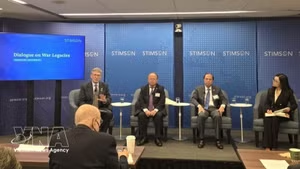
In addition, women’s union organisations at all levels will annually organise or advise on the organisation of at least one policy dialogue or social dialogue activity. This is an important measure to strengthen connections between women and state management agencies, creating opportunities for issues related to women, families, and gender equality to be discussed and addressed in a timely manner.
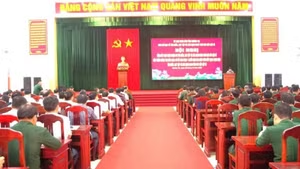
The goals, targets, and solutions outlined for the 2026–2031 term demonstrate a strong determination to innovate supervision, social criticism, and participation in policy-and-law-making activities.
These efforts are not only aimed at improving the quality of Viet Nam Women’s Union operations but also at amplifying the role, voice, and responsibility of women in political and social life, thereby contributing positively to the building of a socialist rule-of-law state, the promotion of democracy, and the sustainable development of the country in the new era.