According to the International Diabetes Federation, more than 11% of the world’s adult population was living with diabetes in 2025. The disease is often referred to as a “silent killer” because its complications can cause severe damage to the cardiovascular system, liver, eyes, and other organs, leading to a high risk of mortality. Unhealthy eating habits, life pressures, and excessive consumption of foods rich in sugar and fat are among the major contributing factors.
Although a variety of diabetes medications have been developed and produced, their high cost and potential side effects remain significant challenges, particularly for low-income patients. In addition, most people with diabetes prefer oral medication because it is easier to comply with, painless, and less likely to cause treatment-related injuries.
Against this backdrop, scientists have increasingly focused on identifying and applying natural bioactive compounds derived from plants to support diabetes treatment. However, many plant-based compounds have limitations, including poor solubility, instability in the stomach, low pharmacological activity, and short degradation times. These factors reduce their interaction with the body and limit their biological effectiveness.
As a result, the development of oral drug-delivery systems capable of improving drug absorption and therapeutic efficacy has become an urgent scientific challenge. Vitexin, a natural bioactive compound found primarily in plants such as mung beans (Vigna radiata L.), pigeon pea leaves (Cajanus cajan Mill sp.), and bamboo leaves (Phyllostachys nigra var. Henonis), has attracted considerable research interest.
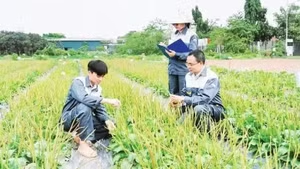
Vitexin extracted from mung bean husks has been shown to possess a wide range of pharmacological properties, including anti-diabetic effects. However, its poor water solubility results in low absorption rates, with only around 4.9–5.8% being absorbed in the small intestine, while most of the compound is excreted through the kidneys. This low bioavailability when administered orally has been the primary obstacle limiting its therapeutic potential.
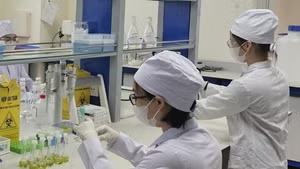
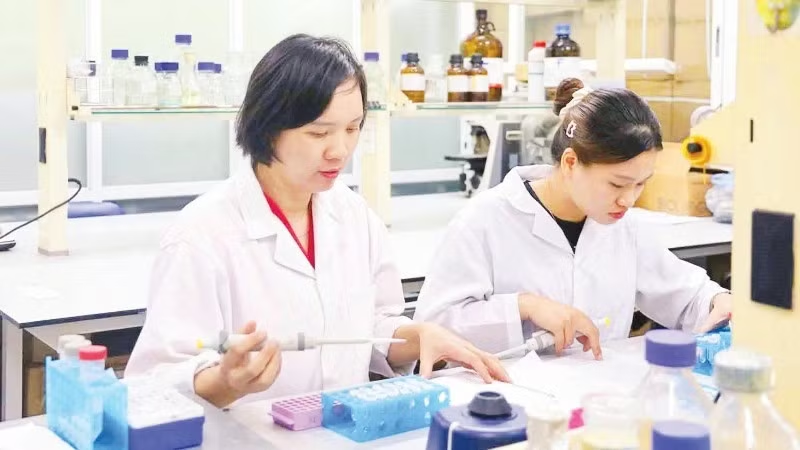
To overcome these challenges, researchers from the Institute of Biology and the Institute of Materials Science under VAST applied nanotechnology to formulate vitexin into a nano-sized form, thereby enhancing its solubility and absorption when taken orally. The team carried out a research project entitled “Developing a Technological Process for Producing Nanovitexin as a Raw Material for Health Supplements Supporting the Prevention and Treatment of Diabetes.”
Sharing insights into the project, Dr Ngo Thi Hoai Thu of the Institute of Biology, the project leader, explained that nanotechnology, particularly nano drug-delivery systems, offers an optimal solution due to several unique advantages. These include improving the solubility and bioavailability of compounds with poor water solubility, enhancing the stability of active ingredients under environmental factors such as temperature, light, humidity, and pH, and increasing absorption and pharmacological effectiveness. With a particle size of only 50–70 nanometres, nanovitexin demonstrates significantly greater cellular uptake than conventional vitexin. It also exhibits strong antioxidant properties by effectively scavenging free radicals and protecting cells from oxidative stress-induced damage.
Notably, nanovitexin represents a breakthrough in blood glucose control through its ability to inhibit enzymes responsible for starch digestion, thereby reducing common gastrointestinal side effects often associated with conventional diabetes medications. Thanks to these outstanding biological properties, nanovitexin is considered a promising raw material for producing health supplements that support the prevention and treatment of type 2 diabetes.
Beyond diabetes management, the material also shows potential for applications in products supporting liver detoxification and neuroprotection. Its enhanced bioavailability may help prolong the duration of therapeutic effects while reducing the frequency of daily use.
According to the project evaluation council, one of the most significant achievements of the research team was the successful development of a technological process for producing nanovitexin from free vitexin extracted from mung bean husks, with clear potential applications in the pharmaceutical and healthcare sectors. The products generated during the research demonstrated high quality and strong prospects for technology transfer and commercialisation.